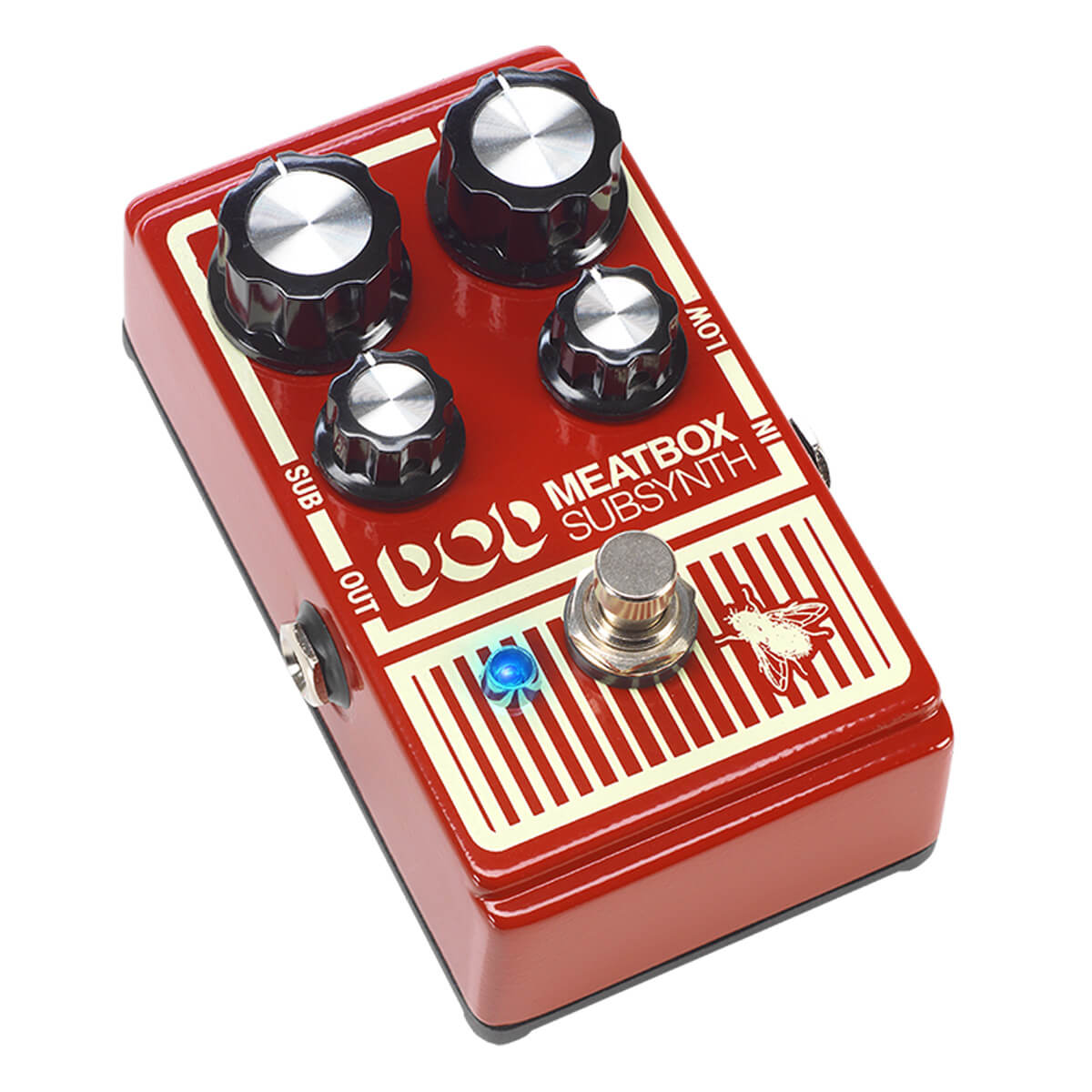
DOD Meatbox Subsynth Octaver + Subharmonic Synthesiser
Pairs well with
DOD Meatbox Subsynth Octaver + Subharmonic Synthesiser
Description
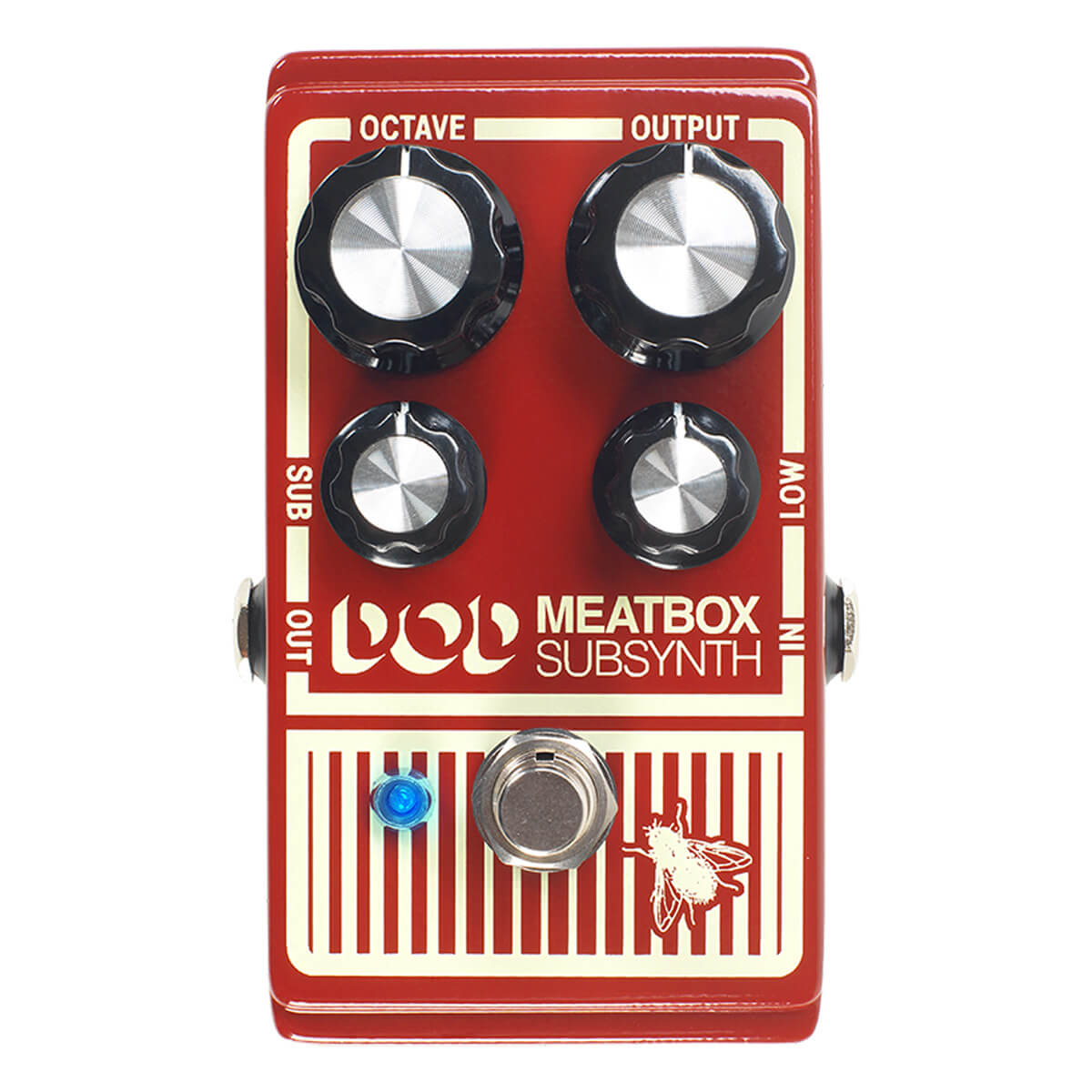
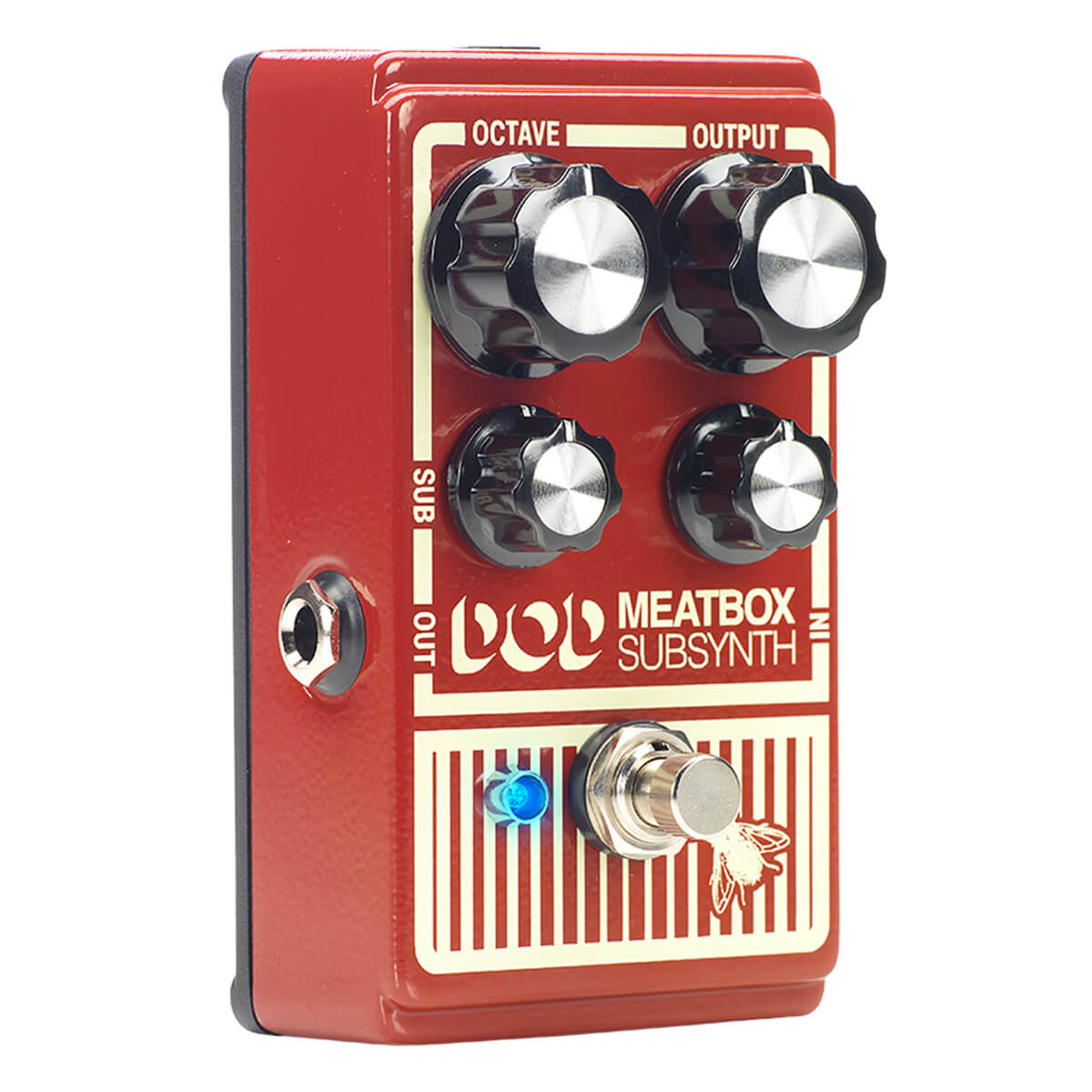
The DOD Meatbox Subsynth Octaver + Subharmonic Synthesiser is a powerful low-frequency effects pedal designed to add huge octave and synthesised subharmonic content to guitar, bass and other suitable instruments.
An updated version of the cult-favourite 1990s DOD Meatbox, the current model gives you independent control over Octave, Sub, Low and Output, making it possible to move from subtle low-octave reinforcement to enormous, room-shaking sub-bass effects.
A clever TRS output can also separate the processed octave/sub signal from your dry instrument signal, making the Meatbox particularly useful for bass rigs, dual-amp setups, PA routing and creative studio applications.
At A Glance
| Feature | Details |
|---|---|
| Brand | DOD |
| Model | Meatbox |
| Product Type | Octaver & Subharmonic Synthesiser |
| Condition | New |
| Controls | Octave, Output, Sub, Low |
| Octave Effect | Adjustable Low Octave |
| Subharmonic Effect | Adjustable Synthesised Sub Bass |
| Output | 1/4" TRS |
| Split Output Capability | Processed + Dry Signals |
| Bypass | True Bypass |
| Input Impedance | 470kΩ |
| Output Impedance | 100Ω |
| Current Draw | 20mA |
| Power | 9V DC / 9V Battery |
| Best For | Bass, guitar, sub-octave effects, experimental sounds and dual-signal rigs |
What Makes The DOD Meatbox Special?
The Meatbox goes considerably further than a conventional octave pedal.
Alongside its low-octave effect, it generates a separate synthesised subharmonic signal capable of adding serious low-frequency weight beneath your instrument.
The Octave and Sub controls can be blended independently, while the Low control lets you manage the extreme bottom end. This gives you the flexibility to create anything from a modest low-frequency enhancement to deliberately oversized sub-bass effects.
Octave Control
The Octave control determines how much low-octave signal is mixed into the effect.
Lower settings provide subtle reinforcement beneath the dry instrument.
Increase Octave for:
-
Fuller bass lines
-
Thick single-note guitar parts
-
Synth-like low-frequency layers
-
Heavy riffs
-
Experimental octave effects
The exact response naturally depends on the instrument, register and notes being played.
Sub Control
The Sub control determines how much of the synthesised subharmonic effect is added.
This is where the Meatbox produces its deepest low-frequency content.
Use lower settings when you simply want extra foundation beneath your sound, or increase Sub for far more dramatic bass enhancement.
It is particularly effective for:
-
Bass guitar
-
Heavy riffs
-
Electronic-inspired bass textures
-
Experimental guitar
-
PA-fed subharmonic effects
-
Studio sound design
Low Control
The Low control adjusts the overall low-frequency content of the processed effect.
This is especially important because the Meatbox is capable of producing extremely deep frequencies.
Reduce Low when you need:
-
Tighter bass response
-
Greater speaker control
-
More definition
-
Less sub-bass reaching a smaller amplifier
Increase it carefully when using equipment capable of reproducing deeper frequencies.
Output Control
The Output control sets the overall level of the processed Meatbox signal.
This gives you control over how strongly the effect hits the next pedal, amplifier, recording input or PA system.
Because the Meatbox can generate exceptionally powerful low-frequency energy, always begin with the Output control low and increase it gradually.
Important Speaker Safety
The Meatbox can generate extremely low frequencies at substantial levels.
Start with both the Output and Low controls at minimum and increase them gradually.
Excessive sub-bass can place significant stress on speakers, particularly smaller guitar speakers that are not designed to reproduce very low frequencies.
For extreme settings, use amplification and PA equipment capable of handling substantial low-frequency content.
TRS Split Output
One of the Meatbox's most useful features is its 1/4-inch TRS output.
With a suitable TRS Y-cable, the output can carry:
-
Tip: Octave + Sub processed signal
-
Ring: Dry unprocessed signal
-
Sleeve: Ground
This makes it possible to route the two signals separately.
For example, you could send:
-
Dry bass to your normal bass amplifier
-
Subharmonic signal to a PA or suitable low-frequency system
Or use the split signals for separate processing during recording.
Using The Meatbox With Bass
Bass is one of the Meatbox's most natural applications.
DOD recommends starting with the pedal near the beginning of a bass effects chain, allowing it to track the cleaner instrument signal before other effects alter it.
It can be used for:
-
Huge sub-bass
-
Synth-style bass sounds
-
Thickening single-note lines
-
Experimental low-frequency textures
-
Splitting dry and sub signals between different systems
Careful adjustment of the Low control is particularly important when using smaller bass cabinets.
Using The Meatbox With Guitar
The Meatbox can also transform electric guitar into something considerably heavier and more synthetic.
DOD suggests guitarists may prefer placing it after distortion effects or towards the end of the signal chain.
It can work particularly well for:
-
Doom
-
Stoner rock
-
Sludge
-
Experimental guitar
-
Noise
-
Industrial textures
-
Heavy single-note riffs
-
Sound design
Using the effect after distortion can create especially dense low-frequency textures.
Pedalboard Placement
There is no single required position, but DOD provides useful starting points.
With Bass
Start near the front of the signal chain.
This gives the Meatbox a relatively clean signal to process.
With Guitar
Try it:
-
After distortion
-
Later in the pedal chain
-
Before modulation
-
Before or after other pitch effects
Experimenting with placement can dramatically change the result.
Who Is It For?
The DOD Meatbox is particularly well suited to:
-
Bass guitarists
-
Doom
-
Stoner rock
-
Sludge
-
Alternative
-
Experimental music
-
Noise
-
Industrial
-
Electronic-inspired guitar and bass
-
Studio sound design
-
Dual-amplifier setups
-
Players routing effects directly to PA
-
Musicians looking for extreme low-frequency effects
Why Choose A Subharmonic Synthesiser?
A conventional octave pedal adds a pitch-shifted note beneath or above the original signal.
The Meatbox adds another dimension through its dedicated synthesised subharmonic section, allowing the processed signal to extend much further into the low-frequency spectrum.
This makes it especially useful when you want the effect to be felt as much as heard.
Its TRS routing also means the low-frequency effect can be separated from the dry instrument, which is particularly useful when a normal guitar or bass amplifier cannot comfortably reproduce the deepest frequencies.
How It Compares
Meatbox vs Conventional Octave Pedal
A conventional octave pedal primarily focuses on adding octave-shifted notes.
The Meatbox combines low octave with an additional synthesised subharmonic effect, providing considerably more low-frequency weight.
Meatbox vs Bass Octaver
A standard bass octave pedal is often intended to thicken bass lines while keeping the entire signal within one amplifier.
The Meatbox can produce much more extreme sub-bass and offers a TRS split output for routing the processed signal separately.
Meatbox vs Synth Pedal
Many synthesiser pedals completely reshape an instrument into a synthesised voice.
The Meatbox is more specialised, concentrating on adding octave and extreme subharmonic content beneath your existing instrument signal.
What's Included?
-
DOD Meatbox Subsynth Octaver + Subharmonic Synthesiser
No power supply included.
9V battery not included.
Technical Specifications
| Specification | Details |
|---|---|
| Brand | DOD |
| Model | Meatbox |
| Product Type | Octaver & Subharmonic Synthesiser |
| Controls | Octave, Output, Sub, Low |
| Input | 1 x 1/4" TS |
| Input Impedance | 470kΩ |
| Output | 1 x 1/4" TRS |
| Output Impedance | 100Ω |
| TRS Tip | Octave + Sub |
| TRS Ring | Dry Signal |
| TRS Sleeve | Ground |
| Bypass | True Bypass |
| Status Indicator | Blue LED |
| Chassis | All Metal |
| Current Draw | 20mA |
| Power | 9V DC / 9V Alkaline Battery |
| Height | 5.71cm |
| Width | 6.68cm |
| Length | 11.88cm |
| Weight | 0.62 lbs / 0.281kg |
| Condition | New |
Power Requirements
The DOD Meatbox can be powered using a 9V alkaline battery or a compatible regulated 9V DC centre-negative pedal power supply.
Current draw is approximately 20mA.
No external power supply is included.
9V battery not included.
FAQs
What does the DOD Meatbox do?
The Meatbox combines a low-octave effect with a synthesised subharmonic generator to produce extremely deep low-frequency sounds.
Is the Meatbox just an octave pedal?
No. In addition to its Octave control, it has a dedicated Sub control for adding synthesised subharmonic content.
What does the Octave control do?
It adjusts how much low-octave signal is added to the effect.
What does the Sub control do?
Sub controls how much synthesised subharmonic content is added.
What does the Low control do?
Low adjusts the overall amount of low-frequency content produced by the effect.
What does the Output control do?
Output determines the overall processed signal level.
Can the Meatbox damage speakers?
Extreme low-frequency settings can place substantial stress on speakers. Start with the Output and Low controls at minimum and increase them gradually.
Is the Meatbox suitable for bass?
Yes. Bass is one of its strongest applications, particularly for sub-bass, octave and synth-style effects.
Can I use the Meatbox with guitar?
Yes. It can create huge low-frequency and experimental textures with electric guitar.
Where should I put the Meatbox on a bass pedalboard?
DOD recommends starting near the beginning of the signal chain.
Where should I place it with guitar?
A useful starting point is after distortion effects or later in the effects chain.
What does the TRS output do?
With a suitable Y-cable, it can send the processed Octave + Sub signal and dry signal to separate destinations.
Can I send the subharmonic signal to a PA?
Yes. The TRS split output makes it possible to send the processed signal separately to suitable PA or amplification equipment.
Can I use the normal output without splitting the signal?
Yes. The Meatbox can be connected like a conventional effects pedal when separate routing is not required.
Does it have true bypass?
Yes. The current DOD Meatbox uses true bypass.
Can it run from a battery?
Yes. It can run from a 9V alkaline battery.
How much current does it draw?
Approximately 20mA.
Is a power supply included?
No. A compatible external power supply is not included.
Why Buy From Fair Deal Music?
When you buy from Fair Deal Music, you're choosing one of the UK's most established, independent family run music retailers since 1987.
-
Expert advice from knowledgeable musicians
-
Carefully checked new, used, pre-owned and ex-display equipment
-
Competitive prices on leading music brands
-
Secure UK-wide delivery
-
Flexible finance options, subject to status
-
Friendly support before and after purchase
-
Independent UK music retailer established in 1987
-
Large Birmingham showroom at 79–83 Holloway Head
Trade In. Trade Up. Save More.
Looking to upgrade your pedalboard or bass rig? Fair Deal Music accepts part exchanges across a wide range of effects pedals, guitars, basses, amplifiers and other musical equipment.
Contact our team for a no-obligation valuation and find out how the value of your existing gear could help towards your next purchase.
If you have any questions, you are always welcome to contact us. We'll get back to you as soon as possible, within 24 hours on weekdays.
-
Shipping Information
Use this text to answer questions in as much detail as possible for your customers.
-
Customer Support
Use this text to answer questions in as much detail as possible for your customers.
-
FAQ’s
Use this text to answer questions in as much detail as possible for your customers.
-
Contact Us
Use this text to answer questions in as much detail as possible for your customers.
Good to Know
How long is the warranty period?
For new products, you will get the full manufacturer warranty. For our second-hand products, we will cover any fault within 4 weeks of the purchase of any guitar. For pianos, that will be extended to 3 months.
What is the estimated delivery time?
We use the 24hr delivery in UK mainlands if it can be delivered by post. For Scotland and Wales, it depends on the area and the distance from our warehouse, but our aim is to get you order to your hands as soon as possible.
For products that cannot be posted, we will arrange the delivery with you to suit your schedule and deliver it to you
Do you offer international shipping?
We usually can ship instruments worldwide. Please get in touch to get a quote
What is the maintinance on your USED products?
- Guitars: Every guitar will be setup to a high playing standard before shipping. The electronics are checked and if there is any issue with guitar, it will be fixed.
- Pianos: Every piano is fully tested to make sure it's fully functional, cleaned, and if it's digital, a facroty reset is performed.
Do you offer assembly and installation?
We offer installation and assembly for pianos, drum kits, or any products that require it for and extra charge. Please get in touch so we can provide you with a quote.