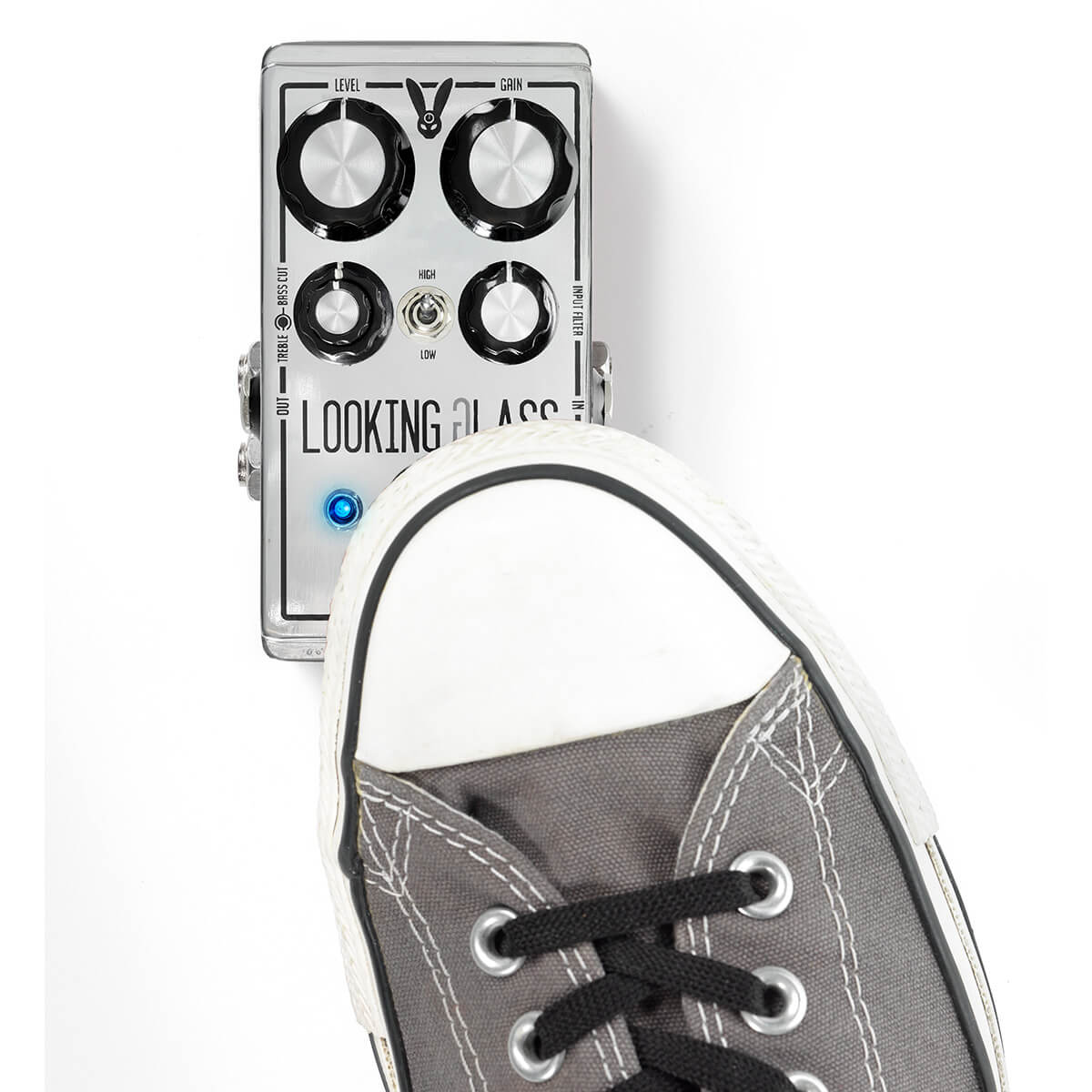
DOD Looking Glass Class-A FET Overdrive Guitar Effects Pedal
Pairs well with
DOD Looking Glass Class-A FET Overdrive Guitar Effects Pedal
Description
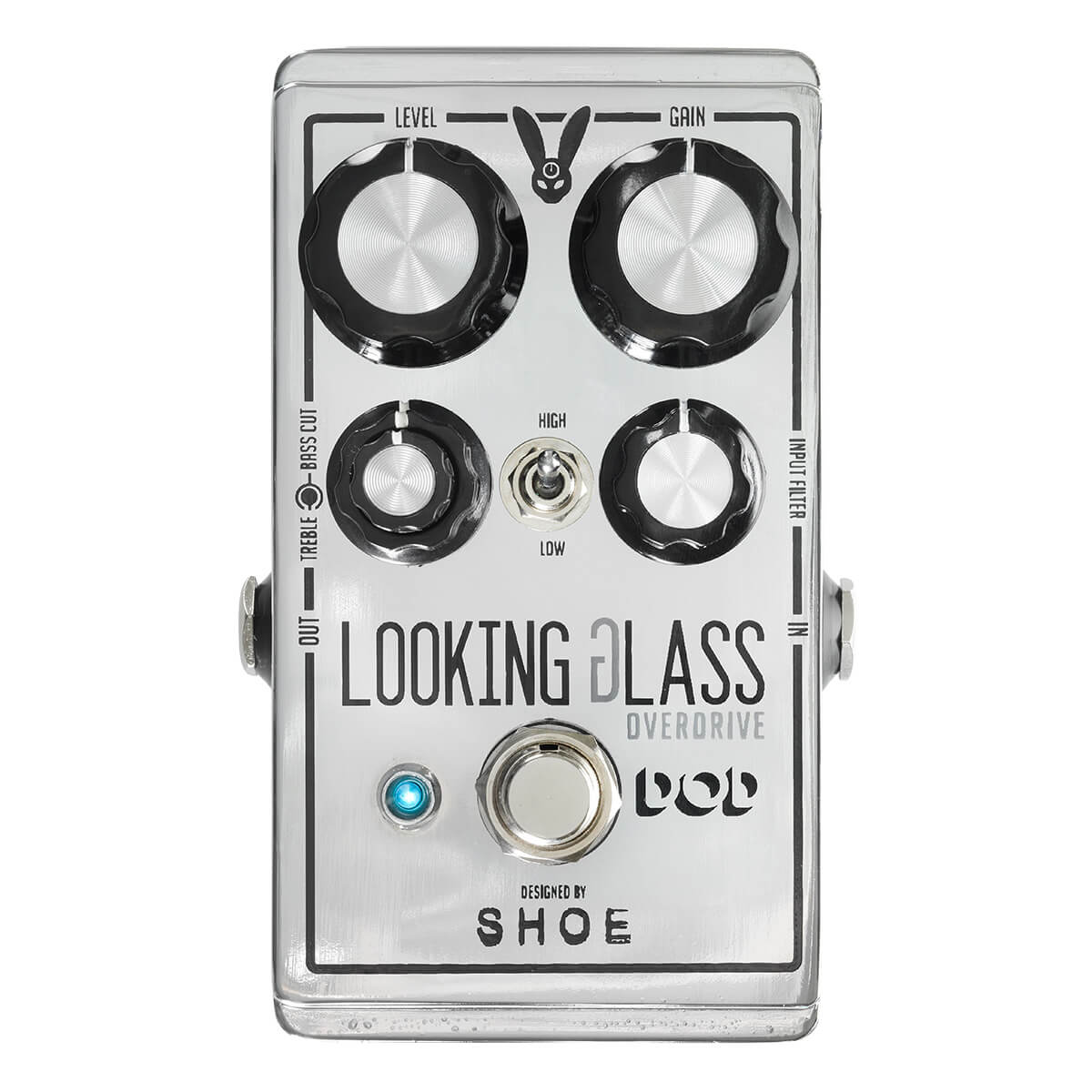
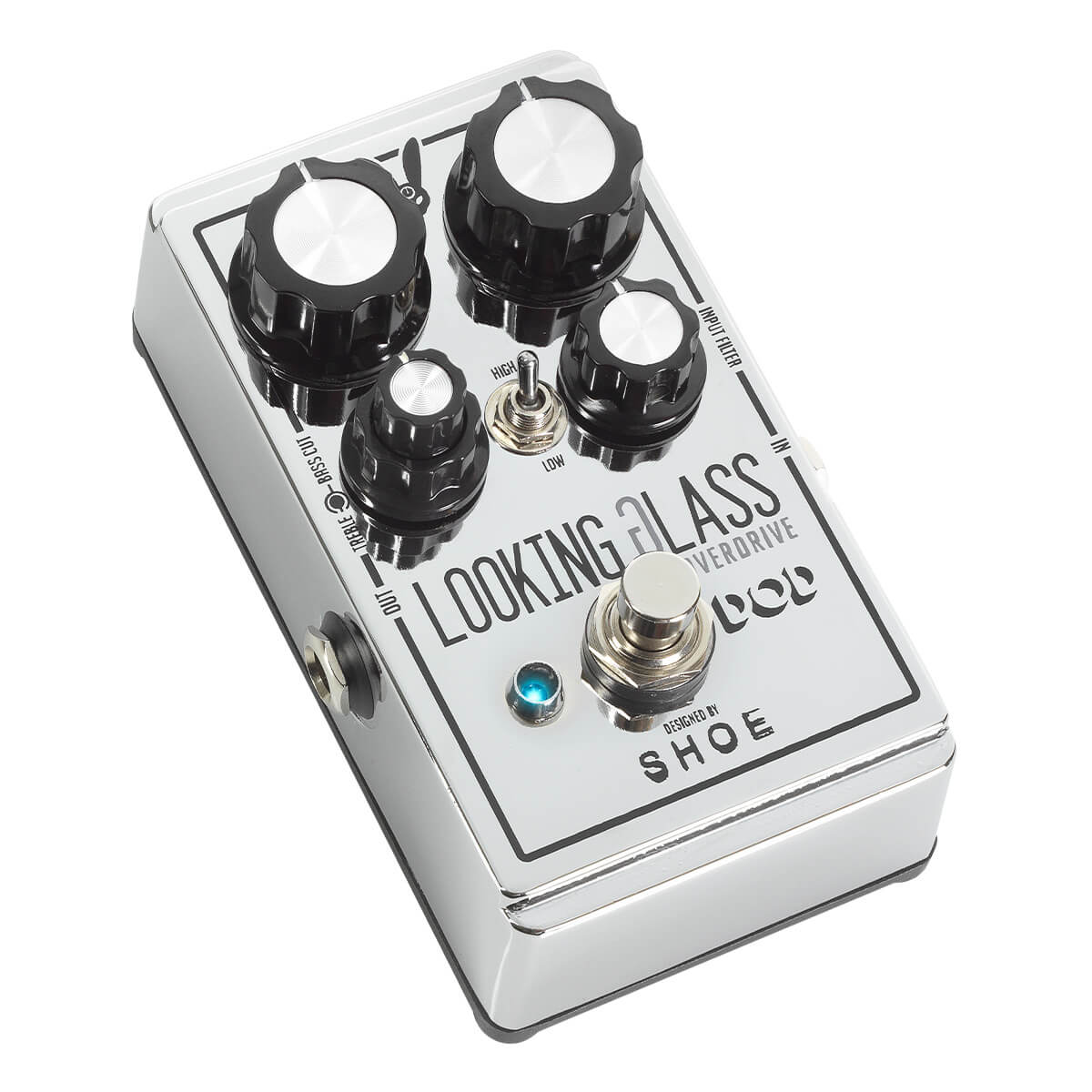
The DOD Looking Glass Class-A FET Overdrive is a highly responsive guitar overdrive and boost pedal developed in collaboration with SHOE Pedals.
Built around a hybrid Class-A discrete FET circuit with asymmetrical clipping, the Looking Glass is designed to react naturally to your playing dynamics. Pick softly for cleaner tones, dig in harder for extra grit and saturation, or push the Gain control for the raw character of a vintage amplifier driven towards its limits.
With High and Low gain modes, pre-drive Bass Cut, post-drive Treble and an interactive Input Filter, it offers considerably more tone-shaping control than a conventional three-knob overdrive while remaining straightforward to use.
At A Glance
| Feature | Details |
|---|---|
| Brand | DOD |
| Model | Looking Glass |
| Product Type | Class-A FET Overdrive & Boost |
| Condition | New |
| Design Collaboration | SHOE Pedals |
| Circuit | Hybrid Class-A Discrete FET |
| Clipping | Asymmetrical |
| Gain Modes | Low / High |
| Controls | Level, Gain, Treble, Input Filter, Bass Cut |
| Internal Voicing | 2 DIP Switches |
| Response | Highly Touch Sensitive |
| Bypass | True Bypass |
| Current Draw | 4mA |
| Power | 9V DC / 9V Battery |
| Best For | Boost, blues, rock, country, indie, alternative and amp-like overdrive |
What Makes The DOD Looking Glass Special?
The Looking Glass is designed to feel more like a responsive amplifier than a heavily compressed distortion box.
Its asymmetrical FET clipping reacts strongly to pick attack, so the amount of drive can change naturally with the way you play. At lighter settings it works as a glassy clean boost and tone shaper, while increasing the gain takes it into increasingly raw and harmonically rich overdrive.
The combination of Bass Cut, Treble and Input Filter controls also lets you tailor how the pedal interacts with different guitars, pickups and amplifiers.
Low & High Gain Modes
A two-position switch gives the Looking Glass two distinct gain ranges.
Low Mode
Low mode is designed for:
-
Clean tone shaping
-
Glassy boost
-
Light compression
-
Edge-of-breakup sounds
-
Low-gain overdrive
-
Country and blues tones
-
Pushing an existing drive or valve amplifier
It retains plenty of playing dynamics and works particularly well when you want to enhance the character of your existing guitar and amplifier.
High Mode
High mode takes over where Low mode finishes, adding considerably more available gain.
Use it for:
-
Crunchy rhythm guitar
-
Classic rock
-
Alternative
-
Lead overdrive
-
Raw vintage-amp tones
-
More saturated drive sounds
Even at higher settings, the circuit remains responsive to pick attack.
Gain Control
The Gain control sets the overall intensity of the overdrive.
Lower settings retain more clean attack and are ideal for boost applications.
Increase Gain for:
-
Additional breakup
-
Harmonic saturation
-
More compression
-
Increased sustain
-
Crunchier rhythm tones
-
Driven lead sounds
Because the circuit is highly dynamic, you can also alter the apparent amount of gain simply by changing how hard you pick.
Level Control
The Level control determines the overall output volume.
The Looking Glass has plenty of output available, making it useful for:
-
Matching unity volume
-
Solo boosting
-
Pushing a valve amplifier
-
Driving another overdrive
-
Adding output with minimal distortion in Low mode
Pre-Drive Bass Cut
The Bass Cut control reduces low-frequency content before the distortion stages.
This is particularly useful because bass frequencies influence how an overdrive circuit clips.
Reducing bass before the gain stages can:
-
Tighten rhythm guitar
-
Reduce muddiness
-
Improve chord definition
-
Keep humbuckers controlled
-
Help low-tuned guitar remain clear
Allowing more bass into the circuit produces a fuller and heavier response.
Post-Drive Treble Control
The Treble control acts after the main distortion stages.
Use it to reduce excessive high-frequency content without drastically changing the way the gain circuit itself responds.
This allows you to:
-
Smooth bright amplifiers
-
Tame sharp single coils
-
Reduce high-gain fizz
-
Create warmer vintage-style overdrive
-
Retain additional presence when required
Interactive Input Filter
One of the Looking Glass's most distinctive features is its Input Filter.
Rather than functioning like a conventional tone control after the distortion, it interacts with your guitar's pickups and input signal.
It can help tame an overly bright guitar while also changing the attack and midrange response.
This is particularly useful when moving between:
-
Single coils and humbuckers
-
Bright and dark guitars
-
Different amplifier voicings
-
Buffered and unbuffered pedalboard setups
Internal DIP Switches
The Looking Glass includes two internal DIP switches for adjusting how the Input Filter behaves.
Input Impedance DIP Switch
One switch changes the pedal's input impedance.
This can be useful when adapting the Looking Glass to buffered pedals placed earlier in the signal chain.
Darker Input Filter Voicing
The second DIP switch provides a darker voicing for the Input Filter.
This gives you another level of adjustment when matching the pedal to bright pickups, buffers or amplifiers.
Highly Touch-Sensitive Overdrive
The Looking Glass responds strongly to playing dynamics.
Pick softly and the sound stays relatively clean.
Dig in harder and the asymmetrical Class-A FET circuit produces more clipping and harmonic content.
This makes it especially useful for players who control dynamics directly from their hands rather than relying entirely on switching pedals on and off.
Who Is It For?
The DOD Looking Glass is particularly well suited to:
-
Blues
-
Classic rock
-
Country
-
Indie
-
Alternative
-
Americana
-
Roots
-
Pop
-
Dynamic rhythm guitar
-
Lead guitar
-
Valve amp users
-
Players wanting a transparent-style boost
-
Guitarists stacking overdrive pedals
-
Musicians who use pick dynamics to control gain
Where Should The Looking Glass Go In The Pedal Chain?
DOD recommends starting with the Looking Glass towards the front of your effects chain.
A typical setup would be:
Guitar → Looking Glass → Other Drive Pedals → Modulation → Delay → Reverb → Amplifier
This position also allows the Input Filter to interact more directly with the guitar pickups.
Buffered pedals placed before the Looking Glass can change this interaction, although the internal DIP switches provide additional adjustment for this situation.
Great For Gain Stacking
The Looking Glass works particularly well alongside other drive pedals.
Before Another Overdrive
Low Gain settings can push another pedal harder while the Bass Cut control helps tighten the combined sound.
After Another Drive
The Looking Glass can add additional level, EQ shaping and saturation.
Into A Valve Amplifier
Use lower Gain and higher Level settings to push an amplifier that is already close to breakup.
How It Compares
Looking Glass vs Conventional Overdrive
Many overdrive pedals provide Gain, Tone and Level controls.
The Looking Glass adds separate pre-drive Bass Cut, post-drive Treble and Input Filter controls, giving you much more control over how the circuit responds before and after clipping.
Looking Glass vs Mid-Focused Overdrive
Traditional mid-focused overdrives deliberately emphasise part of the midrange.
The Looking Glass offers broader tone shaping and is particularly useful when you want to retain more of the natural character of your guitar and amplifier.
Looking Glass as a Clean Boost
In Low mode with reduced Gain, the Looking Glass can function as a powerful tone-shaping boost.
The Bass Cut, Treble and Input Filter controls then let you refine the boosted signal before it reaches your amplifier or next gain stage.
What's Included?
-
DOD Looking Glass Class-A FET Overdrive Guitar Effects Pedal
No power supply included.
9V battery not included.
Technical Specifications
| Specification | Details |
|---|---|
| Brand | DOD |
| Model | Looking Glass |
| Product Type | Class-A FET Overdrive / Boost |
| Design Collaboration | SHOE Pedals |
| Circuit Design | Hybrid Class-A Discrete FET |
| Clipping | Asymmetrical |
| Controls | Level, Gain, Treble, Input Filter, Bass Cut |
| Gain Modes | Low / High |
| Internal Controls | 2 DIP Switches |
| Input | 1 x 1/4" TS |
| Input Impedance | 235kΩ / 260kΩ Depending on DIP Setting |
| Output | 1 x 1/4" TS |
| Output Impedance | 1kΩ |
| Bypass | True Bypass |
| Current Draw | 4mA |
| Power | 9V DC or 9V Alkaline Battery |
| Length | 119mm |
| Width | 67mm |
| Height | 57mm |
| Weight | Approx. 454g |
| Condition | New |
Power Requirements
The DOD Looking Glass can be powered using a 9V alkaline battery or a compatible regulated 9V DC pedal power supply.
Current draw is approximately 4mA.
No power supply is included.
9V battery not included.
FAQs
What type of pedal is the DOD Looking Glass?
The Looking Glass is a Class-A FET overdrive and boost pedal designed for highly dynamic and touch-sensitive gain sounds.
Who designed the DOD Looking Glass?
It was developed by DOD in collaboration with Christopher Venter of SHOE Pedals.
What does the Low/High switch do?
Low mode focuses on clean boost, light compression and low-gain overdrive. High mode provides significantly more gain for crunch and saturated drive.
Is the Looking Glass good as a clean boost?
Yes. Low mode with reduced Gain works particularly well for glassy boost and general tone shaping.
What does the Bass Cut control do?
It reduces bass before the distortion stages, helping tighten the response and prevent excessive low-frequency muddiness.
What does the Treble control do?
Treble reduces high frequencies after the distortion stages.
What does the Input Filter do?
The Input Filter interacts with your guitar's pickups to adjust brightness, attack and midrange response before the main drive circuit.
What are the internal DIP switches for?
One changes input impedance, while the other provides a darker Input Filter voicing.
Does the Looking Glass respond to pick attack?
Yes. Touch sensitivity is one of its defining features, with harder playing producing more drive and saturation.
Is it good with single-coil pickups?
Yes. The Input Filter and Treble controls are particularly useful for controlling brighter single-coil guitars.
Does it work with humbuckers?
Yes. The Bass Cut control can help keep higher-output humbuckers tight and articulate.
Can I stack it with another overdrive?
Yes. Its extensive tone shaping makes it particularly useful for gain stacking.
Can it push a valve amplifier?
Yes. Lower Gain and higher Level settings work well for driving an amplifier into additional natural breakup.
Does the DOD Looking Glass have true bypass?
Yes. It uses true bypass switching.
Can it run from a battery?
Yes. It can operate from a standard 9V alkaline battery.
What power supply does it require?
Use a compatible regulated 9V DC pedal power supply.
Is a power supply included?
No. A compatible external power supply is not included.
Why Buy From Fair Deal Music?
When you buy from Fair Deal Music, you're choosing one of the UK's most established, independent family run music retailers since 1987.
-
Expert advice from knowledgeable musicians
-
Carefully checked new, used, pre-owned and ex-display equipment
-
Competitive prices on leading music brands
-
Secure UK-wide delivery
-
Flexible finance options, subject to status
-
Friendly support before and after purchase
-
Independent UK music retailer established in 1987
-
Large Birmingham showroom at 79–83 Holloway Head
Trade In. Trade Up. Save More.
Looking to upgrade your pedalboard? Fair Deal Music accepts part exchanges across a wide range of effects pedals, guitars, amplifiers and other musical equipment.
Contact our team for a no-obligation valuation and find out how the value of your existing gear could help towards your next purchase.
If you have any questions, you are always welcome to contact us. We'll get back to you as soon as possible, within 24 hours on weekdays.
-
Shipping Information
Use this text to answer questions in as much detail as possible for your customers.
-
Customer Support
Use this text to answer questions in as much detail as possible for your customers.
-
FAQ’s
Use this text to answer questions in as much detail as possible for your customers.
-
Contact Us
Use this text to answer questions in as much detail as possible for your customers.
Good to Know
How long is the warranty period?
For new products, you will get the full manufacturer warranty. For our second-hand products, we will cover any fault within 4 weeks of the purchase of any guitar. For pianos, that will be extended to 3 months.
What is the estimated delivery time?
We use the 24hr delivery in UK mainlands if it can be delivered by post. For Scotland and Wales, it depends on the area and the distance from our warehouse, but our aim is to get you order to your hands as soon as possible.
For products that cannot be posted, we will arrange the delivery with you to suit your schedule and deliver it to you
Do you offer international shipping?
We usually can ship instruments worldwide. Please get in touch to get a quote
What is the maintinance on your USED products?
- Guitars: Every guitar will be setup to a high playing standard before shipping. The electronics are checked and if there is any issue with guitar, it will be fixed.
- Pianos: Every piano is fully tested to make sure it's fully functional, cleaned, and if it's digital, a facroty reset is performed.
Do you offer assembly and installation?
We offer installation and assembly for pianos, drum kits, or any products that require it for and extra charge. Please get in touch so we can provide you with a quote.