

Marshall JCM900 Hi Gain Distortion Pedal
Pairs well with
Marshall JCM900 Hi Gain Distortion Pedal
Description
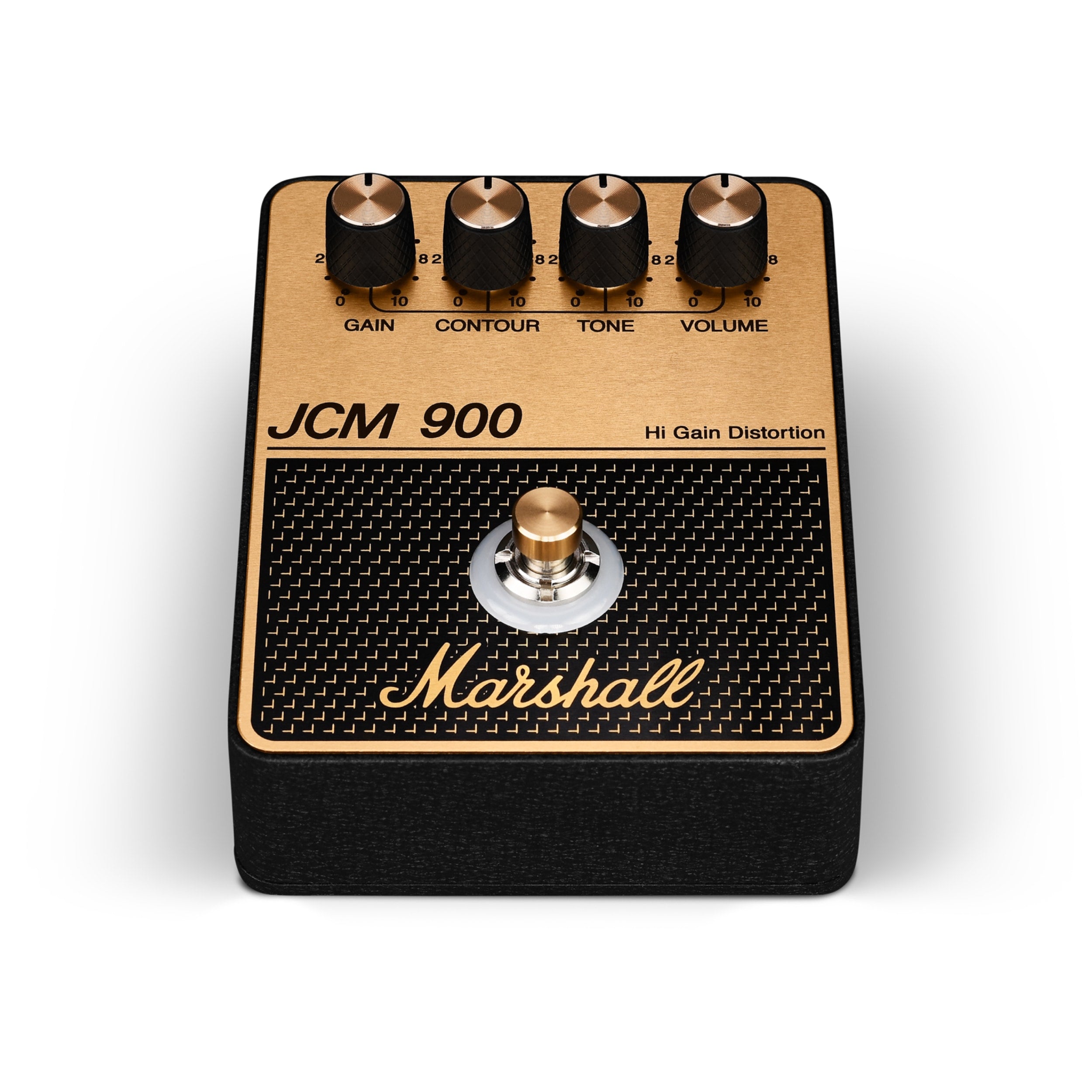
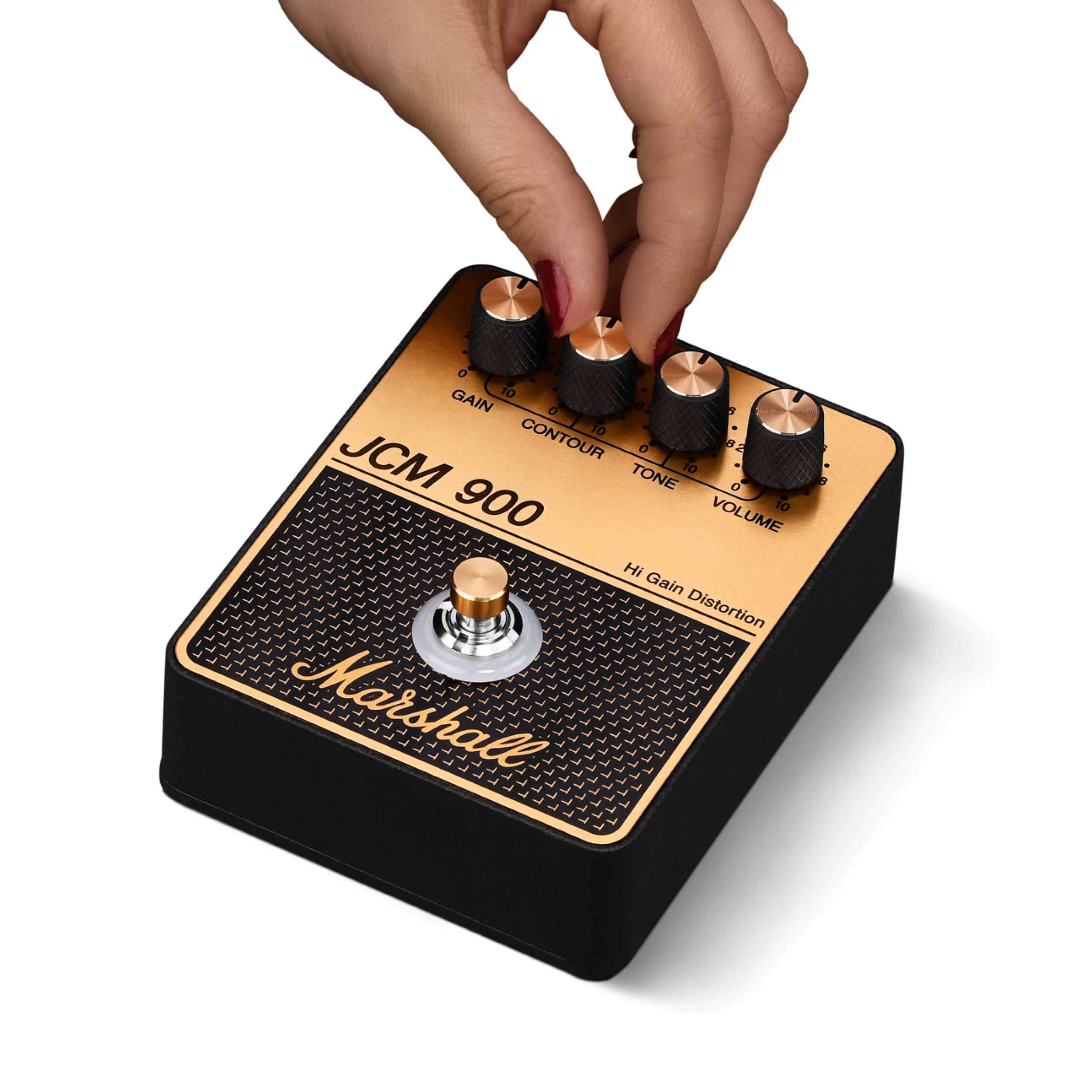
The Marshall JCM900 Pedal places the distinctive high-gain character of the legendary JCM900 amplifier series into a compact and robust pedalboard format.
Characterised by hard-diode clipping, the pedal delivers everything from gritty British overdrive and powerful rhythm crunch to saturated distortion and sustaining lead tones. Its sound sits between the bright, aggressive bite of a JCM800 and the fuller, more bottom-heavy response associated with Marshall’s DSL range.
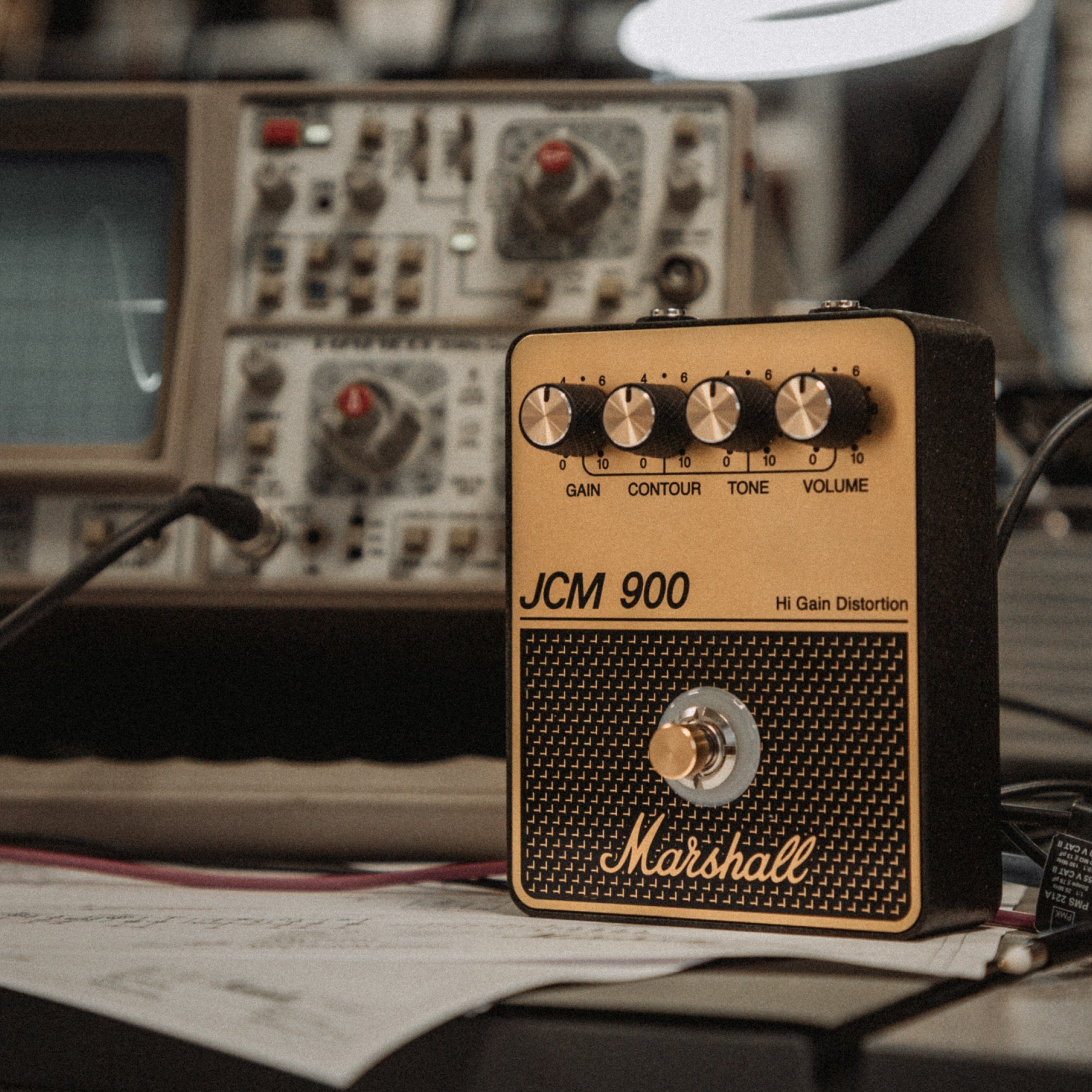
Gain, Contour, Tone and Volume controls provide straightforward but flexible sound shaping. The Contour control adjusts the post-distortion midrange scoop, while the unusual high-frequency roll-off Tone circuit lets you move from cutting attack to warmer, rounder sounds.
True-bypass switching preserves the direct guitar signal when the effect is disengaged, while 9V battery and external power options make the pedal easy to integrate into home, recording and live rigs.
At A Glance
| Feature | Details |
|---|---|
| Brand | Marshall |
| Model | JCM900 Overdrive Pedal |
| Model Reference | PEDL-92005 |
| Effect Type | Overdrive and high-gain distortion |
| Condition | Brand New |
| Circuit Character | Hard-diode clipping |
| Controls | Gain, Contour, Tone and Volume |
| Midrange Control | Post-distortion Contour |
| Switching | True bypass |
| Status Indicator | Illuminated footswitch ring |
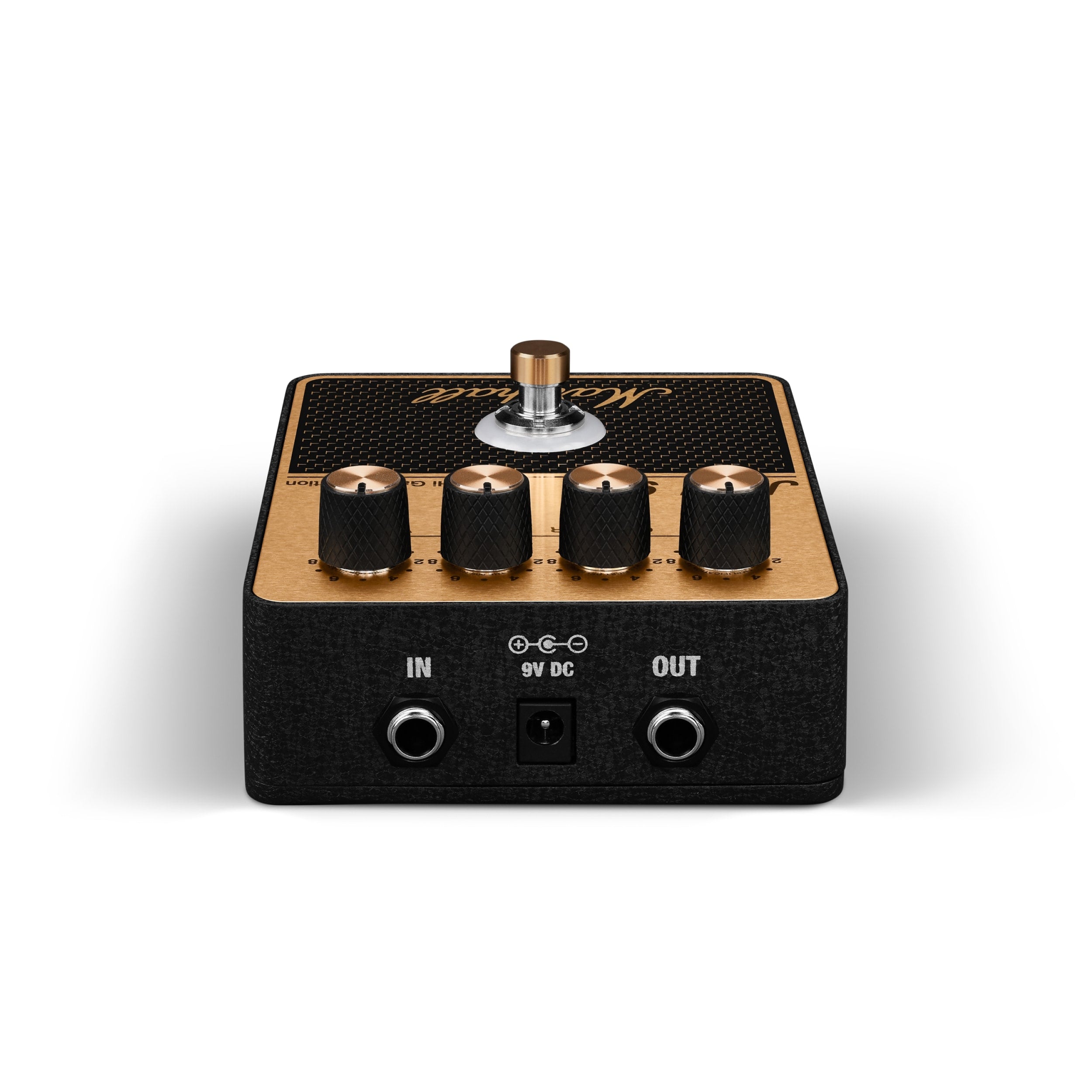
| Input | One 1/4-inch jack |
| Output | One 1/4-inch jack |
| Power | 9V battery or regulated 9V DC supply |
| Current Draw | 25mA |
| Colour | Black and Gold |
| Main Appeal | Classic JCM900 high-gain character in pedal form |
| Best For | Rock, hard rock, punk, alternative music and metal |
| Design and Engineering | United Kingdom |
| Country of Manufacture | Vietnam |
What’s Included?
-
Marshall JCM900 Overdrive Pedal
-
Manufacturer documentation
-
9V battery not included
-
External power supply not included
Why Choose the Marshall JCM900 Pedal?
JCM900-Inspired High-Gain Character
The JCM900 amplifier became known for its aggressive gain, tight response and ability to cover both powerful rhythm sounds and sustaining leads.
Marshall has recreated that character in a compact pedal designed to work with a wide range of amplifiers. It retains the focused attack and rich harmonics associated with the original amp while making the sound accessible without requiring a full-sized JCM900 head and speaker cabinet.
The pedal is particularly effective for:
-
Classic and modern rock
-
Hard rock
-
Punk
-
Alternative music
-
Grunge
-
Heavy rhythm playing
-
Sustaining lead tones
Hard-Diode Clipping
The JCM900 Pedal uses hard-diode clipping to create its distinctive distortion response.
This produces a firm and immediate attack with defined edges around each note. As the Gain control is increased, the sound becomes progressively more compressed, saturated and sustaining.
Hard clipping is especially effective for:
-
Power-chord rhythm playing
-
Defined palm-muted riffs
-
Aggressive pick attack
-
Cutting lead sounds
-
Fast and precise guitar parts
-
Dense band arrangements
The circuit gives the pedal a more forceful distortion character than a soft-clipping overdrive designed primarily for subtle blues breakup.
Broad Gain Range
The Gain control sets the signal level before the distortion stage.
Lower settings produce:
-
Gritty overdrive
-
Light British crunch
-
Dynamic rhythm sounds
-
Additional drive for a valve amplifier
-
Classic-rock textures
Higher settings provide:
-
Greater saturation
-
Increased compression
-
High-gain rhythm sounds
-
Extended lead sustain
-
Heavier distortion
-
More aggressive harmonic content
This range lets the pedal serve as a primary distortion sound or as an additional gain stage placed before an already driven amplifier.
Powerful Contour Control
The Contour control adjusts a post-distortion EQ scoop.
It changes the prominence and shape of the pedal’s midrange, allowing you to move between fuller, more traditional Marshall tones and a more scooped modern response.
Mid-forward settings help:
-
Lead guitar project through a band mix
-
Power chords retain body
-
Single-coil pickups sound fuller
-
Rhythm parts remain prominent
-
Classic-rock tones feel more direct
More scooped settings can create:
-
Wider-sounding high-gain rhythm tones
-
Stronger emphasis on bass and treble
-
Modern rock textures
-
More aggressive palm-muted sounds
-
Additional separation in layered recordings
Because the Contour circuit is positioned after the distortion stage, it shapes the completed drive sound rather than simply changing how the guitar enters the clipping circuit.
High-Frequency Roll-Off Tone Control
The Tone control operates as a post-distortion high-frequency roll-off.
Its response works differently from many conventional guitar pedal tone controls:
-
Lower settings produce a brighter and more cutting sound
-
Higher settings create a rounder and less aggressive response
This makes it easy to balance the pedal with different guitars, pickups, amplifiers and speakers.
Lower settings suit darker amplifiers or situations where additional attack is required. Higher settings help soften bright single-coil pickups, sharp speaker cabinets or particularly aggressive high-gain settings.
Independent Output Volume
The Volume control adjusts the pedal’s final output level after the distortion stage.
It can be used to:
-
Match the pedal’s level to the bypassed guitar signal
-
Create a volume increase for lead playing
-
Push the front of a valve amplifier
-
Balance the JCM900 against other pedals
-
Reduce the final level when using heavier gain
Because Gain and Volume are independent, you can achieve a saturated distortion sound without automatically creating a large jump in output level.
True-Bypass Switching
The JCM900 Pedal uses true-bypass switching.
When the effect is disengaged, the guitar signal bypasses the active distortion circuit. This helps preserve the natural sound of the guitar and amplifier.
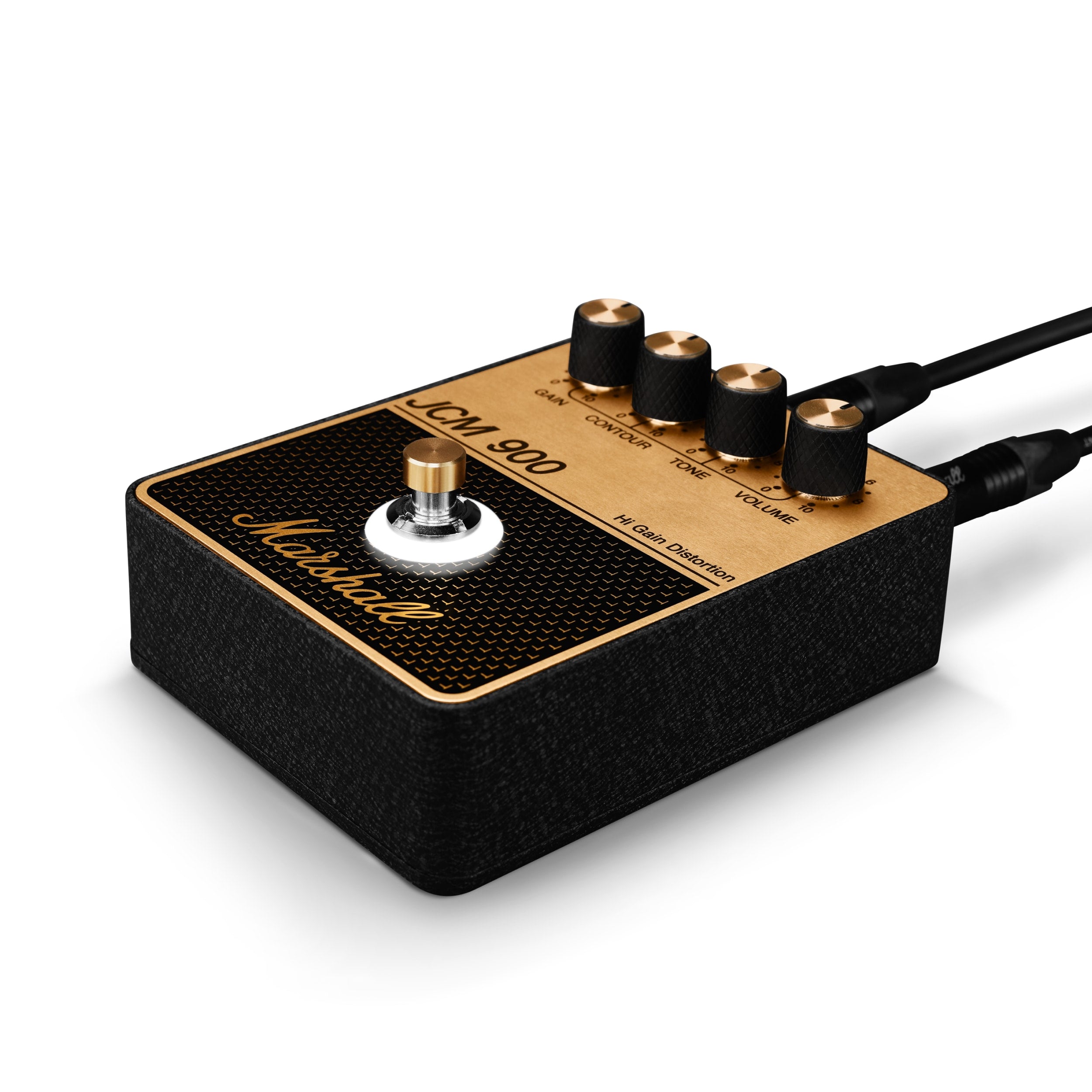
The illuminated ring surrounding the footswitch clearly shows when the pedal is active, making its status easy to identify on dark stages and crowded pedalboards.
Works with Clean and Driven Amplifiers
The pedal can be used in several different ways.
Into a Clean Amplifier
Connected to a clean channel, the JCM900 provides the primary overdrive and distortion sound.
This is useful for players who want Marshall-style gain from an amplifier that does not have a dedicated rock or high-gain channel.
Into an Edge-of-Breakup Amplifier
A lightly driven amplifier adds its own compression and harmonics to the pedal’s distortion.
This can create a thicker, more responsive sound for classic rock and hard rock.
Into a Driven Amplifier
Reducing the pedal’s Gain and increasing its Volume can push an already distorted amplifier harder.
This can add saturation, attack and sustain for solos or heavier rhythm playing.
Suitable for Different Pickup Types
The Contour and Tone controls make the pedal adaptable to a wide range of guitars.
Single-Coil Pickups
Single coils produce a brighter and more open response. The JCM900 can add weight and sustain, while the Tone control helps reduce excessive sharpness.
Traditional Humbuckers
Medium-output humbuckers complement the pedal’s Marshall character and work particularly well for classic rock, punk and hard rock.
High-Output Pickups
High-output and active pickups drive the distortion circuit more aggressively, producing additional compression and saturation for heavier styles.
Robust Pedalboard Construction
The JCM900 uses a substantial enclosure designed for regular studio, rehearsal and stage use.
Its compact dimensions allow it to fit easily onto most pedalboards, while the large rotary controls remain easy to adjust during setup.
The black-and-gold finish reflects the visual identity of Marshall’s classic amplifier range.
Why Choose an Amp-Inspired Distortion Pedal?
An amp-inspired pedal is designed to reproduce the character of a particular amplifier family rather than provide a generic distortion sound.
The JCM900 Pedal offers several practical advantages:
-
Access to JCM900-style gain through different amplifiers
-
Lower cost and size than a complete amplifier rig
-
Consistent distortion at home-friendly volume
-
Easy integration into an existing pedalboard
-
Independent control over gain and final output
-
The ability to switch the sound on and off instantly
-
Flexible use as either a main distortion or amplifier boost
It is particularly useful for players who use clean pedal-platform amplifiers or need a portable Marshall-style gain sound for rehearsals and recording sessions.
Who Is It For?
Rock Guitarists
The JCM900 covers gritty rhythm crunch, muscular power chords and sustaining leads without requiring a complicated control layout.
Hard-Rock Players
Higher Gain settings provide the compression, saturation and attack required for heavier riffs and expressive solos.
Punk and Alternative Musicians
The pedal’s direct response and aggressive clipping suit energetic rhythm guitar, power chords and raw live tones.
Grunge Players
Its place between the sharper JCM800 sound and the fuller DSL response makes it particularly effective for thick 1990s-inspired alternative and grunge guitar tones.
Lead Guitarists
The combination of Gain, Contour and Volume controls makes it easy to create a louder, more sustaining lead sound that remains present within a band mix.
Recording Musicians
The JCM900 provides a repeatable high-gain sound without relying on extreme amplifier volume.
Its Contour control also helps guitar tracks occupy different frequency spaces within layered arrangements.
Pedalboard Users
The pedal provides amp-style distortion in a compact format and works well alongside boosts, modulation, delay and reverb effects.
Players Using Clean Amplifiers
It can turn a clean amplifier into a convincing British rock and high-gain platform without requiring channel switching or amplifier modification.
Understanding the Marshall JCM900 Sound
Gritty British Overdrive
Use a lower Gain setting with the Contour control adjusted for a full midrange response.
Set Volume to match or slightly exceed the bypassed level and use Tone to balance the brightness.
This produces an articulate rhythm sound for classic rock, indie and punk.
Classic Rock Crunch
Raise Gain to a medium setting and retain enough midrange to keep chords full and prominent.
This provides a muscular sound with clear pick attack and strong harmonic detail.
Scooped High-Gain Rhythm
Increase Gain and adjust Contour for a deeper midrange scoop.
Use the Tone control to retain enough attack without making the sound excessively sharp.
This works well for heavier riffs, palm-muted playing and layered rhythm tracks.
Sustaining Lead Tone
Use a higher Gain setting, reduce the midrange scoop and raise Volume above the rhythm level.
A slightly rounder Tone setting can soften the attack and create a smoother lead response.
Amplifier Boost
Reduce Gain and increase Volume.
This sends a stronger signal into the amplifier’s preamp, adding attack, saturation and sustain while allowing more of the amplifier’s natural distortion character to remain.
Technical Specifications
| Specification | Details |
|---|---|
| Brand | Marshall |
| Product Name | JCM900 Overdrive Pedal |
| Model Reference | PEDL-92005 |
| Effect Type | JCM900-inspired overdrive and distortion |
| Clipping Character | Hard-diode clipping |
| Controls | Gain, Contour, Tone and Volume |
| Contour Function | Post-distortion EQ scoop |
| Tone Function | Post-distortion high-frequency roll-off |
| Footswitch | Effect on/off |
| Bypass Type | True bypass |
| Status Indicator | Illuminated footswitch ring |
| Input | One 1/4-inch jack |
| Output | One 1/4-inch jack |
| Input Impedance | 1MΩ |
| Output Impedance | 1kΩ |
| Power Supply | Regulated 9V DC |
| Polarity | Centre negative |
| DC Connector | 5.5mm x 2.1mm |
| Battery Type | Standard 9V PP3 |
| Approximate Battery Life | 30 hours |
| Current Draw | 25mA |
| Width | 101mm |
| Depth | 131mm |
| Height | 52mm |
| Weight | Approximately 0.74kg excluding battery |
| Colour | Black and Gold |
| Design and Engineering | United Kingdom |
| Country of Manufacture | Vietnam |
Power Requirements
The Marshall JCM900 Pedal can operate from either:
-
One standard 9V PP3 battery
-
A regulated 9V DC centre-negative power supply
The external supply requires a standard 5.5mm x 2.1mm connector and must provide at least 25mA.
An incompatible power supply can create unwanted noise or damage the pedal.
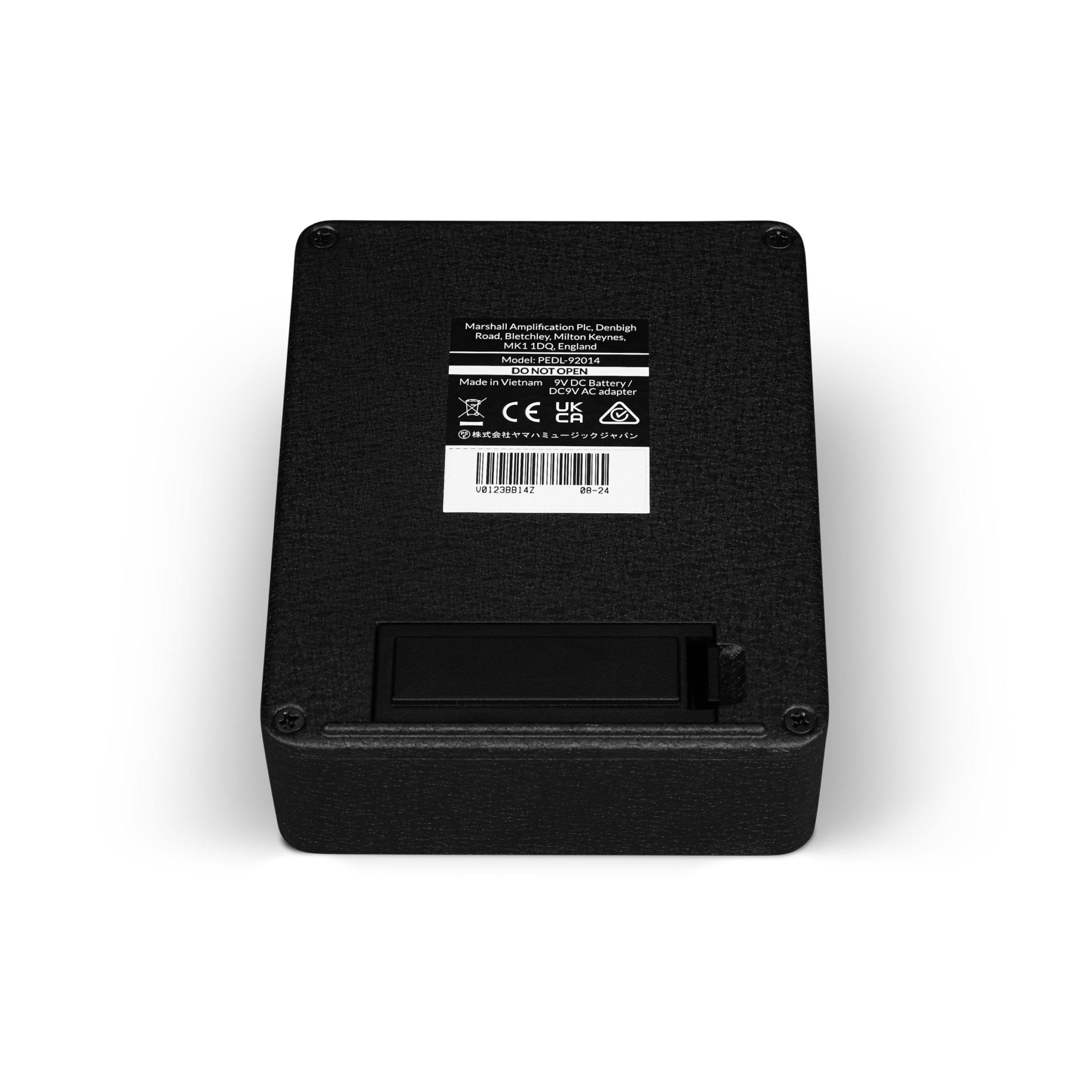
When using battery power, disconnect the input cable and remove the battery during extended periods of storage to reduce drain and prevent leakage.
Suggested Pedalboard Placement
A useful starting signal chain is:
Guitar → Tuner → Compressor → Wah → JCM900 Pedal → Modulation → Delay → Reverb → Amplifier
Placing the JCM900 before delay and reverb allows the repeats and ambience to remain clearer.
The pedal can also be placed after a boost or lower-gain overdrive when additional saturation is required. Stacking multiple drive pedals increases gain and noise, so output levels should be balanced carefully.
Comparison with Other Marshall Drive Pedals
Marshall JCM900 Pedal
The JCM900 provides hard-diode clipping, an adjustable midrange Contour and an aggressive response positioned between the brightness of a JCM800 and the fuller character of a DSL.
It is particularly suited to 1990s rock, hard rock, punk, grunge and high-gain lead playing.
Marshall JCM800 Pedal
The JCM800 offers a brighter and more cutting response with the direct attack associated with the classic 2203 amplifier.
It is the stronger choice for players prioritising traditional hard-rock crunch and prominent upper midrange.
Marshall DSL Pedal
The DSL provides a fuller and more bottom-heavy response with broad modern-rock versatility.
It suits players looking for thicker bass, modern saturation and a more contemporary Marshall voice.
Marshall JVM Pedal
The JVM offers a broad high-gain range with an integrated noise gate.
It is especially useful for tighter modern rhythm tones and players who require onboard noise reduction, while the JCM900 provides a distinctive hard-clipped response and dedicated Contour control.
Frequently Asked Questions
Is the Marshall JCM900 an overdrive or distortion pedal?
It covers both. Lower Gain settings provide gritty overdrive and crunch, while higher settings produce saturated high-gain distortion.
What does the Contour control do?
Contour adjusts the post-distortion EQ scoop.
It allows the midrange to be shaped from a fuller, more prominent response to a more scooped high-gain sound.
How does the Tone control work?
The Tone control applies a post-distortion high-frequency roll-off.
Lower settings sound brighter and more cutting, while higher settings produce a rounder and smoother response.
Is the pedal true bypass?
Yes. The guitar signal bypasses the active effect circuit when the pedal is switched off.
Does it include a noise gate?
No. The JCM900 Pedal does not include an integrated noise gate.
Players requiring onboard gating should consider the Marshall JVM Pedal or use a separate noise-suppression pedal.
Can it be used with a clean amplifier?
Yes. It can provide the primary overdrive and distortion sound through a clean amplifier channel.
Can it boost an already driven amplifier?
Yes. Reduce Gain and increase Volume to push the amplifier’s preamp harder.
Can it operate from a battery?
Yes. It accepts one standard 9V PP3 battery and provides approximately 30 hours of operation.
Which external power supply does it require?
Use a regulated 9V DC, centre-negative supply with a 5.5mm x 2.1mm connector and at least 25mA of available current.
Can it be connected to an amplifier’s effects loop?
The JCM900 is designed primarily for placement before the amplifier’s main instrument input.
Overdrive and distortion pedals generally interact most naturally with the amplifier’s preamp when connected this way.
Does it work with bass guitar?
The pedal is designed and voiced for electric guitar. Bass players who need to retain the full low-frequency range should use a dedicated bass overdrive or distortion pedal.
Fair Deal Music Verdict
★★★★★ 5/5
The Marshall JCM900 Pedal is a convincing and highly usable recreation of the aggressive drive character that helped define a generation of rock guitar.
Its hard-diode clipping provides firm attack and powerful saturation, while the Contour control offers far more control over the midrange than a basic one-knob distortion circuit. The distinctive Tone control also makes it easy to move between cutting rhythm sounds and smoother, rounder lead tones.
With a broad gain range, independent output control, true-bypass switching and flexible battery or external-power operation, it works equally well as a primary distortion sound or as an additional gain stage for a driven amplifier.
For rock, punk, grunge and hard-rock players looking for classic JCM900 character in a practical pedalboard format, it is an outstanding choice.
Why Buy From Fair Deal Music?
Choosing Fair Deal Music means buying from a passionate team of musicians who genuinely understand the products we sell. Whether you’re purchasing your first instrument, upgrading your current setup or searching for something special, we’re here to help you make the right choice with friendly advice and expert support.
When you shop with Fair Deal Music, you can buy with confidence thanks to:
-
Expert advice from knowledgeable musicians
-
Carefully checked new, used, pre-owned and ex-display equipment
-
Competitive prices on leading music brands
-
Secure UK-wide delivery
-
Flexible finance options available, subject to status
-
Friendly support before and after your purchase
-
A trusted independent UK music retailer with decades of experience
Trade In. Trade Up. Save More.
Thinking about upgrading? Your next piece of gear could cost less than you think. We’re always happy to consider part exchanges and trade-ins on a wide range of musical instruments and equipment. Whether you’re looking to trade a guitar, amplifier, keyboard, drum kit, pedal or studio equipment, our team can provide a fair, no-obligation valuation and help make your next upgrade more affordable.
Contact our team or visit the Fair Deal Music Birmingham showroom to discuss your equipment and discover how much you could save.
If you have any questions, you are always welcome to contact us. We'll get back to you as soon as possible, within 24 hours on weekdays.
-
Shipping Information
Use this text to answer questions in as much detail as possible for your customers.
-
Customer Support
Use this text to answer questions in as much detail as possible for your customers.
-
FAQ’s
Use this text to answer questions in as much detail as possible for your customers.
-
Contact Us
Use this text to answer questions in as much detail as possible for your customers.
Good to Know
How long is the warranty period?
For new products, you will get the full manufacturer warranty. For our second-hand products, we will cover any fault within 4 weeks of the purchase of any guitar. For pianos, that will be extended to 3 months.
What is the estimated delivery time?
We use the 24hr delivery in UK mainlands if it can be delivered by post. For Scotland and Wales, it depends on the area and the distance from our warehouse, but our aim is to get you order to your hands as soon as possible.
For products that cannot be posted, we will arrange the delivery with you to suit your schedule and deliver it to you
Do you offer international shipping?
We usually can ship instruments worldwide. Please get in touch to get a quote
What is the maintinance on your USED products?
- Guitars: Every guitar will be setup to a high playing standard before shipping. The electronics are checked and if there is any issue with guitar, it will be fixed.
- Pianos: Every piano is fully tested to make sure it's fully functional, cleaned, and if it's digital, a facroty reset is performed.
Do you offer assembly and installation?
We offer installation and assembly for pianos, drum kits, or any products that require it for and extra charge. Please get in touch so we can provide you with a quote.