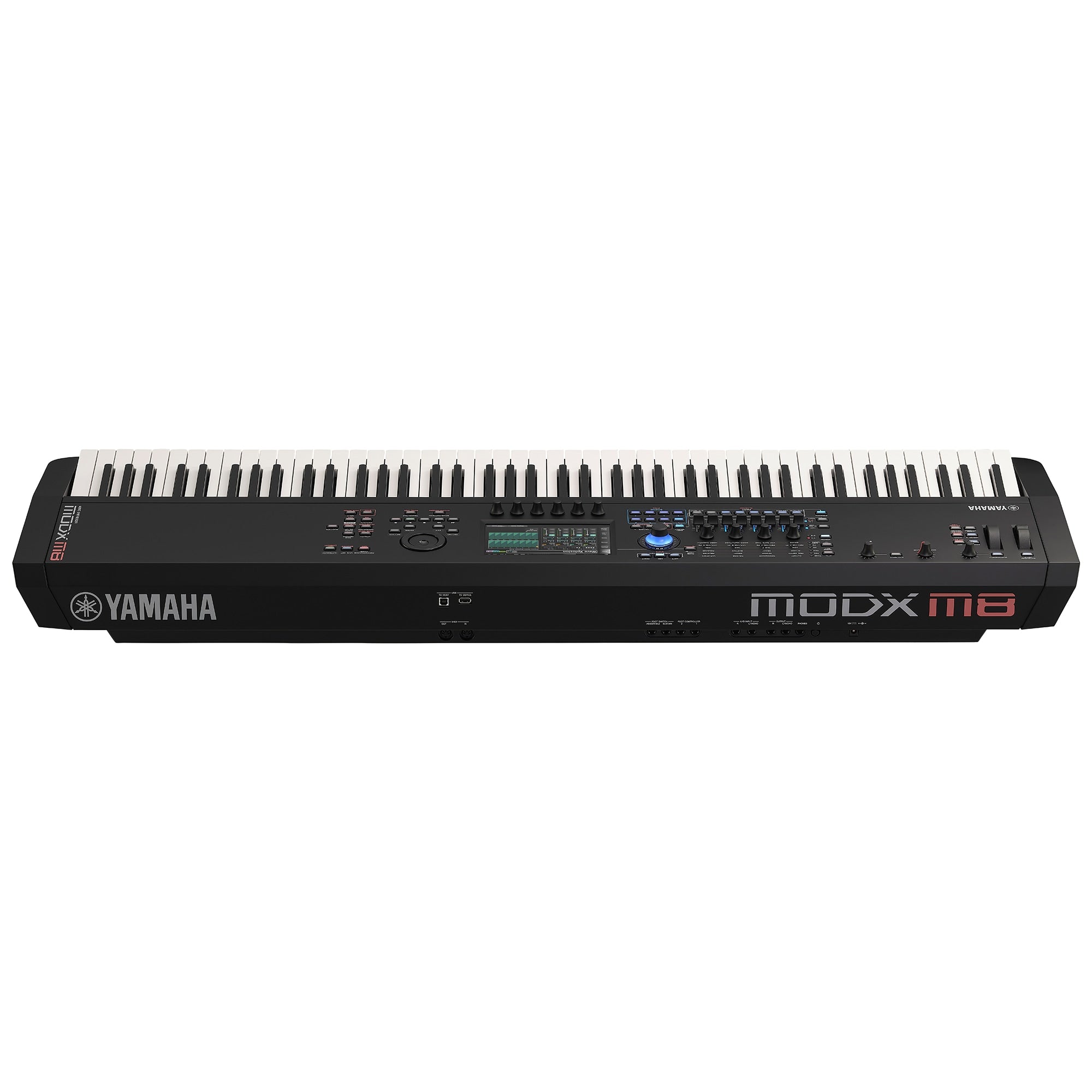

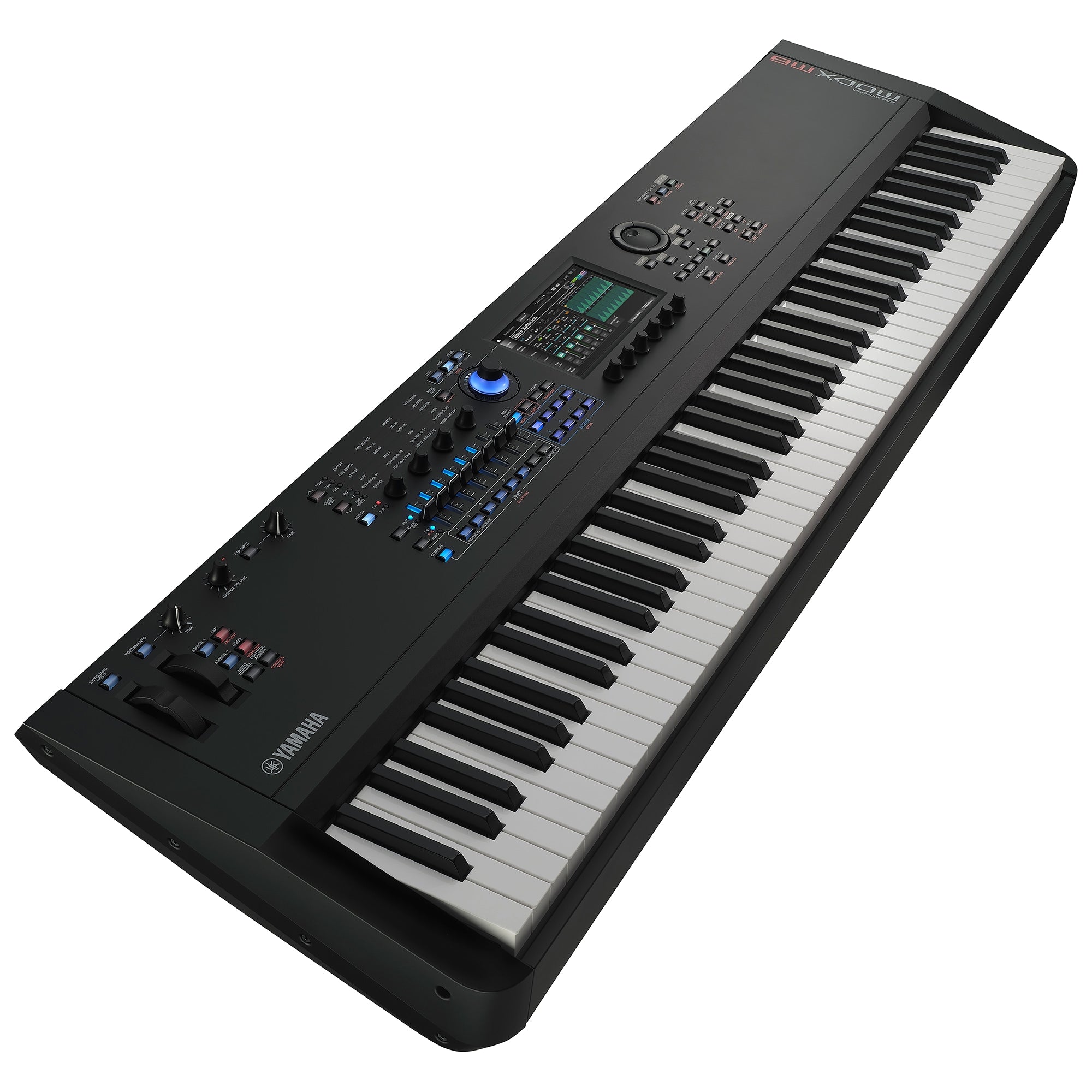
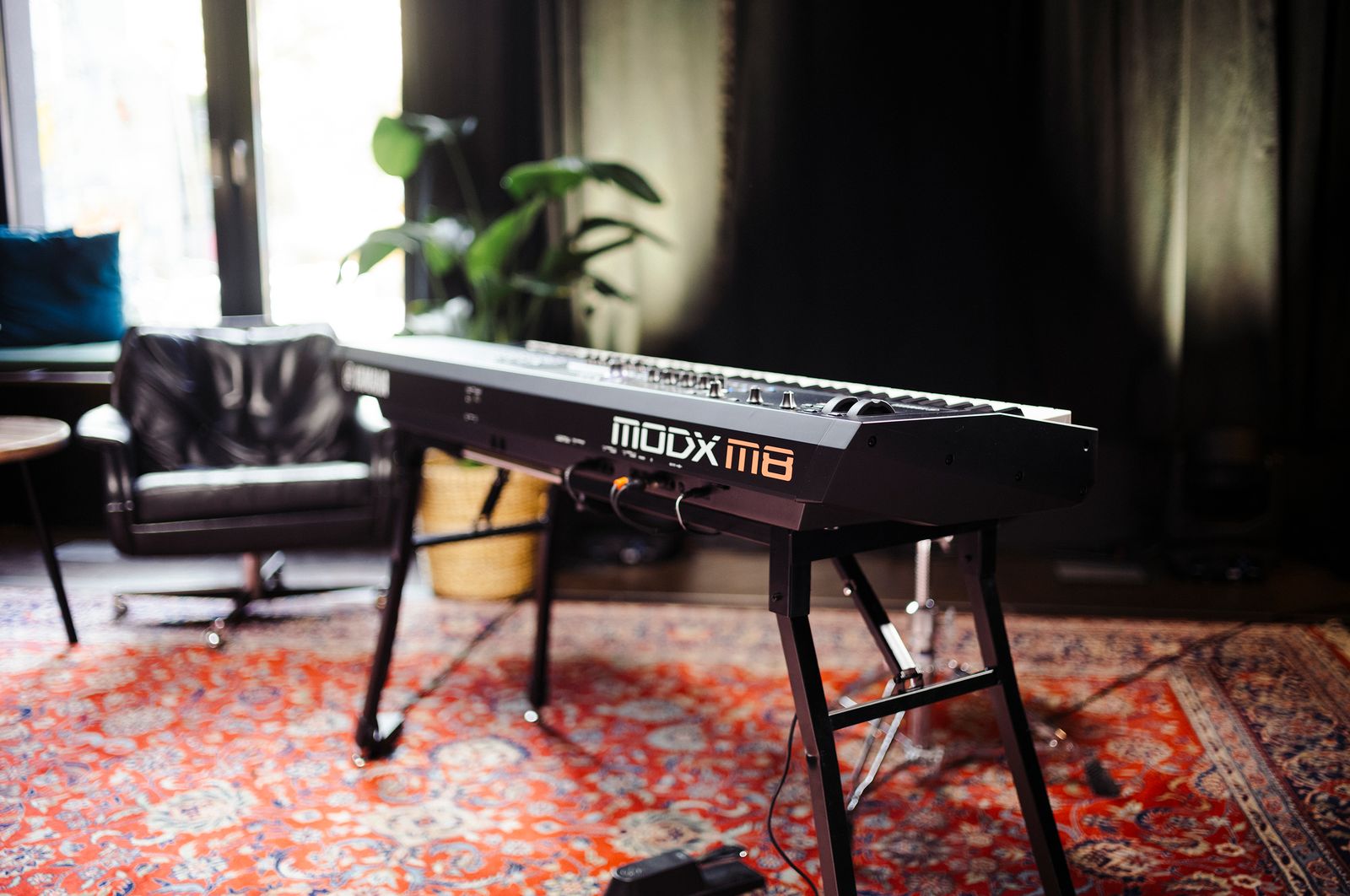
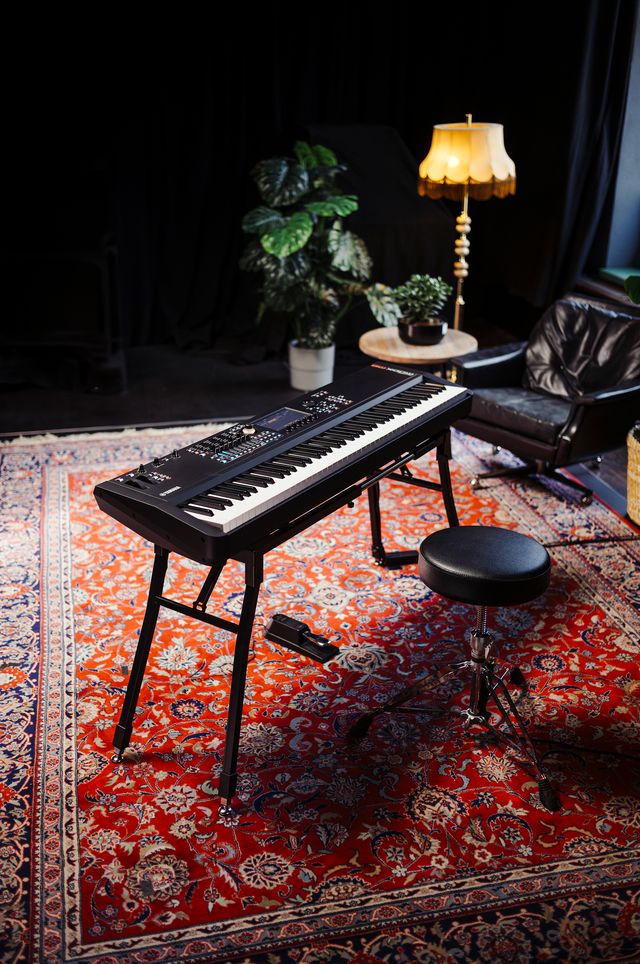


Yamaha MODX M8 Synthesizer with 88-note Keyboard
Pairs well with
Yamaha MODX M8 Synthesizer with 88-note Keyboard
Description

INTRODUCTION
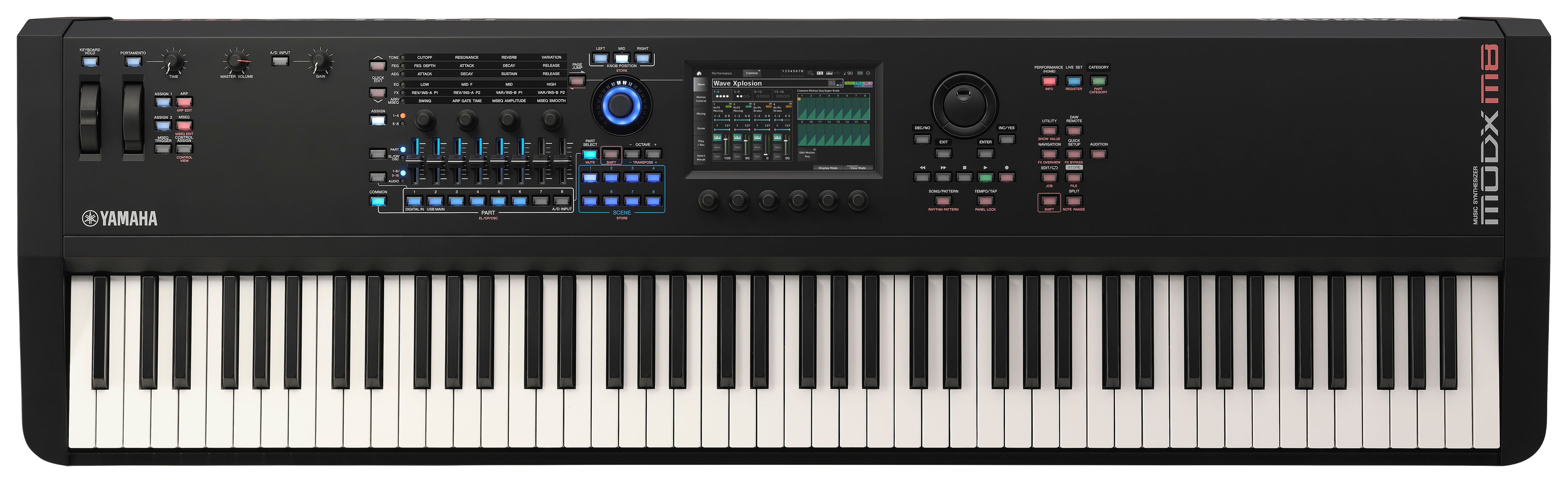
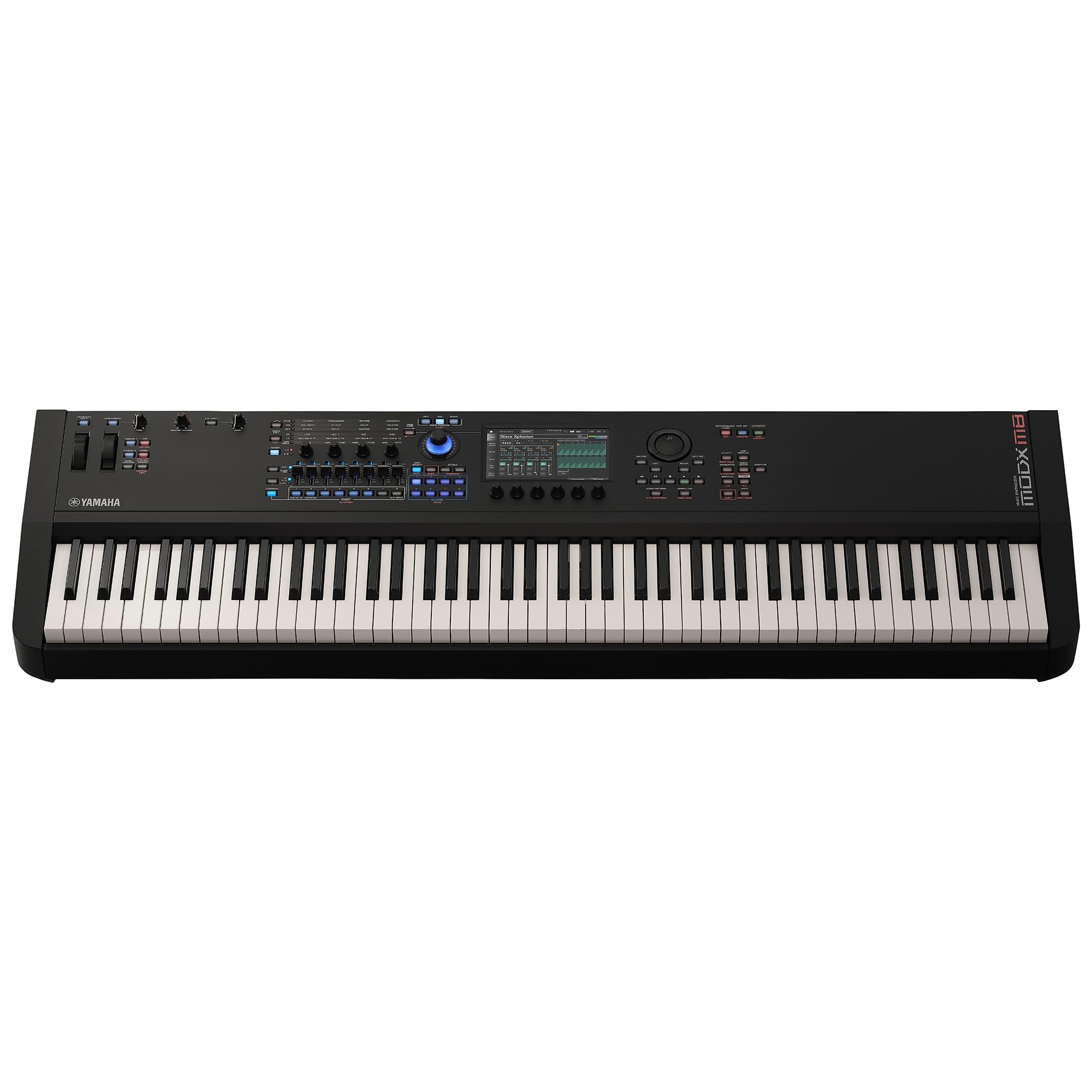
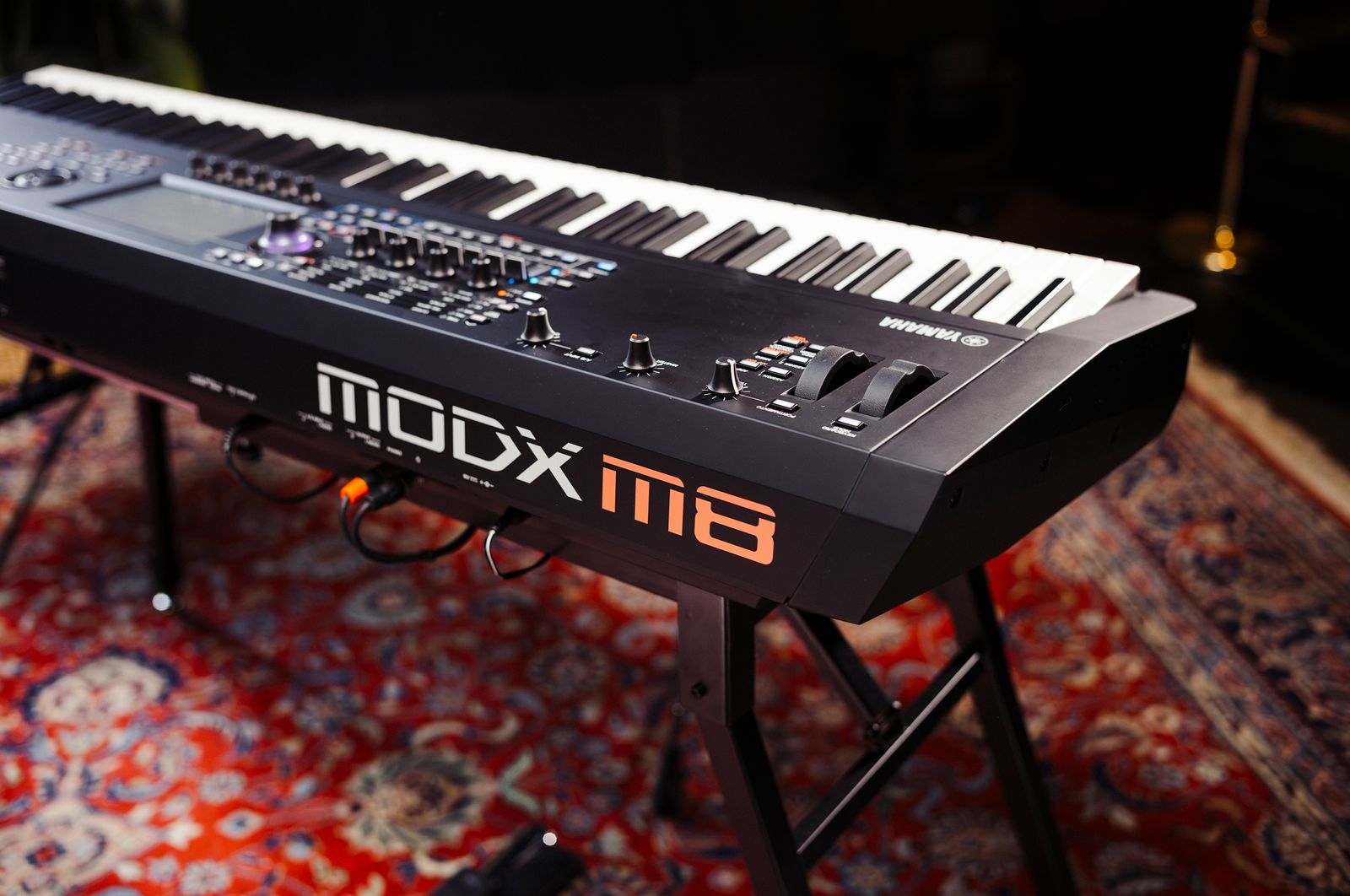
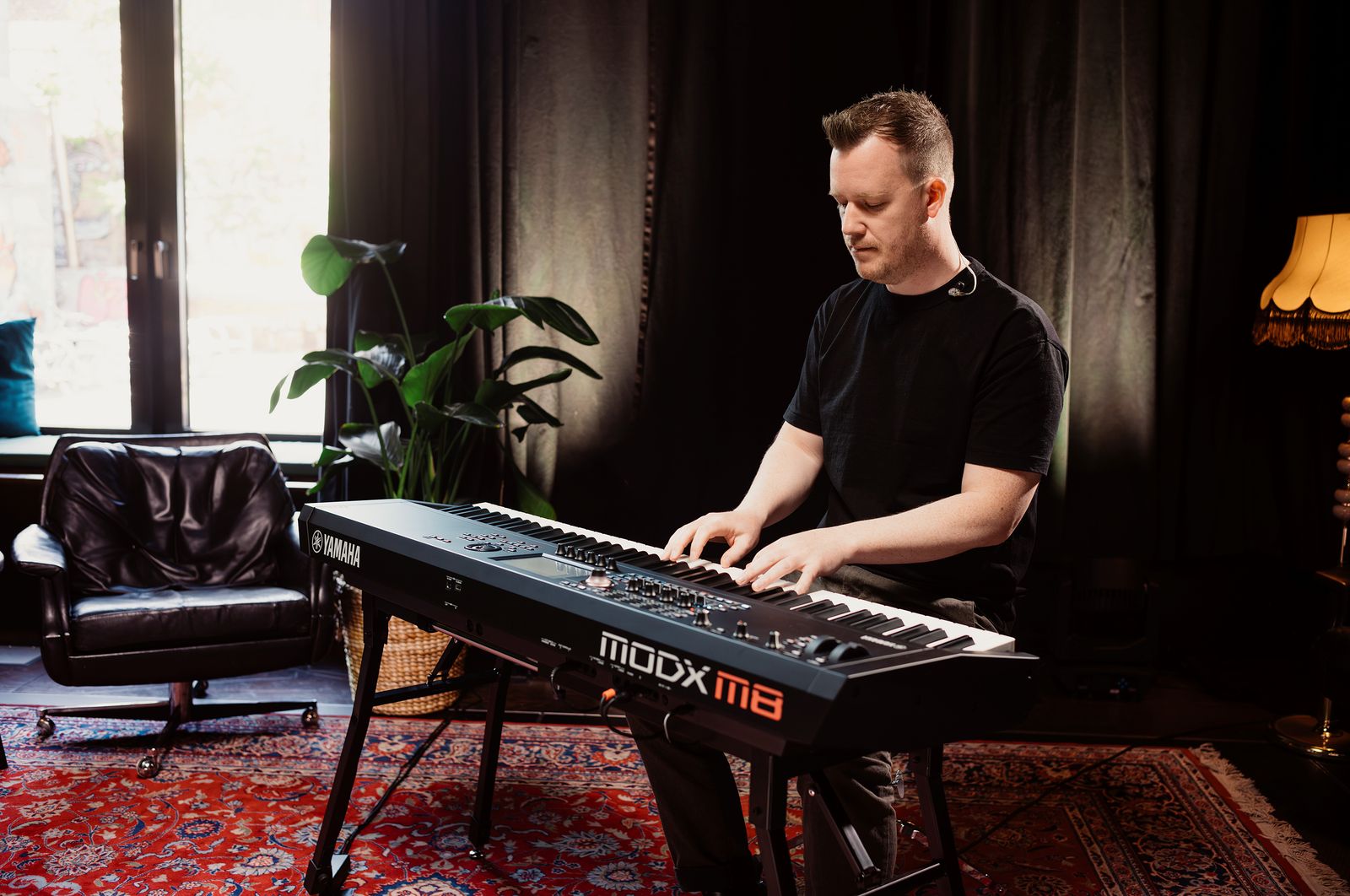
The Yamaha MODX M8 is the 88-note weighted model in Yamaha’s latest MODX M synthesizer family, combining a piano-friendly Graded Hammer Standard (GHS) keyboard with powerful technology derived from the flagship MONTAGE M platform.
At its heart is Yamaha’s Motion Control Synthesis Engine, bringing together three distinct sound engines:
-
AWM2 sample-based synthesis
-
FM-X 8-operator FM synthesis
-
AN-X virtual-analogue synthesis
This represents a major development over the previous MODX+ generation, adding AN-X alongside a dramatically expanded AWM2 architecture capable of up to 128 Elements per Part.
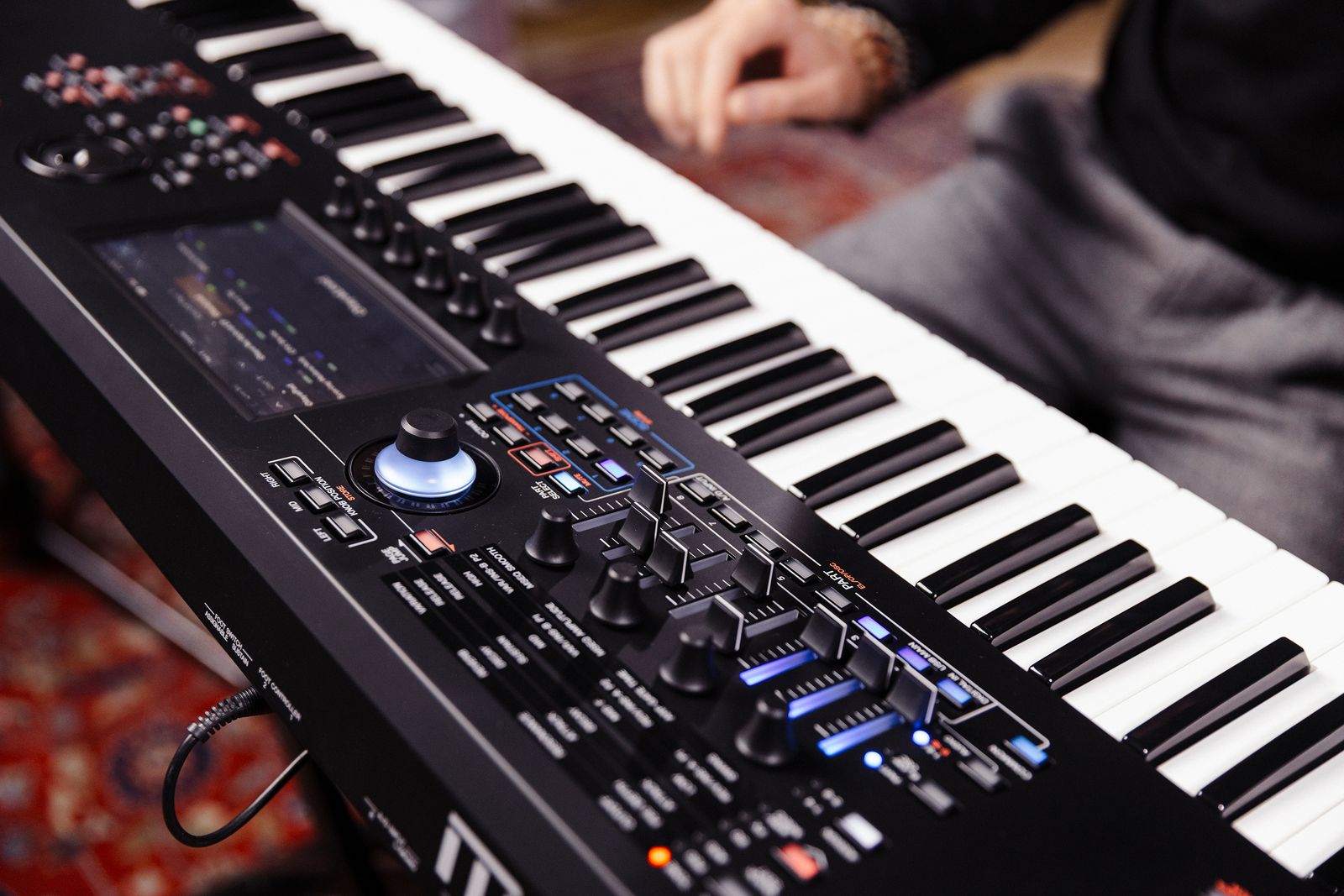
The MODX M8 provides up to 268 notes of total polyphony across its three engines: 128 AWM2, 128 FM-X and 12 AN-X. Add high-resolution controls, Super Knob, dedicated Part and Scene controls, eight faders, a colour touchscreen, sophisticated Motion Control and multi-channel USB audio/MIDI, and the result is a remarkably capable stage and studio instrument.
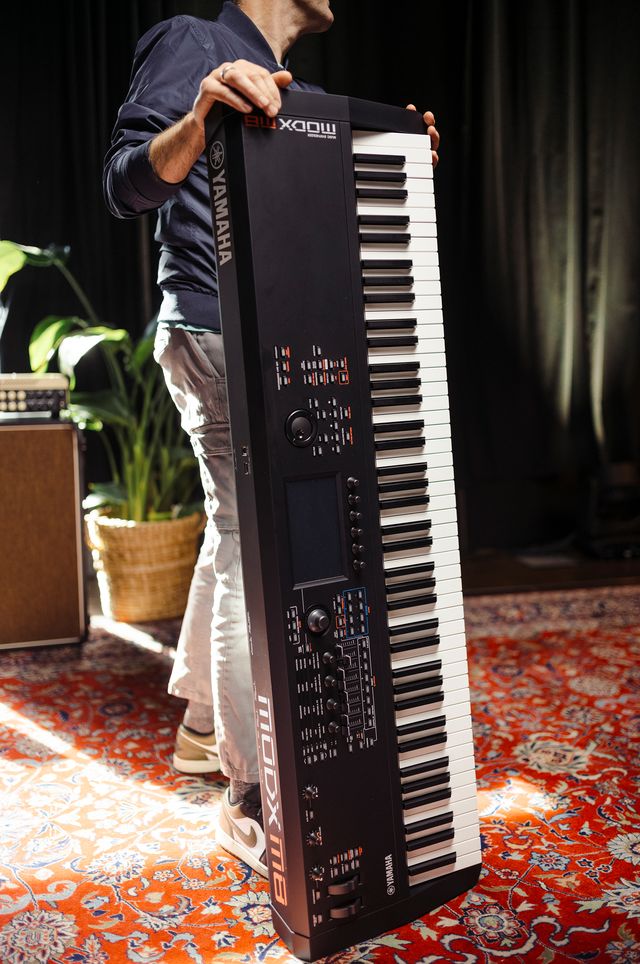
What makes the M8 particularly interesting is the physical format. Its 88-note GHS weighted keyboard gives pianists the graded resistance expected from a digital piano-style action, yet the complete instrument weighs only 13.6kg.
For pianists, performers, producers and composers who want a full 88-note weighted keyboard without giving up serious synthesis, sound design and computer integration, the MODX M8 occupies an unusually versatile position.
QUICK PRODUCT SUMMARY
The Yamaha MODX M8 is an 88-note weighted music synthesizer combining Yamaha’s GHS keyboard with the latest MODX M Motion Control platform.
Its three sound engines are:
-
AWM2
-
FM-X
-
AN-X
Maximum polyphony is:
-
128 notes AWM2
-
128 notes FM-X
-
12 notes AN-X
-
268 notes total across the three engines
Other highlights include:
-
Up to 128 Elements per AWM2 Part
-
16 internal Parts
-
Motion Control
-
Super Knob
-
Dedicated Part and Scene controls
-
High-resolution controllers
-
8 faders
-
4 knobs
-
6 display knobs
-
Colour touchscreen
-
Stereo A/D input
-
Multi-channel USB audio
-
USB MIDI 2.0
-
Expanded Softsynth Plugin integration
-
88-note GHS weighted keyboard
-
Compact 13.6kg design
It is an excellent choice for players who want weighted 88-note control and serious synthesis without the size and weight of a flagship 88-note workstation.
AT A GLANCE
| Key Detail | Information |
|---|---|
| Product | Yamaha MODX M8 |
| Product Type | Music Synthesizer |
| Number of Keys | 88 |
| Keyboard | GHS – Graded Hammer Standard |
| Initial Touch | Yes |
| Aftertouch | No |
| Sound Engines | AWM2 / FM-X / AN-X |
| AWM2 Elements | Up to 128 per Part |
| AWM2 Polyphony | 128 notes max. |
| FM-X Polyphony | 128 notes max. |
| AN-X Polyphony | 12 notes max. |
| Combined Maximum | 268 notes across the three engines |
| Internal Parts | 16 |
| Motion Control | Yes |
| Super Knob | Yes |
| USB MIDI | MIDI 2.0 |
| USB Audio | Multi-channel |
| Width | 1,310mm |
| Height | 152mm |
| Depth | 391mm |
| Weight | 13.6kg |
| Condition | New |
KEY FEATURES
-
Latest-generation Yamaha MODX M synthesizer
-
88-note GHS weighted keyboard
-
Initial Touch
-
AWM2 sound engine
-
FM-X sound engine
-
AN-X virtual-analogue sound engine
-
Up to 128 AWM2 Elements per Part
-
128-note AWM2 polyphony
-
128-note FM-X polyphony
-
12-note AN-X polyphony
-
Up to 268 notes total across all three engines
-
16 internal Parts
-
Motion Control Synthesis Engine
-
Super Knob
-
Motion Sequences
-
Envelope Follower
-
Dedicated Part and Scene Selection
-
High-resolution controllers
-
8 faders
-
4 knobs
-
6 display knobs
-
Pitch Bend
-
Modulation Wheel
-
Colour touchscreen
-
Stereo A/D input
-
Two insertion effects for A/D input
-
USB MIDI 2.0
-
Multi-channel USB audio
-
Expanded Softsynth Plugin integration
-
Compact 88-note chassis
-
Approx. 13.6kg
WHY YOU’LL LOVE IT
The MODX M8 does something that is surprisingly difficult to find in one instrument:
It combines a full 88-note weighted keyboard with a genuinely deep synthesizer architecture while remaining highly portable for its class.
You get the physical benefits of GHS:
-
Weighted keys
-
Graded resistance
-
Full piano range
but underneath the keyboard is an instrument capable of:
sample-based synthesis
8-operator FM
virtual analogue
Motion Control
multi-Part Performances
arpeggiation
real-time sound transformation
and
deep DAW integration.
At just 13.6kg, the MODX M8 is particularly appealing for musicians who need to move an 88-note instrument regularly.
88-NOTE GHS WEIGHTED KEYBOARD
The MODX M8 uses Yamaha’s:
Graded Hammer Standard – GHS – keyboard.
It provides:
-
88 keys
-
Initial Touch
-
Weighted action
-
Graded resistance across the keyboard
The lower register feels heavier, with the resistance becoming progressively lighter as you move towards the treble.
This makes the M8 significantly more piano-oriented than the MODX M6 and M7, which use semi-weighted FSB keyboards.
IMPORTANT AFTERTOUCH INFORMATION
The MODX M8 does not feature aftertouch.
This is an important distinction when comparing it with Yamaha’s flagship MONTAGE M instruments.
The MODX M8 provides:
-
Initial Touch
-
GHS weighted action
-
No Channel Aftertouch
-
No Polyphonic Aftertouch
Players specifically requiring aftertouch should consider the MONTAGE M range.
THREE SOUND ENGINES
The MODX M generation brings together three different synthesis engines:
AWM2
Advanced sample-based synthesis.
FM-X
8-operator frequency-modulation synthesis.
AN-X
Virtual-analogue synthesis.
This makes MODX M considerably more than a sample-playback keyboard.
The three engines can be incorporated into sophisticated multi-Part Performances and manipulated through Yamaha’s Motion Control architecture.
AWM2
AWM2 – Advanced Wave Memory 2 handles sample-based synthesis.
The new MODX M architecture allows an AWM2 Part to use up to:
128 Elements.
This is a major increase over the previous MODX+ generation, which supported up to eight Elements per AWM2 Part.
The additional Elements allow substantially more sophisticated:
-
Velocity layers
-
Articulations
-
Sample switching
-
Key ranges
-
Dynamic changes
-
Sound-design structures
AWM2 is particularly useful for:
-
Acoustic pianos
-
Electric pianos
-
Strings
-
Brass
-
Woodwind
-
Guitars
-
Bass
-
Percussion
-
Orchestral sounds
-
Hybrid instruments
128-NOTE AWM2 POLYPHONY
The AWM2 engine provides up to:
128 notes of polyphony
for Preset and User Waveform Parts.
This provides substantial capacity for complex layers, sustained sounds and multi-Part Performances.
FM-X
FM-X is Yamaha’s sophisticated modern FM synthesis engine.
It provides:
-
8 Operators
-
88 Algorithms
-
Up to 128-note polyphony
FM-X is capable of producing:
-
Electric pianos
-
Bells
-
Metallic textures
-
Digital bass
-
Leads
-
Pads
-
Percussion
-
Evolving soundscapes
-
Complex experimental sounds
FM-X can also interact with Yamaha’s Motion Control environment for highly dynamic sound design.
AN-X
One of the biggest additions to the MODX M generation is:
AN-X.
This is Yamaha’s virtual-analogue synthesis engine derived from the technology introduced with MONTAGE M.
Each AN-X Part provides:
-
3 Oscillators
-
1 Noise source
with up to:
12-note polyphony.
AN-X ANALOGUE SOUND DESIGN
AN-X is designed to create expressive analogue-style sounds.
Its architecture includes features such as:
-
Two filters
-
10 filter types
-
Pulse Width Modulation
-
Oscillator Self Sync
-
Ring Modulation
-
FM
-
Wave Shaper
-
Wave Folder
-
Voltage Drift
-
Ageing behaviour
The Voltage Drift and Ageing parameters allow AN-X to introduce behaviour inspired by the inconsistencies of vintage analogue synthesizers.
This gives sound designers a way to move away from perfectly static digital oscillators and towards more organic analogue-style movement.
268 NOTES TOTAL POLYPHONY
Across its three engines, Yamaha specifies up to:
268 notes of total polyphony.
This comprises:
AWM2: 128 notes
FM-X: 128 notes
AN-X: 12 notes
It is worth understanding that these are separate engine allocations rather than one interchangeable 268-note pool.
16-PART ARCHITECTURE
MODX M provides:
16 internal Parts
alongside audio input Parts.
This allows sophisticated Performances to combine:
-
Acoustic instruments
-
Synth Parts
-
FM-X sounds
-
AN-X sounds
-
Drum Parts
-
Arpeggios
-
Splits
-
Layers
-
External audio
within one Performance architecture.
MOTION CONTROL SYNTHESIS ENGINE
Yamaha’s Motion Control Synthesis Engine allows sounds to develop and change dynamically while you play.
Motion Control incorporates technologies including:
-
Motion Sequences
-
Super Knob
-
Envelope Follower
-
Controller assignments
Instead of simply switching between static sounds, the system allows multiple parameters to evolve together.
MOTION SEQUENCES
Motion Sequences can automatically manipulate synthesis and effects parameters in synchronisation with tempo.
This can be used to create:
-
Rhythmic filter movement
-
Dynamic panning
-
Evolving textures
-
Pulsing effects
-
Timbral changes
-
Automated synthesis movement
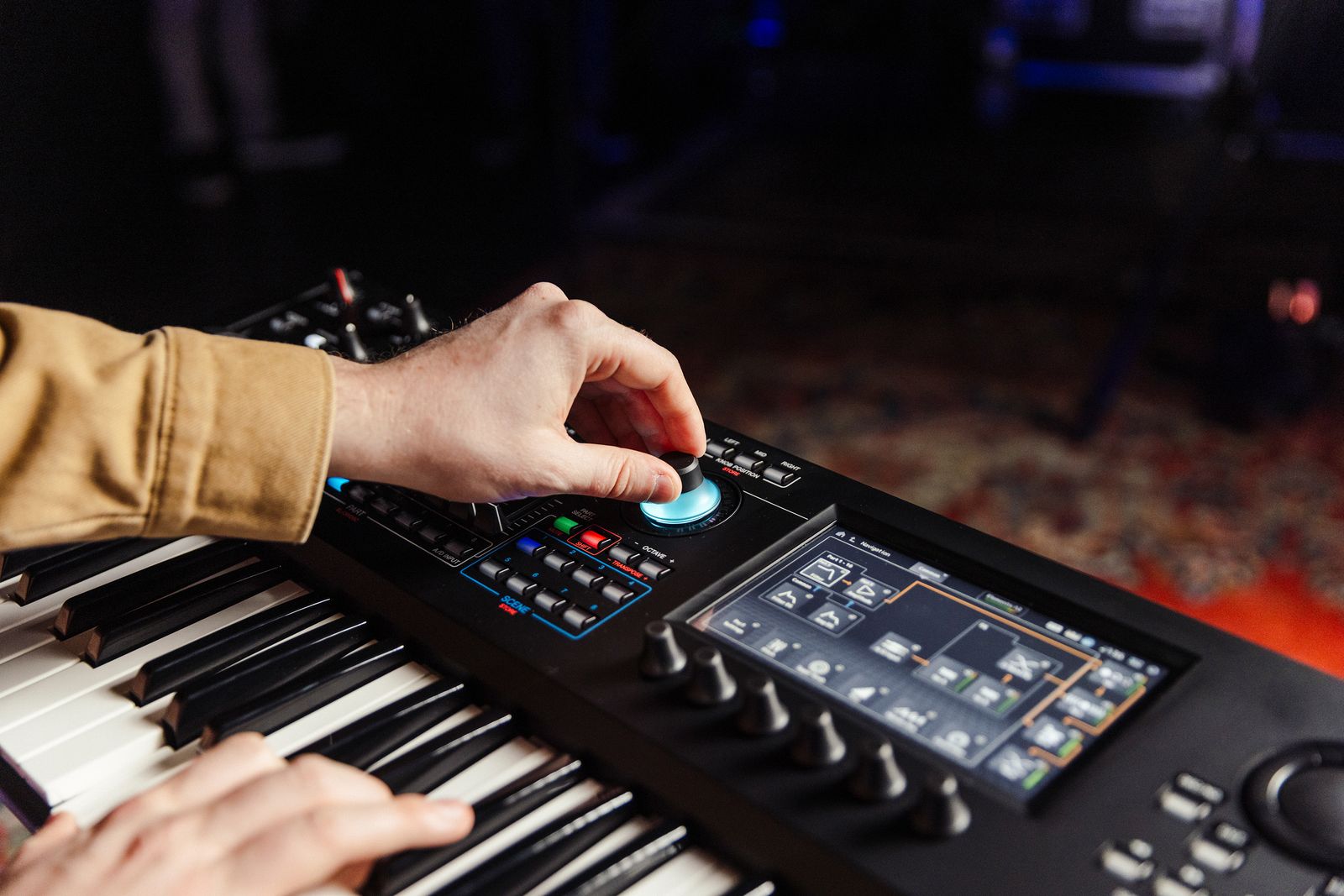
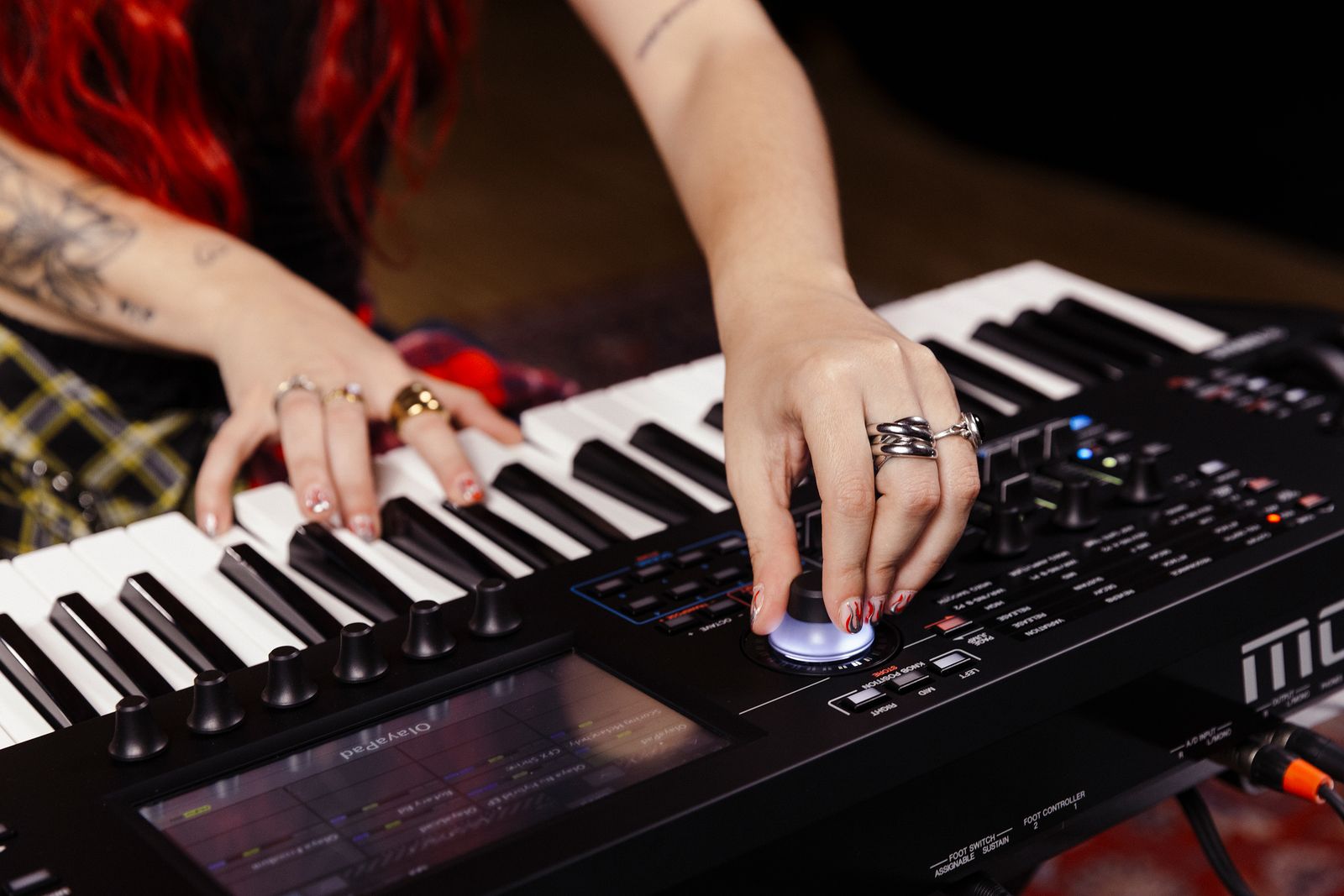
SUPER KNOB
The Super Knob is one of Yamaha’s signature Motion Control features.
It can manipulate multiple parameters simultaneously.
One movement can potentially:
-
Change Part levels
-
Open filters
-
Adjust effects
-
Modify FM parameters
-
Transform AN-X sounds
-
Change the balance between layers
-
Morph an entire Performance
ENVELOPE FOLLOWER
The Envelope Follower allows audio from another Part or the A/D input to become a modulation source.
This means one sound can dynamically influence another, opening up sophisticated rhythmic and sound-design possibilities.
HIGH-RESOLUTION CONTROL
MODX M introduces high-resolution operation across important controllers and the sound engine.
Yamaha identifies:
-
Knobs
-
Super Knob
-
Pitch Bend
-
Modulation Wheel
-
Sound Engine
as benefiting from higher-resolution control.
The result is smoother parameter movement than on previous MODX generations.
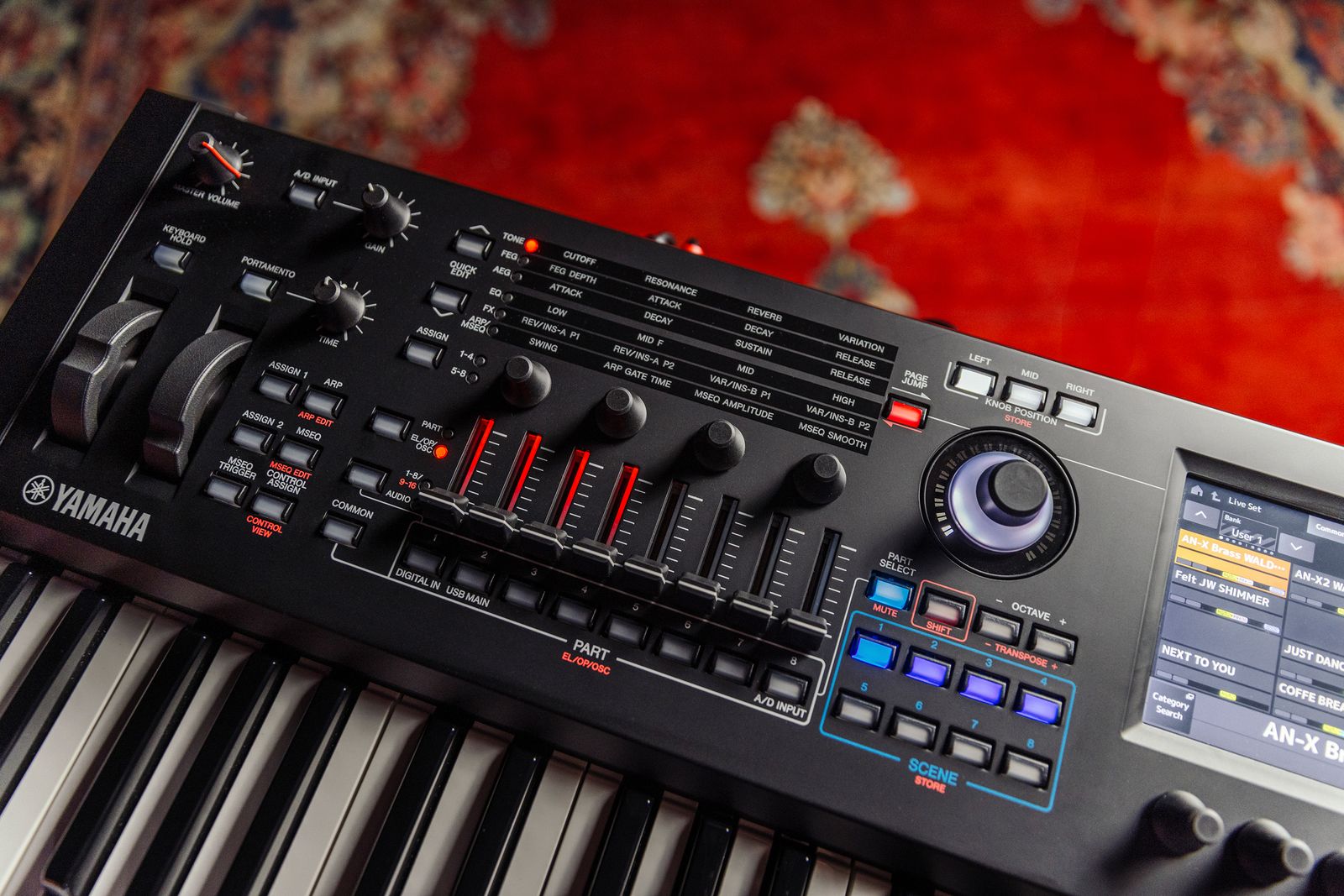
DEDICATED PART & SCENE CONTROLS
MODX M provides dedicated:
Part and Scene Selection buttons
for controlling up to eight Parts per Performance directly from the front panel.
This is particularly useful on stage.
It allows quicker access to:
-
Parts
-
Scenes
-
Performance variations
-
Live sound changes
without relying entirely on touchscreen navigation.
8 FADERS
The MODX M control surface provides:
8 Faders.
These can give direct physical control over important Performance parameters and Part levels.
For live use and mixing complex Performances, having eight physical faders is a significant practical improvement.
4 KNOBS
Four physical control knobs provide additional hands-on parameter access.
6 DISPLAY KNOBS
Six Display Knobs work alongside the touchscreen interface, giving quicker physical access to parameters shown on screen.
COLOUR TOUCHSCREEN
The MODX M uses a colour touchscreen as the centre of its user interface.
It provides access to functions including:
-
Performance selection
-
Editing
-
Mixing
-
Sound design
-
Motion Control
-
Utility functions
-
System settings
The combination of touchscreen, display knobs and dedicated physical controls helps reduce dependence on menu diving.
STEREO A/D INPUT
The MODX M includes a stereo:
A/D Input
for connecting external audio sources.
Yamaha also provides:
two insertion effects
for the A/D input.
This allows external instruments or other suitable audio sources to become part of the MODX M Performance and processing environment.
USB MIDI 2.0
MODX M supports:
USB MIDI 2.0.
This gives the new generation a more advanced foundation for communication with compatible computer-based music systems.
MULTI-CHANNEL USB AUDIO INTERFACE
The MODX M also functions as a multi-channel USB audio interface.
At:
44.1kHz
Yamaha specifies:
4 input channels
and
10 output channels.
This can substantially simplify a studio setup.
Instead of requiring a separate audio interface for basic production workflows, MODX M can send and receive multiple audio channels directly over USB.
EXPANDED SOFTSYNTH PLUGIN – ESP
Registered MODX M owners can access Yamaha’s:
Expanded Softsynth Plugin – ESP for MODX M.
ESP replicates the MODX M environment inside a compatible DAW.
This allows users to:
-
Create Performances
-
Edit sounds
-
Mix
-
Work away from the hardware
-
Save software settings within DAW projects
-
Recall projects more easily
It creates a much tighter relationship between the hardware synthesizer and computer-based production.
OS V3.0
Yamaha’s current MODX M OS v3.0 significantly expands the platform.
Updates include:
-
Expanded Softsynth Plugin support
-
Additional effect types
-
New Clavi waveforms
-
New Performances
-
Additional AN-X and FM-X Part LFO destinations
-
ESP Control in DAW Remote
-
Updated DAW Remote controller assignments
-
Scene Note Limit
-
Scene Note Shift
-
External Part support
-
Live Set workflow improvements
This ongoing OS development adds useful capabilities beyond the original MODX M launch specification.
WHO IS IT FOR?
The Yamaha MODX M8 is particularly well suited to:
-
Pianists who also need deep synthesis
-
Professional keyboardists
-
Gigging musicians
-
Producers
-
Composers
-
Film and media composers
-
Studio musicians
-
Sound designers
-
Electronic musicians
-
Musical directors
-
Worship musicians
-
Session players
-
Players who want an 88-note weighted synthesizer
-
Musicians wanting a relatively lightweight 88-note instrument
-
MODX8 and MODX8+ owners considering an upgrade
PLAYING STYLES & APPLICATIONS
The MODX M8 is exceptionally versatile for:
-
Acoustic piano
-
Electric piano
-
Strings
-
Orchestral sounds
-
Pads
-
Synth leads
-
Synth bass
-
Electronic music
-
Pop
-
Rock
-
Jazz
-
Fusion
-
Gospel
-
R&B
-
Worship
-
Ambient music
-
Cinematic scoring
-
Film composition
-
Sound design
-
Studio production
-
Live performance
MODX M8 VS MODX8+
The MODX M8 represents a substantial development from the previous MODX8+.
MODX8+
-
88-note GHS keyboard
-
Initial Touch
-
AWM2 + FM-X
-
8 Elements per AWM2 Part
-
128-note AWM2 polyphony
-
128-note FM-X polyphony
-
No AN-X
-
Approx. 13.8kg
MODX M8
-
88-note GHS keyboard
-
Initial Touch
-
AWM2 + FM-X + AN-X
-
Up to 128 Elements per AWM2 Part
-
128-note AWM2 polyphony
-
128-note FM-X polyphony
-
12-note AN-X polyphony
-
High-resolution control
-
Dedicated Part/Scene controls
-
8 faders
-
USB MIDI 2.0
-
ESP integration
-
Approx. 13.6kg
The addition of AN-X and the jump from eight to as many as 128 AWM2 Elements per Part are particularly significant developments.
MODX M8 VS MONTAGE M8x
These instruments share Yamaha’s current three-engine synthesis concept, but they occupy different positions.
MODX M8
-
88-note GHS
-
Initial Touch
-
No Aftertouch
-
AWM2 + FM-X + AN-X
-
128-note AWM2 polyphony
-
128-note FM-X polyphony
-
12-note AN-X polyphony
-
13.6kg
MONTAGE M8x
-
88-note GEX
-
Initial Touch
-
Polyphonic Aftertouch
-
AWM2 + FM-X + AN-X
-
Up to 256-note AWM2 polyphony
-
Up to 128-note FM-X polyphony
-
Up to 16-note AN-X polyphony
-
Flagship control and connectivity
-
28.1kg
The MONTAGE M8x is the flagship choice where keyboard action, Polyphonic Aftertouch, maximum synthesis resources and extensive professional control are the priority.
The MODX M8 offers a very different advantage:
13.6kg versus 28.1kg.
For players carrying their own 88-note keyboard regularly, that difference is enormous.
MODX M8 VS MODX M7
Both share the same MODX M synthesis architecture.
The major difference is the keyboard.
MODX M8
-
88 keys
-
GHS weighted action
-
1,310mm wide
-
13.6kg
MODX M7
-
76 keys
-
Semi-weighted FSB action
-
1,089mm wide
-
7.6kg
Choose the M8 if weighted piano-style control and a full 88-note range matter.
Choose the M7 if faster synth-style response and significantly lower weight are priorities.
MODX M8 VS MODX M6
MODX M8
-
88-note GHS weighted keyboard
-
Full piano range
-
13.6kg
MODX M6
-
61-note semi-weighted FSB keyboard
-
Compact format
-
6.6kg
The sound architecture is shared, but the playing experience and portability are very different.
PRODUCT SPECIFICATIONS
| Specification | Yamaha MODX M8 |
|---|---|
| Product Type | Music Synthesizer |
| Number of Keys | 88 |
| Keyboard | GHS – Graded Hammer Standard |
| Initial Touch | Yes |
| Aftertouch | No |
| Sound Engines | AWM2 / FM-X / AN-X |
| AWM2 Elements | Up to 128 per Part |
| FM-X | 8 Operators / 88 Algorithms |
| AN-X | 3 Oscillators + 1 Noise |
| AWM2 Polyphony | 128 max. |
| FM-X Polyphony | 128 max. |
| AN-X Polyphony | 12 max. |
| Combined Engine Polyphony | Up to 268 notes |
| Internal Parts | 16 |
| Motion Control | Yes |
| Motion Sequences | Yes |
| Super Knob | Yes |
| Envelope Follower | Yes |
| Faders | 8 |
| Control Knobs | 4 |
| Display Knobs | 6 |
| Pitch Bend | Yes |
| Modulation Wheel | Yes |
| Dedicated Part/Scene Control | Yes |
| Colour Touchscreen | Yes |
| Stereo A/D Input | Yes |
| A/D Insertion Effects | 2 |
| USB MIDI | MIDI 2.0 |
| USB Audio at 44.1kHz | 4 in / 10 out |
| ESP Support | Yes |
| Width | 1,310mm |
| Height | 152mm |
| Depth | 391mm |
| Weight | 13.6kg |
| Condition | New |
DIMENSIONS & WEIGHT
The Yamaha MODX M8 measures approximately:
Width: 1,310mm
Height: 152mm
Depth: 391mm
Weight is approximately:
13.6kg.
That figure is one of the M8’s strongest practical advantages.
For comparison:
MODX M8: 13.6kg
MONTAGE M8x: 28.1kg
The MODX M8 is therefore approximately:
14.5kg lighter than the MONTAGE M8x.
For an 88-note instrument intended to travel between home, rehearsals, studios and venues, that is a very substantial difference.
🎵 FAIR DEAL MUSIC EXPERT VERDICT ★★★★★
Best suited for: Pianists, performers, producers and composers who want an 88-note weighted keyboard combined with Yamaha’s latest Motion Control synthesis platform, but need something significantly lighter than a flagship MONTAGE M8x.
Likely upgrade path: MODX8 and MODX8+ owners, older MOXF8 users, or digital-piano players who want to move into much deeper synthesis and stage functionality.
Useful pairings: A sturdy 88-note keyboard stand, sustain and expression pedals, the matching Yamaha SC-MODX M8 soft case, quality headphones and suitable stage or studio monitoring.
Our tip: Pay close attention to the action rather than comparing the MODX M8 and MONTAGE M8x purely by their sound engines. The MODX M8's GHS action keeps weight down dramatically, while the M8x's GEX action adds the much more sophisticated Polyphonic Aftertouch experience. For musicians moving their own equipment every week, the MODX M8's 13.6kg weight can be a decisive advantage.
FDM view: The MODX M8 is a clever combination. It provides a proper 88-note weighted playing surface, three serious synthesis engines and much of Yamaha's current Motion Control philosophy, yet weighs less than many conventional stage pianos. AN-X and the 128-Element AWM2 architecture make this generation a particularly meaningful step forward from MODX+.
WHY BUY FROM FAIR DEAL MUSIC?
When you buy from Fair Deal Music, you're choosing one of the UK's most established, independent family run music retailers since 1987.
Our keyboard and synth team can help with:
-
MODX M8 vs MODX8+ comparisons
-
MODX M8 vs MONTAGE M8x
-
MODX M8 vs stage-piano comparisons
-
Sustain and expression pedals
-
Keyboard stands
-
Cases
-
Studio integration
-
USB audio
-
MIDI setups
-
Part exchange
PART EXCHANGE / TRADE-IN
Trade In. Trade Up.
Already own a synthesizer, workstation, digital piano or stage keyboard?
Fair Deal Music welcomes part-exchange enquiries on suitable musical instruments.
Simply provide:
-
Make
-
Exact model
-
Condition
-
Included accessories
and our team can provide a no-obligation valuation towards your new Yamaha MODX M8.
FREQUENTLY ASKED QUESTIONS
How many keys does the Yamaha MODX M8 have?
88.
What keyboard action does it use?
Yamaha’s GHS – Graded Hammer Standard – weighted keyboard.
Is the keyboard graded?
Yes.
GHS provides heavier resistance in the lower register and progressively lighter resistance towards the upper register.
Does the MODX M8 have aftertouch?
No.
The MODX M8 does not provide Channel or Polyphonic Aftertouch.
Does it have the same keyboard as the MONTAGE M8x?
No.
The MODX M8 uses GHS.
The MONTAGE M8x uses Yamaha’s flagship GEX keyboard with Polyphonic Aftertouch.
What sound engines does the MODX M8 have?
Three:
-
AWM2
-
FM-X
-
AN-X
What is AWM2?
AWM2 is Yamaha’s advanced sample-based synthesis engine.
How many Elements can an AWM2 Part use?
Up to:
128 Elements.
What is FM-X?
FM-X is Yamaha’s advanced frequency-modulation engine featuring:
8 Operators and 88 Algorithms.
What is AN-X?
AN-X is Yamaha’s virtual-analogue synthesis engine.
How many oscillators does an AN-X Part provide?
Three oscillators plus one Noise source.
How much AWM2 polyphony is available?
Up to:
128 notes.
How much FM-X polyphony is available?
Up to:
128 notes.
How much AN-X polyphony is available?
Up to:
12 notes.
Why does Yamaha say 268-note total polyphony?
Because the three engines provide separate maximum allocations:
128 AWM2 + 128 FM-X + 12 AN-X = 268.
How many internal Parts are available?
16.
Does it have Motion Control?
Yes.
Does it have the Super Knob?
Yes.
Does it have Motion Sequences?
Yes.
Does it have an Envelope Follower?
Yes.
How many faders are provided?
Eight.
How many control knobs?
Four, plus six Display Knobs.
Does it have dedicated Part and Scene controls?
Yes.
Does it have a touchscreen?
Yes.
MODX M uses a colour touchscreen interface.
Does it have audio inputs?
Yes.
A stereo A/D input is provided, with two insertion effects available for external audio processing.
Does it support USB MIDI 2.0?
Yes.
Can the MODX M8 work as an audio interface?
Yes.
At 44.1kHz Yamaha specifies:
4 input channels / 10 output channels.
Does it have built-in speakers?
No.
The MODX M8 is designed for use with:
-
Headphones
-
Studio monitors
-
Keyboard amplification
-
PA systems
How wide is the MODX M8?
Approximately:
1,310mm.
How deep is it?
Approximately:
391mm.
How high is it?
Approximately:
152mm.
How much does it weigh?
Approximately:
13.6kg.
How much lighter is it than the MONTAGE M8x?
Approximately:
14.5kg lighter.
MODX M8: 13.6kg
MONTAGE M8x: 28.1kg
Is the MODX M8 lighter than the previous MODX8+?
Yes, marginally.
MODX M8: 13.6kg
MODX8+: 13.8kg
What is ESP?
ESP – Expanded Softsynth Plugin for MODX M replicates the MODX M environment within a compatible DAW, allowing Performances to be created, edited and mixed without requiring the physical keyboard throughout the entire production process.
Is ESP included for MODX M owners?
Yamaha states that ESP is available free for registered MODX M owners, subject to Yamaha's applicable registration, software and system requirements.
What is the current MODX M operating system?
Yamaha currently provides MODX M OS v3.0.
What did OS v3.0 add?
Among the additions are:
-
ESP support
-
New effects
-
New Clavi waveforms and Performances
-
Expanded AN-X and FM-X LFO destinations
-
ESP Control through DAW Remote
-
Scene Note Limit and Note Shift
-
External Part support
-
Live Set improvements
Is the MODX M8 a replacement for the MODX8+?
The MODX M8 is the current 88-note model in Yamaha's newer MODX M generation and substantially expands the architecture of the previous MODX8+, particularly through AN-X and the new 128-Element AWM2 structure.
Should I choose MODX M8 or MONTAGE M8x?
Choose the MODX M8 when you prioritise:
-
Lower weight
-
13.6kg portability
-
GHS weighted action
-
Excellent value
-
AWM2 + FM-X + AN-X
-
88-note range
Choose the MONTAGE M8x when you prioritise:
-
Flagship GEX action
-
Polyphonic Aftertouch
-
Greater synthesis resources
-
More extensive professional control
-
Flagship connectivity
-
Maximum expressive capability
WHAT’S INCLUDED?
The standard Yamaha package centres around:
-
1 × Yamaha MODX M8
-
Manufacturer-supplied power equipment
-
Yamaha documentation
-
Applicable Yamaha software/download information
Accessories such as:
-
Keyboard stand
-
Sustain pedal
-
Expression pedal
-
Case
-
Headphones
-
Amplification
should not be assumed to be included unless specifically stated by Fair Deal Music.
88 WEIGHTED KEYS. THREE SYNTH ENGINES. JUST 13.6KG.
The Yamaha MODX M8 brings together three things that rarely coexist this comfortably:
Full 88-note range.
Weighted GHS action.
Serious synthesis.
Underneath the keyboard you get:
AWM2.
FM-X.
AN-X.
128 Elements per AWM2 Part.
268 notes of combined engine polyphony.
Motion Control.
Super Knob.
Eight faders.
USB MIDI 2.0.
Multi-channel USB audio.
ESP software integration.
And Yamaha fits all of it into an 88-note instrument weighing approximately:
13.6kg.
For pianists who want to move beyond conventional stage-piano sounds and into deep synthesis without hauling a 28kg flagship keyboard, the MODX M8 makes a very strong case.
WARRANTY & CONDITIONS
3 years Yamaha warranty included. We can not offer 0% Finance on this particular product. MODX M is available upon request direct from the manufacturer and usually arrives at our warehouse within 14 days. This product is sold in the name and on behalf of Yamaha Music Europe and the Yamaha General Terms and Yamaha Data Protection Information will be applicable.
If you have any questions, you are always welcome to contact us. We'll get back to you as soon as possible, within 24 hours on weekdays.
-
Shipping Information
Use this text to answer questions in as much detail as possible for your customers.
-
Customer Support
Use this text to answer questions in as much detail as possible for your customers.
-
FAQ’s
Use this text to answer questions in as much detail as possible for your customers.
-
Contact Us
Use this text to answer questions in as much detail as possible for your customers.
Good to Know
How long is the warranty period?
For new products, you will get the full manufacturer warranty. For our second-hand products, we will cover any fault within 4 weeks of the purchase of any guitar. For pianos, that will be extended to 3 months.
What is the estimated delivery time?
We use the 24hr delivery in UK mainlands if it can be delivered by post. For Scotland and Wales, it depends on the area and the distance from our warehouse, but our aim is to get you order to your hands as soon as possible.
For products that cannot be posted, we will arrange the delivery with you to suit your schedule and deliver it to you
Do you offer international shipping?
We usually can ship instruments worldwide. Please get in touch to get a quote
What is the maintinance on your USED products?
- Guitars: Every guitar will be setup to a high playing standard before shipping. The electronics are checked and if there is any issue with guitar, it will be fixed.
- Pianos: Every piano is fully tested to make sure it's fully functional, cleaned, and if it's digital, a facroty reset is performed.
Do you offer assembly and installation?
We offer installation and assembly for pianos, drum kits, or any products that require it for and extra charge. Please get in touch so we can provide you with a quote.