

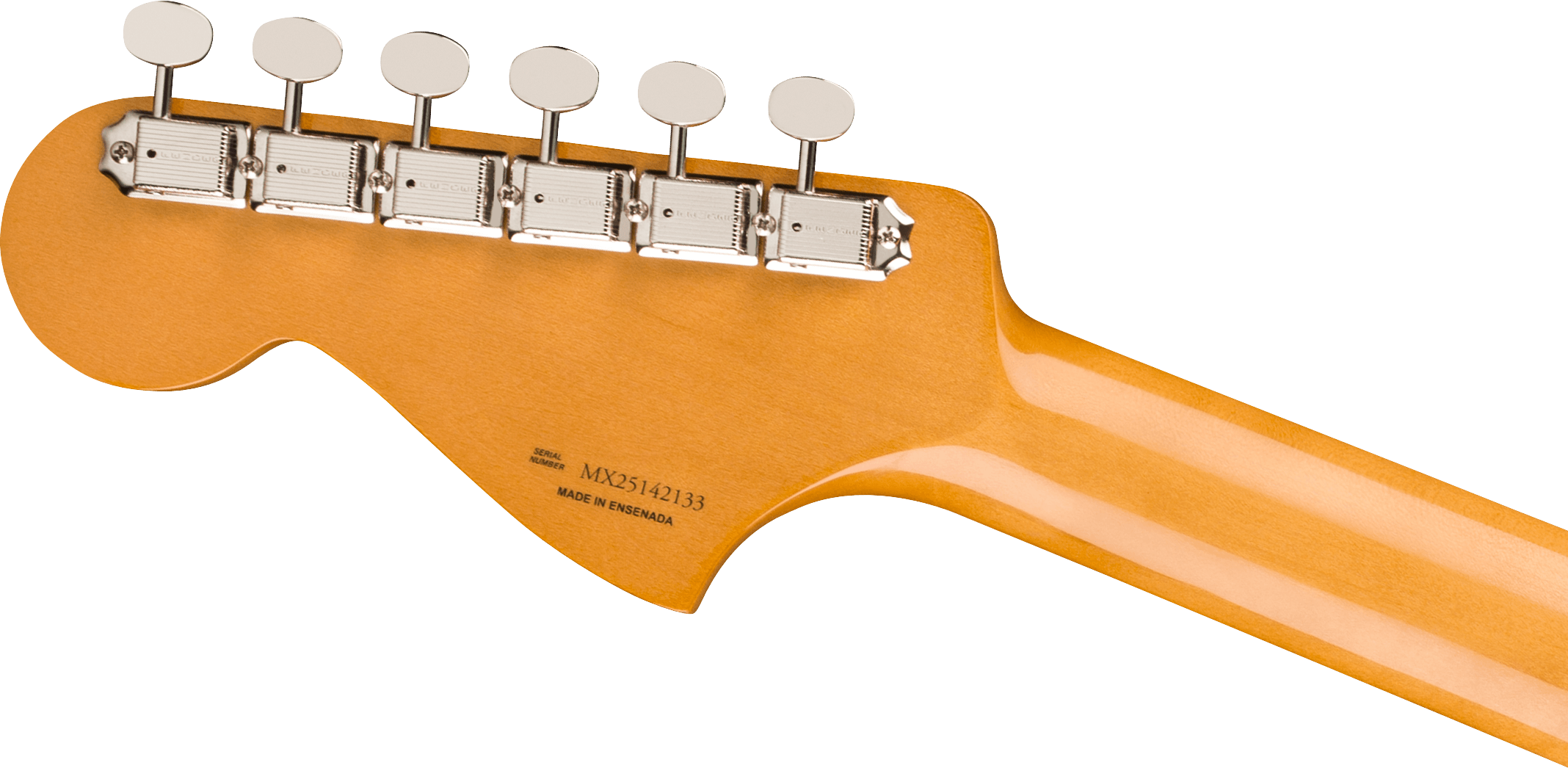
Fender Vintera III Early '60s Bass VI Rosewood Candy Apple Red Electric Bass Guitar
Pairs well with
Fender Vintera III Early '60s Bass VI Rosewood Candy Apple Red Electric Bass Guitar
Description
Quick Product Summary
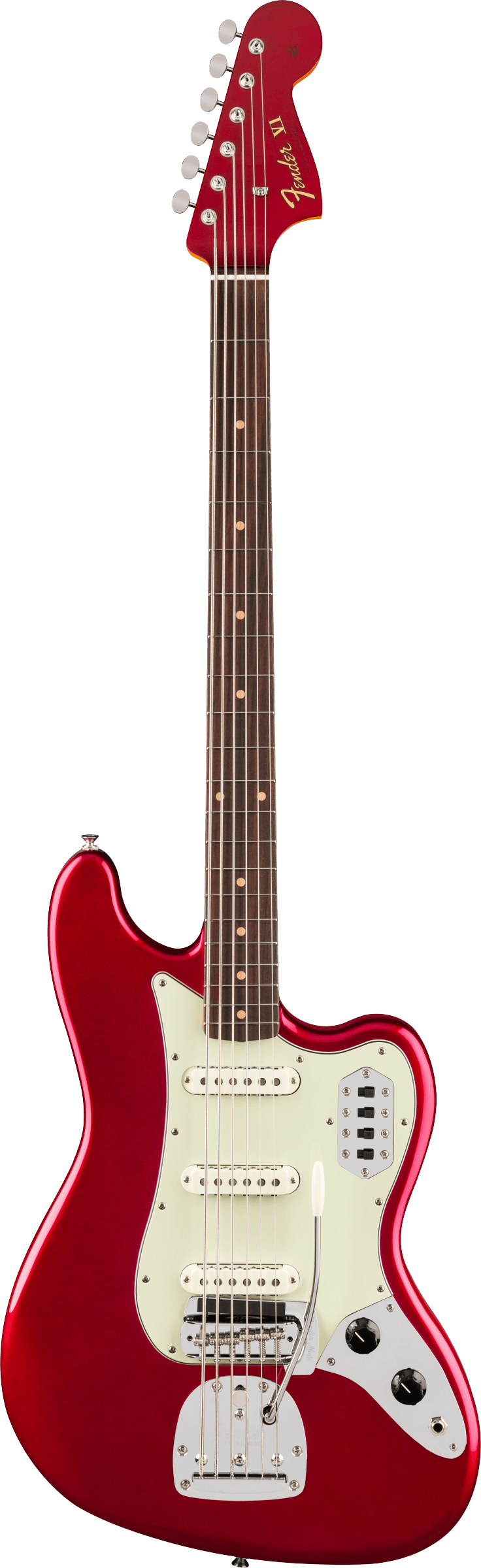
The Fender Vintera III Early '60s Bass VI in Candy Apple Red brings one of Fender's most distinctive instrument designs into the Vintera III range, combining genuine bass-register tuning with a familiar six-string layout and vintage-inspired early-'60s Fender character.
Tuned E-A-D-G-B-E one octave below a standard guitar, the Bass VI occupies a unique space between electric guitar and conventional bass. Its 30-inch scale, three vintage-style early-'60s Bass VI single-coil pickups, individual pickup switches, low-cut circuit and floating tremolo make it equally capable of deep bass lines, melodic parts, chords, atmospheric textures and heavily effected sounds.
Finished in striking Candy Apple Red with a round-laminated rosewood fingerboard, this is a particularly strong choice for guitarists exploring the bass register, bassists wanting a more melodic second instrument and players working in indie, alternative, surf, post-punk, shoegaze and experimental music.
At A Glance
| Feature | Details |
|---|---|
| Brand | Fender |
| Series | Vintera III |
| Model | Early '60s Bass VI |
| Finish | Candy Apple Red |
| Fingerboard | Round-Laminated Rosewood |
| Scale Length | 30" / 762 mm |
| Pickups | 3 x Vintage-Style Early '60s Bass VI Single-Coils |
| Condition | New |
| Included Item | Deluxe Gig Bag |
| Main Appeal | Six-string octave-low range with vintage-inspired Fender electronics and tremolo |
| Best For | Alternative bass parts, recording, indie, surf, post-punk, shoegaze and experimental playing |
What's In The Box?
-
Fender Vintera III Early '60s Bass VI
-
Deluxe Gig Bag
Why Choose The Fender Vintera III Early '60s Bass VI?
Genuine Bass VI Tuning
Unlike a typical baritone guitar, the Bass VI is tuned one complete octave below standard guitar tuning. You retain the familiar E-A-D-G-B-E string arrangement while accessing genuine bass-register pitches, opening up an unusually wide range of playing possibilities.
Vintage-Inspired Early-'60s Feel
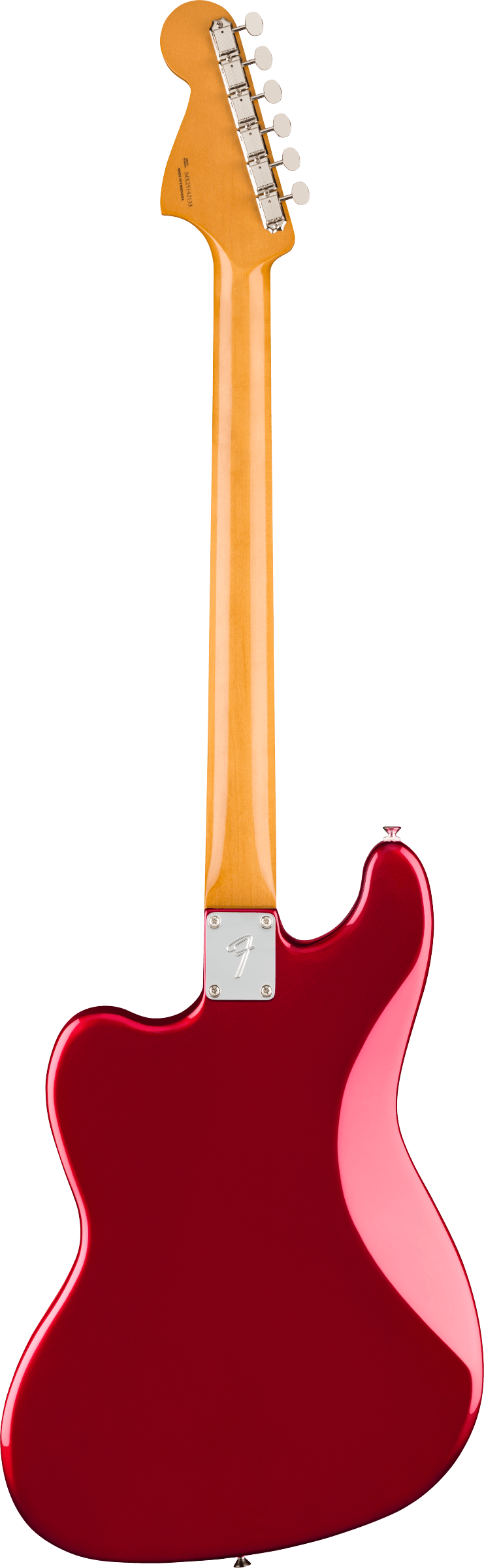
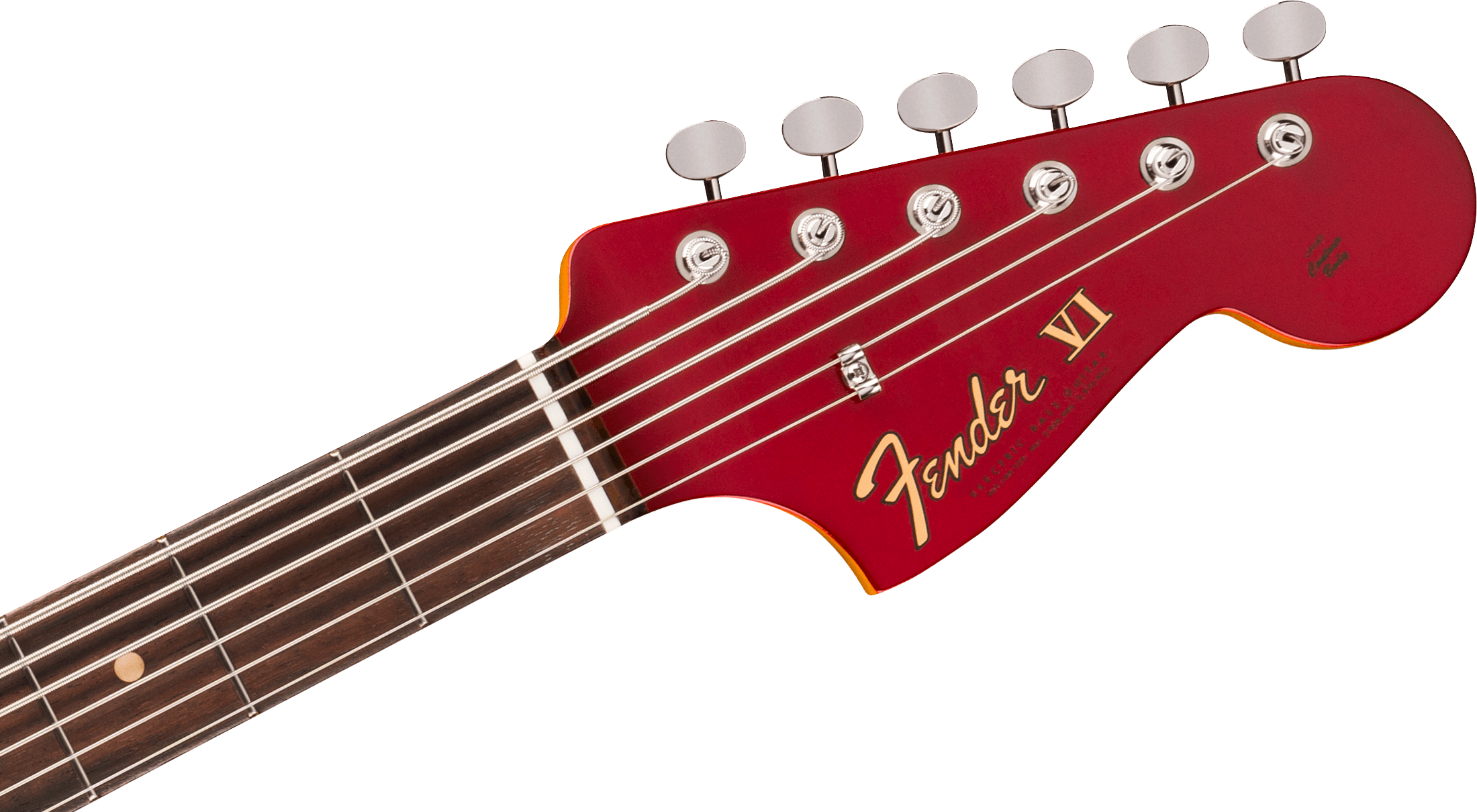
The maple neck uses an early-'60s “C” profile, paired with a 7.25-inch-radius round-laminated rosewood fingerboard and vintage-tall frets. Its 30-inch scale sits between conventional guitar and long-scale bass territory, making the Bass VI particularly approachable for electric guitar players.
Three Individually Switchable Pickups
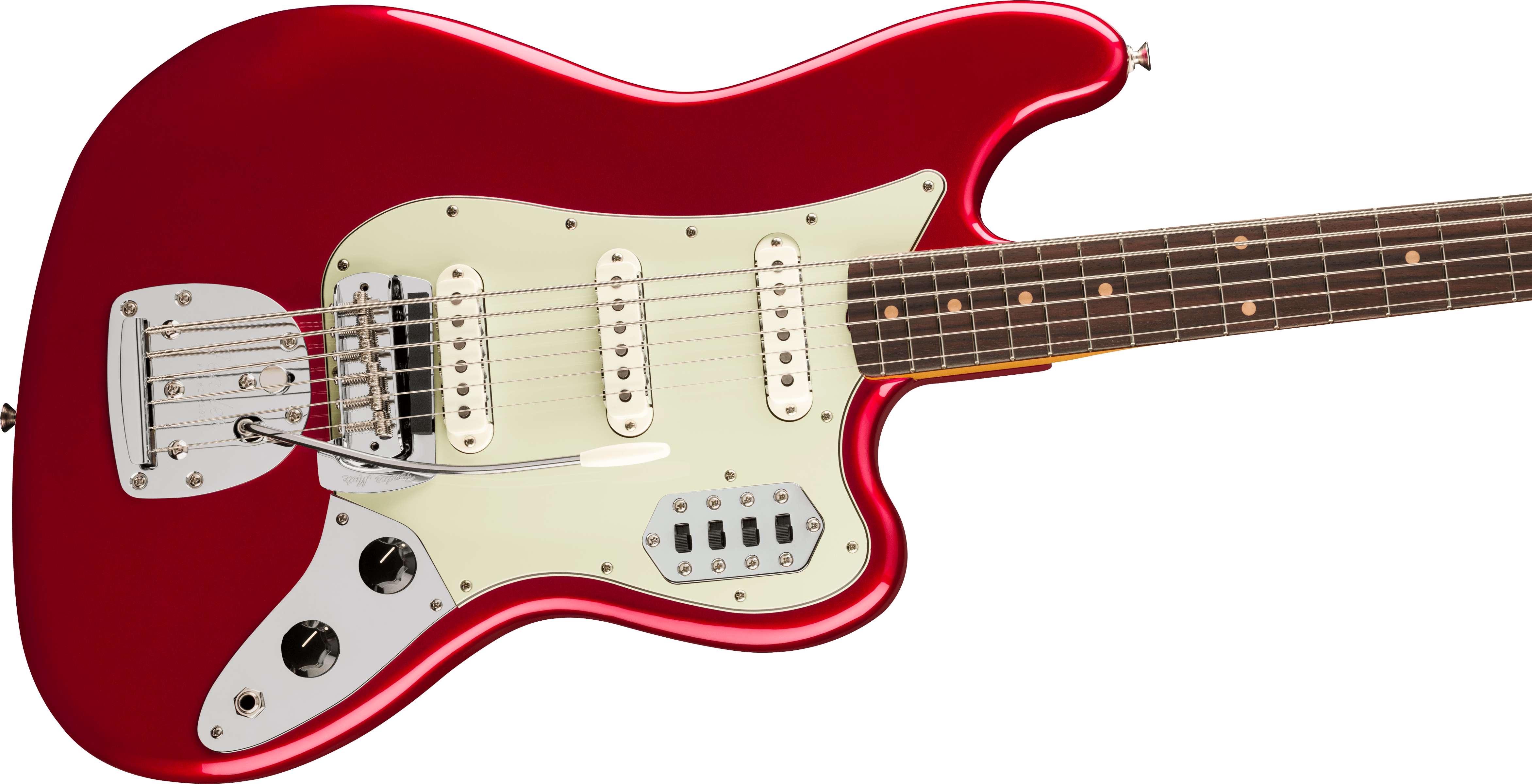
Three vintage-style early-'60s Bass VI single-coils provide much more control than the electronics found on most traditional bass guitars. Each pickup can be switched independently, making it possible to create numerous pickup combinations from the instrument itself.
Low-Cut Circuit For Greater Definition
A dedicated low-cut switch reduces some of the deepest bass frequencies, producing a tighter and more cutting response. This is particularly useful for melodic playing, layered recording, effects-heavy parts and situations where you want the Bass VI to occupy a different space from a conventional bass guitar.
Floating Tremolo And Bass VI Mute
The vintage-style floating tremolo adds expressive pitch movement ranging from subtle shimmer to more dramatic offset-style effects. Fender also includes the distinctive Bass VI mute, adding another unusual tonal option for shorter, more controlled notes.
Comparison Against Popular Alternatives
Fender Vintera III Early '60s Bass VI vs Squier Classic Vibe Bass VI
The Squier Classic Vibe Bass VI remains one of the most accessible ways into the six-string bass format and is a strong option for players working with a tighter budget. The Fender Vintera III moves further towards a detailed vintage-inspired specification with its alder body, round-laminated rosewood fingerboard, early-'60s neck profile, bone nut, vintage-style pickups and Bass VI mute. Choose the Squier for maximum affordability; choose the Vintera III when Fender specification, feel and period-inspired detail matter more.
Fender Vintera III Early '60s Bass VI vs Vintera II '60s Bass VI
The Vintera II '60s Bass VI established the previous generation of Fender's vintage-inspired Bass VI offering. The Vintera III focuses more closely on an early-'60s interpretation, including its specific early-'60s neck profile, round-laminated rosewood fingerboard and integrated Bass VI mute. Players already considering a Vintera II should look closely at the Vintera III if the earlier Fender aesthetic and revised period-style details are particularly appealing.
Fender Bass VI vs A Fender Precision Or Jazz Bass
A Precision Bass or Jazz Bass is the more conventional option for traditional bass technique, wider string spacing and straightforward four-string playing. The Bass VI is better suited to musicians who want to combine low-register bass work with chords, double-stops, melodic movement and guitar-derived phrasing.
Fender Bass VI vs A Baritone Electric Guitar
A baritone guitar extends the range of a conventional guitar downwards, but it normally remains above true bass-register tuning. The Bass VI goes significantly lower, reaching the same fundamental low E territory as a standard bass while retaining six-string guitar-style tuning. Choose a baritone for deeper guitar sounds; choose a Bass VI when you want genuine bass range with guitar-derived fingering possibilities.
Who Is The Fender Vintera III Bass VI For?
The Vintera III Early '60s Bass VI is particularly well suited to:
-
Guitarists exploring bass without abandoning familiar six-string shapes
-
Bassists looking for a more melodic second instrument
-
Studio musicians wanting unusual low-register layers
-
Indie and alternative players
-
Post-punk musicians
-
Surf and retro-influenced players
-
Shoegaze and ambient musicians
-
Producers working with layered arrangements
-
Fender offset enthusiasts
-
Players upgrading from a Squier Bass VI
-
Musicians interested in less conventional instrument designs
If your priority is straightforward traditional bass playing, a Precision or Jazz Bass will usually be the more natural choice. If you want something capable of moving between bass lines, chords, melodies and atmospheric textures, the Bass VI offers possibilities that conventional four-string instruments simply do not.
Playing Styles & Applications
The Bass VI is particularly effective in indie, alternative rock, post-punk, surf, shoegaze, ambient music, soundtrack work and experimental recording, where its extended range and distinctive attack can become part of the arrangement rather than simply supporting it.
It can handle straightforward bass lines, but its real strength appears when you start using its upper strings, pickup combinations, low-cut circuit and tremolo. Chords, moving inner voices, double-stops and higher-register melodies all become practical without giving up the instrument's genuine low-end range.
Bass VI vs Baritone Guitar: Which One Should You Choose?
A Bass VI and baritone guitar can appear similar, but they serve different musical purposes. The Bass VI is tuned E-A-D-G-B-E one octave below standard guitar, placing its lowest strings firmly in electric-bass territory. Its longer 30-inch scale and dedicated Bass VI strings are designed around this lower tuning.
A baritone guitar generally sits higher and works as an extension of standard electric-guitar range. If you want lower riffs while remaining fundamentally in guitar territory, choose a baritone. If you want an instrument that can perform genuine bass duties while retaining six-string guitar-style tuning, the Bass VI is the stronger option.
Compatibility And Practical Pairing Advice
Bass Amplifiers
A good bass amplifier is the natural pairing when you want the Bass VI to deliver its full low-frequency range. Adequate speaker and amplifier headroom helps reproduce the lowest notes with greater authority.
Recording Interfaces And Studio Equipment
The Bass VI is particularly useful in recording environments because its switching system can create very different tonal roles without changing instruments. It can be connected to a suitable audio interface, DI system, amplifier modeller or recording preamp just like another passive electric instrument.
Effects Pedals
Reverb, delay, chorus, tremolo, modulation, fuzz and overdrive can all transform the Bass VI into a highly expressive textural instrument. Guitar pedals are particularly effective for brighter or low-cut sounds, while bass-focused pedals can help preserve more low-frequency weight.
Bass VI Strings
This model uses a dedicated Fender Bass VI .024-.100 string set. When replacing strings, use a set intended for Bass VI scale length and tuning rather than ordinary guitar strings or a conventional four-string bass set.
Looking for advice on choosing the right Bass VI, bass amplifier, effects pedals or recording equipment? Our experienced team of musicians can help by phone, online or in-store.
Story & Context
Fender introduced the original Bass VI in 1961, creating an instrument that sat outside the traditional divide between electric guitar and electric bass. Instead of the four-string layout associated with Fender's Precision and Jazz basses, the Bass VI used six strings tuned E-to-E one octave beneath a standard guitar.
The design developed during the early 1960s as Fender explored increasingly sophisticated offset instruments and switching systems. The combination of three pickups, individual switching, low-cut circuit and floating tremolo helped establish the Bass VI as something more versatile and unusual than a conventional bass.
The Vintera III Early '60s Bass VI deliberately looks back to this formative period. Its vintage-inspired neck dimensions, rosewood fingerboard, switching arrangement, floating tremolo and Bass VI mute reflect the character of Fender's early-'60s approach while making the design available as part of the modern Vintera III range.
That history matters because the Bass VI was never designed simply as a six-string version of an ordinary bass. Its appeal has always been the unusual territory it occupies between instruments, and that remains the main reason musicians continue to seek one out today.
Technical Specifications
| Specification | Details |
|---|---|
| Brand | Fender |
| Series | Vintera III |
| Model | Early '60s Bass VI |
| Orientation | Right-Handed |
| Colour | Candy Apple Red |
| Body Material | Alder |
| Body Shape | Bass VI |
| Body Style | Solid Body |
| Body Finish | Gloss Polyester |
| Neck Material | Maple |
| Neck Shape | Early '60s “C” |
| Neck Finish | Gloss Urethane |
| Neck Construction | 4-Bolt Standard |
| Fingerboard Material | Round-Laminated Rosewood |
| Fingerboard Radius | 7.25" / 184.1 mm |
| Scale Length | 30" / 762 mm |
| Number Of Frets | 21 |
| Fret Size | Vintage Tall |
| Position Inlays | Clay Dot |
| Side Dots | White |
| Nut Material | Bone |
| Nut Width | 1.650" / 42 mm |
| Truss Rod | Vintage-Style Butt Adjust |
| Bridge Pickup | Vintage-Style Early '60s Bass VI Single-Coil |
| Middle Pickup | Vintage-Style Early '60s Bass VI Single-Coil |
| Neck Pickup | Vintage-Style Early '60s Bass VI Single-Coil |
| Pickup Configuration | SSS |
| Controls | Master Volume, Master Tone |
| Switching | 3 Pickup On/Off Switches, 1 Low-Cut Switch |
| Bridge | 6-Saddle Vintage-Style Adjustable Bridge with Floating Tremolo Tailpiece |
| Bridge Mounting | Floating |
| Tremolo | Vintage-Style Floating Tremolo with Tremolo Lock Button and Push-In Tremolo Arm |
| Mute | Vintage-Style Bass VI Mute |
| Tuning Machines | Fender Vintage-Style |
| Hardware Finish | Nickel / Chrome |
| Pickguard | 3-Ply Mint Green |
| Pickup Covers | Vintage White |
| Control Knobs | Black Plastic |
| Strap Buttons | Vintage-Style |
| Strings | Fender USA Bass VI Nickel-Plated Steel .024-.100 |
| Case / Gig Bag | Deluxe Gig Bag |
Power Requirements
The Fender Vintera III Early '60s Bass VI uses passive pickups and does not require a battery.
Connect it to a suitable bass amplifier, effects setup, DI system or audio interface using a standard instrument cable.
Fair Deal Music Verdict 🎵
★★★★★ 5/5
The Fender Vintera III Early '60s Bass VI is one of those instruments that can genuinely change how you approach an arrangement. Rather than simply offering extra strings, it gives guitarists and bassists access to a different musical role altogether.
The combination of genuine bass-register tuning, individually switched pickups, low-cut circuit and floating tremolo makes it particularly valuable for players who enjoy building textures rather than simply following conventional guitar or bass rules.
Best suited for: Guitarists, bassists, producers and alternative musicians looking for a distinctive six-string bass with vintage-inspired Fender character.
Customers usually upgrade from: Squier Classic Vibe Bass VI and more affordable Bass VI or baritone-style instruments.
Most commonly paired with: Bass amplifiers, recording interfaces, reverb, delay, chorus, modulation, fuzz and other creative effects.
Our tip: Spend time exploring the individual pickup switches and low-cut circuit before adding external EQ. The instrument can move from deep bass response to much sharper, more focused sounds directly from its own controls.
Showroom feedback: The Bass VI format tends to feel immediately more familiar to guitarists than a conventional four-string bass because the E-to-E layout preserves familiar intervals and chord shapes. Bass players may need more time to adjust to the tighter string spacing, but that difference is also part of what makes the instrument so distinctive.
Why Buy From Fair Deal Music?
When you buy from Fair Deal Music, you're choosing one of the UK's most established, independent family run music retailers since 1987.
From our Birmingham showroom, our knowledgeable musician-led team helps customers choose guitars, basses, amplifiers, keyboards, drums, studio equipment and much more.
When you shop with Fair Deal Music, you can buy with confidence thanks to:
-
Expert advice from knowledgeable musicians
-
Carefully checked new, used, pre-owned and ex-display equipment
-
Competitive prices on leading music brands
-
Secure UK-wide delivery
-
Friendly support before and after your purchase
-
Secure online ordering
-
A large Birmingham showroom
-
Decades of experience with new and pre-owned musical instruments
Thinking of upgrading from your current guitar or bass? Our team is also happy to discuss part-exchange options and no-obligation valuations to help make your next instrument more affordable.
Frequently Asked Questions
Can the Fender Bass VI replace a normal bass guitar?
It can cover genuine bass-register notes and is perfectly capable of handling many bass parts. However, the six-string layout and tighter string spacing create a different playing experience from a Precision or Jazz Bass. Players focused purely on traditional fingerstyle or pick bass technique may still prefer a conventional four-string instrument.
Is the Fender Bass VI suitable for guitar players?
Yes. The E-A-D-G-B-E layout preserves the same string relationships as a standard guitar, making familiar scales, chord shapes and intervals easier to transfer. The longer 30-inch scale and much lower tuning require some adjustment, but the basic fretboard logic remains familiar.
Can I play chords on a Bass VI?
Yes, and this is one of its biggest creative advantages. Chords and partial chord voicings can produce huge low-register textures, although keeping voicings relatively open often creates greater clarity than playing dense six-string guitar shapes in the lowest positions.
Can I use normal guitar pedals with a Bass VI?
Yes. Guitar effects can work extremely well with a Bass VI, particularly reverb, delay, chorus, tremolo, fuzz and other modulation effects. The low-cut switch can also help keep heavily effected sounds clearer.
What does the low-cut switch do?
The low-cut circuit reduces some of the deepest bass frequencies, creating a tighter and more cutting tone. This can be useful for melodic lines, distorted sounds, layered recordings and situations where another instrument is already covering the deepest low end.
Is the 7.25-inch fingerboard radius very different from a modern Fender?
It provides a noticeably more curved, vintage-style fingerboard feel than many modern Fender instruments. Players who enjoy traditional Fender necks are likely to find it familiar, while those used exclusively to flatter contemporary fingerboards may notice the difference.
What is the Bass VI mute used for?
The integrated mute shortens the sustain and changes the attack of the strings, creating a tighter and more percussive character. It can be particularly effective for retro-inspired lines, rhythmic parts and studio textures.
Is the Bass VI good for shoegaze and ambient music?
Very much so. The combination of extended low range, floating tremolo, multiple pickups and compatibility with effects makes the Bass VI particularly effective for ambient, shoegaze and other styles built around layered textures.
If you have any questions, you are always welcome to contact us. We'll get back to you as soon as possible, within 24 hours on weekdays.
-
Shipping Information
Use this text to answer questions in as much detail as possible for your customers.
-
Customer Support
Use this text to answer questions in as much detail as possible for your customers.
-
FAQ’s
Use this text to answer questions in as much detail as possible for your customers.
-
Contact Us
Use this text to answer questions in as much detail as possible for your customers.
Good to Know
How long is the warranty period?
For new products, you will get the full manufacturer warranty. For our second-hand products, we will cover any fault within 4 weeks of the purchase of any guitar. For pianos, that will be extended to 3 months.
What is the estimated delivery time?
We use the 24hr delivery in UK mainlands if it can be delivered by post. For Scotland and Wales, it depends on the area and the distance from our warehouse, but our aim is to get you order to your hands as soon as possible.
For products that cannot be posted, we will arrange the delivery with you to suit your schedule and deliver it to you
Do you offer international shipping?
We usually can ship instruments worldwide. Please get in touch to get a quote
What is the maintinance on your USED products?
- Guitars: Every guitar will be setup to a high playing standard before shipping. The electronics are checked and if there is any issue with guitar, it will be fixed.
- Pianos: Every piano is fully tested to make sure it's fully functional, cleaned, and if it's digital, a facroty reset is performed.
Do you offer assembly and installation?
We offer installation and assembly for pianos, drum kits, or any products that require it for and extra charge. Please get in touch so we can provide you with a quote.