

Marshall 1959 Modified Amp Head
Pairs well with
Description
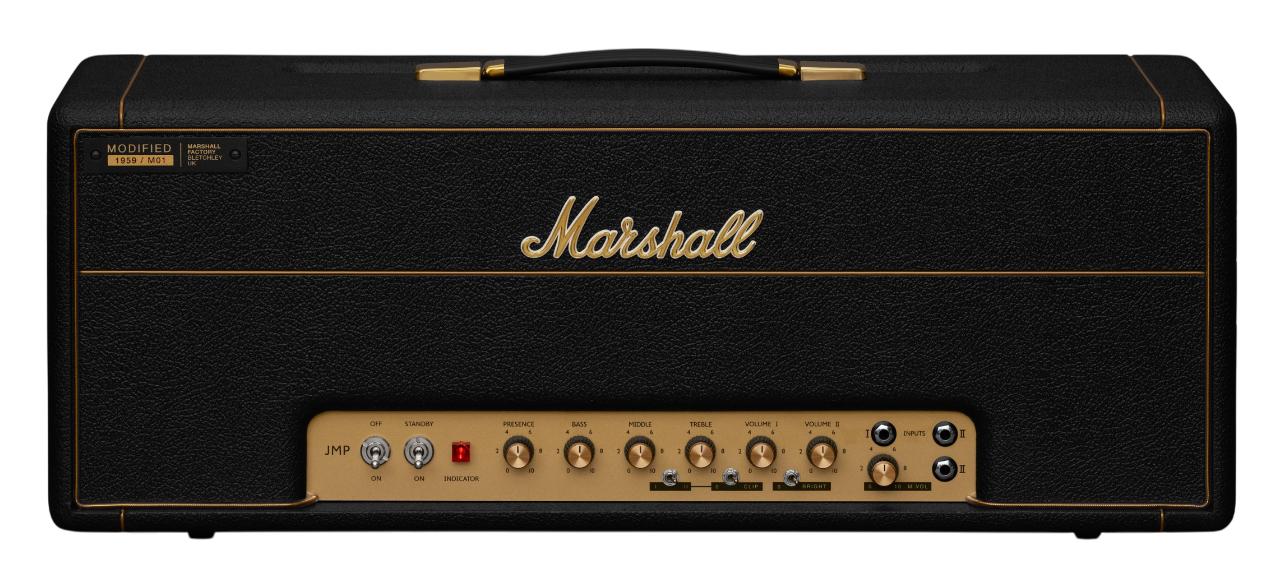
The Marshall 1959 Modified takes the legendary 100-watt Super Lead platform and equips it with the modifications guitarists have traditionally added to make the classic Plexi circuit more flexible.
Its Master Volume control lets you push the amplifier into rich overdrive without relying entirely on its enormous output level, while the switchable Bright function changes the response of the High Treble channel from traditional cutting Plexi attack to a fuller, warmer voice.
Switchable clipping adds another level of preamp drive, with two distinct modes offering either tight, compressed aggression or a more open and dynamic response. Combined with two EL34-powered channels and traditional shared EQ controls, the 1959 Modified can move from vintage British cleans and crunch to saturated hard-rock and high-gain sounds.
Built at Marshall’s factory in Bletchley, England, this is a professional 100-watt valve head for serious stage, studio and touring use.
At A Glance
| Feature | Details |
|---|---|
| Brand | Marshall |
| Model | 1959 Modified |
| Product Type | Valve guitar amplifier head |
| Condition | Brand New |
| Output Power | 100 watts |
| Channels | Two with shared EQ |
| Channel Voices | High Treble and Normal |
| Master Volume | Yes |
| Bright Switch | Yes |
| Additional Clipping | Switchable |
| Clipping Modes | Tight/compressed and open/dynamic |
| Preamp Valves | Two ECC83 |
| Phase Splitter | One ECC83 |
| Power Valves | Four EL34 |
| Effects Loop | No |
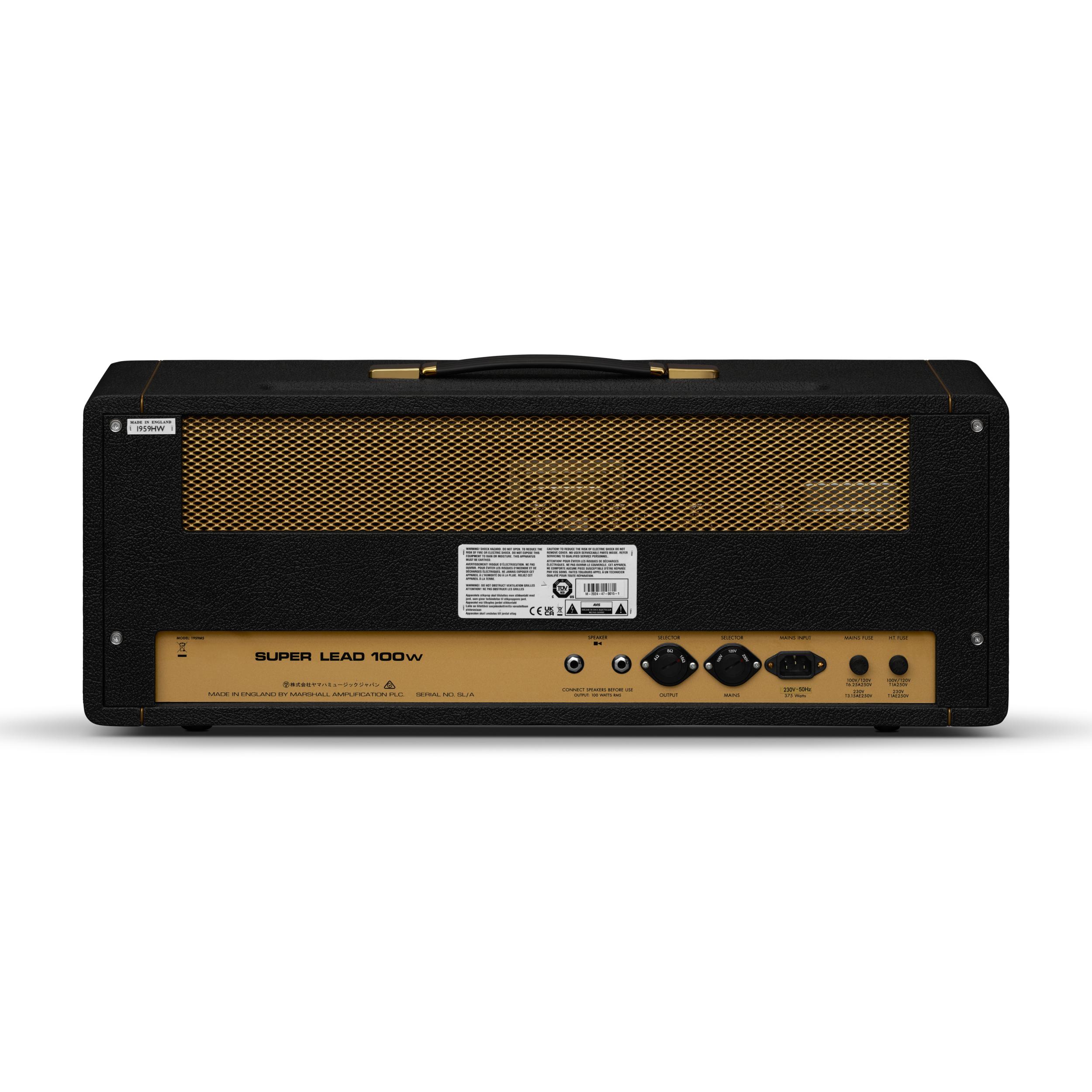
| Speaker Outputs | Two |
| Selectable Impedance | 16Ω, 8Ω or 4Ω |
| Country of Manufacture | United Kingdom |
| Main Appeal | Modified Plexi tone with greater gain and volume control |
| Best For | Rock, blues, punk, hard rock, metal, recording and professional stages |
| Skill Level | Experienced to professional |
What’s Included?
-
Marshall 1959 Modified 100W amplifier head
-
Detachable mains power cable
-
Manufacturer documentation
Why Choose the Marshall 1959 Modified?
The Legendary 1959 Platform
The original Marshall 1959 Super Lead helped establish the sound of high-powered British rock amplification. Its powerful EL34 output stage, immediate attack and prominent midrange became inseparable from the development of blues rock, hard rock and heavy music.
The 1959 Modified retains that fundamental character while introducing controls inspired by the modifications players and amplifier technicians have performed since the 1970s.
The result is a familiar Plexi-style experience with considerably greater control over gain, brightness and playing volume.
Added Master Volume Control
A traditional 1959 creates much of its overdrive by being played at extremely high output levels. The 1959 Modified adds a Master Volume control, allowing the channel volumes to drive the preamp while the final output level is managed separately.
This makes it possible to achieve:
-
Rich classic-rock crunch at more controlled levels
-
Saturated rhythm tones without running the amplifier fully open
-
Greater balance between gain and stage volume
-
More practical recording levels
-
Easier integration into modern live rigs
Turning the Master Volume fully clockwise allows the amplifier to respond more like the traditional 1959 circuit. Reducing the Master Volume lets the preamp be driven harder at a lower overall output level.
This remains a powerful 100-watt valve amplifier and can still produce considerable volume.
Switchable Bright Response
The Bright switch changes the high-frequency response of the High Treble channel.
With the switch engaged, the traditional bright capacitor is active, providing the cutting attack and upper-frequency bite associated with a classic Marshall 1959.
Switching it off creates a fuller and smoother High Treble response. This can be especially useful with brighter guitars, single-coil pickups, aggressive speakers or distortion pedals that already add substantial treble.
The switch gives players access to both the traditional Plexi response and a warmer alternative without requiring internal modification.
Additional Preamp Clipping
The Clip switch introduces additional preamp distortion, allowing the amplifier to reach heavier and more saturated sounds at lower Master Volume settings.
With clipping switched off, the amplifier retains a more traditional 1959-style response. Engaging it adds gain and compression, making the amplifier better suited to aggressive rhythm tones, sustained leads and heavier musical styles.
This additional gain stage allows the 1959 Modified to cover considerably more ground than a standard vintage-style Super Lead.
Two Distinct Clipping Modes
When the Clip function is engaged, a second switch selects between two clipping characters.
Mode I: Tight and Compressed
The first position produces a firmer and more compressed overdrive response. It is particularly effective for:
-
Tight rhythm guitar
-
Punk
-
Hard rock
-
Palm-muted riffs
-
Focused lead sounds
-
Higher-gain playing
Mode II: Open and Dynamic
The second position creates a more open response with greater dynamic movement. It works particularly well for:
-
Classic-rock crunch
-
Blues-rock leads
-
Expressive rhythm playing
-
Guitar-volume control
-
Touch-sensitive overdrive
-
Less compressed gain sounds
Together, the two modes let players choose between precise aggression and a more traditional, responsive feel.
High Treble and Normal Channels
The 1959 Modified retains two differently voiced channels.
The High Treble channel offers the brighter and more cutting response associated with classic Plexi rhythm and lead sounds.
The Normal channel has a rounder, fuller tonal balance with additional body and reduced high-frequency emphasis.
Each channel has its own Volume control, allowing the level and drive character to be adjusted independently.
Three Input Options
The front panel provides three instrument inputs:
-
High Treble channel input
-
Normal channel high-sensitivity input
-
Normal channel low-sensitivity input
The high-sensitivity Normal input delivers the strongest signal and fullest response from Channel II.
The lower-sensitivity Normal input reduces the input level, providing additional clean headroom and working particularly well with high-output humbuckers, active pickups or boost pedals.
Authentic EL34 Power
Four EL34 power valves deliver the authority, punch and harmonic complexity expected from a full-sized Marshall Super Lead.
The amplifier responds naturally to:
-
Picking strength
-
Guitar volume settings
-
Pickup output
-
Boost and overdrive pedals
-
Speaker choice
-
Channel-volume settings
Played lightly, the amplifier can remain articulate and controlled. Digging in introduces additional compression, upper harmonics and aggression.
The 100-watt power section also provides the bass authority and stage projection that smaller valve amplifiers cannot fully reproduce.
Traditional Shared Equalisation
Treble, Middle, Bass and Presence controls shape both amplifier channels.
The three-band EQ operates within the preamp, while Presence adjusts the upper-frequency response of the power-amplifier section.
This traditional control layout makes it possible to create:
-
Cutting Plexi-style lead tones
-
Thick, mid-forward rhythm sounds
-
Fuller blues-rock textures
-
Tight high-gain sounds
-
Warm vintage cleans
-
Aggressive punk and hard-rock tones
The controls are highly interactive, so changing one frequency range can influence the response of the others.
Made in Bletchley, England
The 1959 Modified is designed, engineered and manufactured in the United Kingdom.
Each amplifier is built at Marshall’s Bletchley factory, continuing the heritage of the original British-made amplifiers that established the company’s reputation.
Why Choose a Modified Plexi-Style Amplifier?
The classic Plexi circuit is celebrated for its openness, dynamic response and powerful midrange, but traditional examples are extremely loud and provide relatively limited control over gain.
Historically, players modified these amplifiers to add:
-
Master Volume control
-
Additional preamp gain
-
Different clipping textures
-
Alternative bright-cap arrangements
-
Tighter and more compressed distortion
-
Greater control at practical stage levels
The Marshall 1959 Modified incorporates these ideas into a factory-built amplifier while retaining the central character of the original platform.
It is ideal for players who love the sound and response of a Plexi but require more gain and control than a traditional reissue provides.
Who Is It For?
Classic-Rock Guitarists
With clipping disengaged and the Bright switch active, the amplifier delivers the cutting attack, broad dynamic range and muscular crunch associated with classic British rock amplification.
Hard-Rock and Metal Players
The additional clipping modes provide more gain, compression and sustain than a traditional 1959 circuit.
Mode I is particularly effective for tight riffs and focused rhythm sounds, while Mode II provides more open and expressive high-gain tones.
Punk and Alternative Players
The amplifier’s aggressive midrange, fast response and powerful projection make it especially well suited to energetic rhythm guitar.
The added Master Volume and clipping controls allow the sound to be shaped from raw vintage crunch to tighter modern aggression.
Professional Touring Musicians
Its 100-watt output provides substantial clean headroom, stage projection and low-frequency authority.
The amplifier is designed for professional cabinets, large stages and systems where the guitar amplifier will be professionally miked or attenuated.
Recording Studios
The selectable clipping character and switchable Bright response make the amplifier useful for creating several distinct British guitar sounds from one head.
Studios equipped with isolation rooms, attenuators or reactive load devices can capture its full range without relying on a single high-volume configuration.
Players Who Use Guitar Controls Dynamically
The open character of the circuit responds exceptionally well to changes in the guitar’s volume and tone settings.
Players can move from cleaner rhythm sounds to overdriven leads directly from the instrument, particularly when using the more open clipping mode.
Understanding the Marshall 1959 Modified Sound
The amplifier’s sound can be divided into several broad operating styles.
Traditional Plexi Response
Set the Clip function to off, engage the Bright switch and turn the Master Volume fully clockwise.
This produces the closest response to a conventional 1959, with open dynamics, considerable headroom and overdrive developing as the channel volumes are increased.
Fuller Vintage Response
Switch the Bright function off to remove the traditional bright-cap response from the High Treble channel.
This produces a rounder tone that works well with bright guitars, treble-heavy pedals and cutting speaker cabinets.
Controlled Classic-Rock Crunch
Increase the channel volume while using the Master Volume to manage the final output.
This creates rich preamp crunch without requiring the amplifier to operate at its absolute maximum level.
Tight Modified Gain
Engage the Clip function and select Mode I.
The response becomes tighter, more compressed and better suited to precise rhythm playing, heavier riffs and sustained leads.
Open Modified Gain
Engage the Clip function and select Mode II.
The sound remains saturated but has a more open and dynamic feel, retaining greater sensitivity to picking strength and guitar-volume adjustments.
Technical Specifications
| Specification | Details |
|---|---|
| Model | 1959 Modified |
| Amplifier Type | All-valve guitar amplifier head |
| Output Power | 100 watts |
| Channels | Two |
| Channel Voices | High Treble and Normal |
| Shared Equalisation | Treble, Middle and Bass |
| Power-Amp Control | Presence |
| Channel Controls | Volume I and Volume II |
| Master Volume | Yes |
| Bright Function | Switchable |
| Additional Clipping | Switchable |
| Clip Modes | Mode I: tighter and more compressed; Mode II: more open and dynamic |
| Instrument Inputs | Three |
| High Treble Inputs | One |
| Normal Inputs | High sensitivity and low sensitivity |
| Preamp Valves | Two ECC83 |
| Phase Splitter Valve | One ECC83 |
| Power Valves | Four EL34 |
| Built-In Reverb | No |
| Effects Loop | No |
| Speaker Outputs | Two 1/4-inch jack outputs |
| Selectable Output Impedance | 16Ω, 8Ω or 4Ω |
| Width | 741mm |
| Height | 294mm |
| Depth | 210mm |
| Weight | Approximately 20kg |
| Country of Manufacture | United Kingdom |
Power and Speaker Requirements
The Marshall 1959 Modified requires a suitable mains electricity connection and an external guitar speaker cabinet.
The amplifier must never be switched on without a correctly connected speaker cabinet or appropriately rated professional load device.
The rear-panel impedance selector must match the total impedance of the connected cabinet configuration.
Common examples include:
| Cabinet Configuration | Amplifier Setting |
|---|---|
| One 16Ω cabinet | 16Ω |
| Two 16Ω cabinets | 8Ω |
| One 8Ω cabinet | 8Ω |
| Two 8Ω cabinets | 4Ω |
| One 4Ω cabinet | 4Ω |
A proper speaker cable must be used between the amplifier and cabinet. A screened guitar instrument cable is not suitable for this connection.
Because this is a 100-watt valve amplifier, the selected cabinet must also have sufficient power handling.
Which Speaker Cabinet Should You Choose?
Marshall 1960A or 1960B
A traditional 4x12 cabinet provides the projection, sound dispersion and visual presence associated with a full-sized Marshall rig.
The angled 1960A helps direct the upper speakers towards the player, while the straight 1960B offers a slightly fuller and more focused cabinet response.
Marshall 1960AV or 1960BV
These Vintage cabinets offer a more pronounced upper-midrange voice and work well for classic-rock, hard-rock and lead tones.
Marshall 1960AHW or 1960BHW
The Handwired cabinets provide a traditional construction and vintage speaker response for players seeking a more historically inspired Super Lead pairing.
Compatible 2x12 Cabinet
A correctly rated 2x12 can create a more portable rig, but its power handling and impedance must be suitable for a 100-watt amplifier.
The connected speakers will have a substantial influence on the amplifier’s brightness, bass response, compression and perceived gain.
Comparison With Other Marshall Amplifier Heads
Marshall 1959 Modified
The 1959 Modified offers classic Super Lead character with a Master Volume, switchable Bright response and additional clipping modes.
It is the choice for players who want Plexi heritage with greater gain and practical control.
Marshall 1959HW
The 1959HW provides the more traditional handwired Super Lead experience, with bridgeable channels and no Master Volume or added clipping.
It is best suited to players seeking a historically focused circuit and who have the space or equipment required to manage its volume.
Marshall 2203 Modified
The 2203 Modified starts from the tighter, more aggressive JCM800 Master Volume platform.
It offers a more focused and immediate high-gain response, while the 1959 Modified retains more of the open feel and broad dynamic range associated with the earlier Plexi design.
Marshall SV20H Studio Vintage
The SV20H provides Plexi-inspired tone in a compact 20-watt format with a switchable 5-watt mode.
It is easier to transport and manage, while the 1959 Modified provides greater headroom, low-end authority and stage projection.
Frequently Asked Questions
Is the Marshall 1959 Modified handwired?
The amplifier is built in Marshall’s Bletchley factory in England. It is a separate model from the traditional 1959HW Handwired head and adds factory-designed modern modifications to the 1959 platform.
Does it have a Master Volume?
Yes. The Master Volume allows the preamp to be driven harder while controlling the final output level.
With the control fully clockwise, the amplifier behaves more like a traditional non-master-volume 1959.
What does the Bright switch do?
The Bright switch activates or removes the bright capacitor from the High Treble channel.
Engaged, it provides the traditional brighter 1959 response. Disengaged, the High Treble channel becomes fuller and smoother.
What does the Clip switch do?
The Clip switch introduces additional preamp distortion, providing more gain and allowing heavier sounds to be achieved at lower Master Volume settings.
What is the difference between the two Clip modes?
Mode I is tighter and more compressed, making it effective for precise riffs and aggressive rhythm sounds.
Mode II is more open and dynamic, providing greater sensitivity to playing strength and guitar controls.
Does it have an effects loop?
No. The 1959 Modified does not include an effects loop.
Delay, reverb and modulation pedals can be connected before the amplifier input, or incorporated through compatible external routing and load equipment.
Can it be used at home?
The Master Volume makes it more controllable than a traditional non-master-volume 100-watt Plexi, but it remains an extremely powerful professional amplifier.
Players requiring very low listening levels should use a suitable attenuator or reactive load device designed for a 100-watt valve amplifier.
Can it be used without a speaker cabinet?
No. It must always be connected to a correctly matched speaker cabinet or suitable professional load device before it is powered on.
Can two cabinets be connected?
Yes. Two speaker outputs are provided.
The combined cabinet impedance must match the selected output setting on the amplifier.
Is a footswitch required?
No. The Bright and Clip functions are controlled directly from the amplifier’s front panel.
Fair Deal Music Verdict
★★★★★ 5/5
The Marshall 1959 Modified successfully expands the legendary Super Lead formula without removing the power, dynamics and unmistakable midrange that made the original so influential.
Its Master Volume makes the available gain easier to control, while the switchable Bright response and two clipping modes provide a genuinely useful range of vintage and modified tones. It can deliver everything from open Plexi crunch to tight, compressed hard-rock aggression without relying entirely on external drive pedals.
This remains a serious 100-watt valve amplifier intended for professional cabinets, studios and stages. For guitarists who want the authority of a full-sized British head with the flexibility of classic amplifier modifications built in at the factory, it is an exceptional choice.
Why Buy From Fair Deal Music?
Choosing Fair Deal Music means buying from a passionate team of musicians who genuinely understand the products we sell. Whether you’re purchasing your first instrument, upgrading your current setup or searching for something special, we’re here to help you make the right choice with friendly advice and expert support.
When you shop with Fair Deal Music, you can buy with confidence thanks to:
-
Expert advice from knowledgeable musicians
-
Carefully checked new, used, pre-owned and ex-display equipment
-
Competitive prices on leading music brands
-
Secure UK-wide delivery
-
Flexible finance options available, subject to status
-
Friendly support before and after your purchase
-
A trusted independent UK music retailer with decades of experience
Trade In. Trade Up. Save More.
Thinking about upgrading? Your next piece of gear could cost less than you think. We’re always happy to consider part exchanges and trade-ins on a wide range of musical instruments and equipment. Whether you’re looking to trade a guitar, amplifier, keyboard, drum kit, pedal or studio equipment, our team can provide a fair, no-obligation valuation and help make your next upgrade more affordable.
Contact our team or visit the Fair Deal Music Birmingham showroom to discuss your equipment and discover how much you could save.
If you have any questions, you are always welcome to contact us. We'll get back to you as soon as possible, within 24 hours on weekdays.
-
Shipping Information
Use this text to answer questions in as much detail as possible for your customers.
-
Customer Support
Use this text to answer questions in as much detail as possible for your customers.
-
FAQ’s
Use this text to answer questions in as much detail as possible for your customers.
-
Contact Us
Use this text to answer questions in as much detail as possible for your customers.
Good to Know
How long is the warranty period?
For new products, you will get the full manufacturer warranty. For our second-hand products, we will cover any fault within 4 weeks of the purchase of any guitar. For pianos, that will be extended to 3 months.
What is the estimated delivery time?
We use the 24hr delivery in UK mainlands if it can be delivered by post. For Scotland and Wales, it depends on the area and the distance from our warehouse, but our aim is to get you order to your hands as soon as possible.
For products that cannot be posted, we will arrange the delivery with you to suit your schedule and deliver it to you
Do you offer international shipping?
We usually can ship instruments worldwide. Please get in touch to get a quote
What is the maintinance on your USED products?
- Guitars: Every guitar will be setup to a high playing standard before shipping. The electronics are checked and if there is any issue with guitar, it will be fixed.
- Pianos: Every piano is fully tested to make sure it's fully functional, cleaned, and if it's digital, a facroty reset is performed.
Do you offer assembly and installation?
We offer installation and assembly for pianos, drum kits, or any products that require it for and extra charge. Please get in touch so we can provide you with a quote.